



Marvel Rivals launch in South Africa
Marvel Rivals launch needs a balanced parts plan, not a random basket. Map the CPU, GPU, RAM, SSD, cooling, and monitor target to the budget so SA builders know where to spend first.
Read moreHall effect shifter technology uses magnetic sensors to cut wear and drift, keeping shifts precise and low-maintenance in sim racing 🏁🔧 Learn why magnetic shifting lasts.
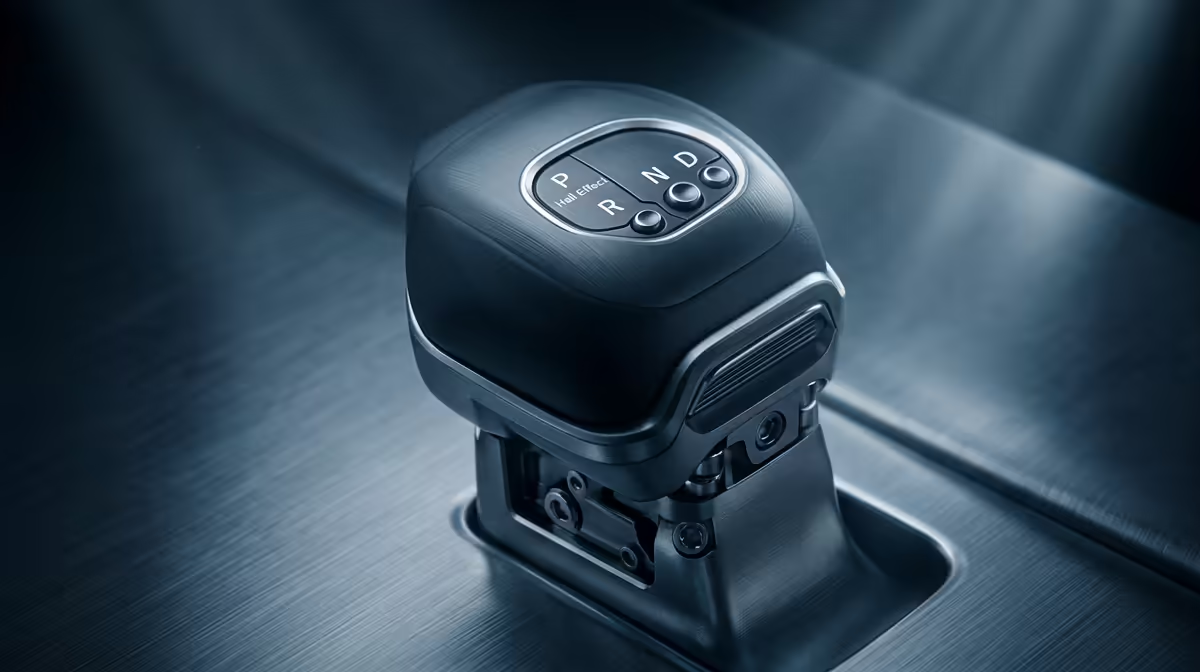
Ever missed a crucial downshift at Kyalami? It is a frustrating moment that every virtual driver fears. Most standard shifters rely on mechanical switches that eventually wear out. This leads to missed gears and inconsistent performance. A Hall Effect Shifter changes everything by using magnets instead of physical contact. For South African gamers, this means more reliability and much faster lap times. 🏎️
Traditional shifters use copper contacts or microswitches. These parts rub together every time you change gear. Over time, friction causes wear. This leads to "ghost shifts" or inputs that simply do not register. A Hall Effect sensor works differently. It measures the position of a magnet as it moves. Because nothing touches, there is no friction. There is no wear. The signal remains as crisp on day 1,000 as it was on day one.
When you pull the lever, a magnet moves closer to a sensor. The sensor detects the change in the magnetic field. It then converts this into a digital signal for your PC. This process is incredibly fast. It is also immune to the dust and humidity often found in South African homes. Whether you are browsing the latest sim racing equipment or building a custom cockpit, this tech is a massive upgrade.
In competitive racing, consistency is everything. You need to know exactly when that gear will engage. Mechanical switches can become "mushy" over time. This tiny delay ruins your rhythm. With magnetic shifting, the activation point never moves. This allows you to develop better muscle memory.
When setting up a magnetic shifter, always check your deadzones in the driver software. Because Hall Effect sensors are so sensitive, a tiny bit of play in your rig might trigger a shift. Setting a 2% deadzone ensures every click is intentional and prevents accidental shifts during heavy braking.
Most professional drivers in South Africa are moving toward magnetic setups. When you are fighting for a podium spot, you cannot afford a mechanical failure. The peace of mind offered by a Hall Effect Shifter is worth every cent. It allows you to focus entirely on the apex... not on whether your hardware will survive the final lap.
Investing in high-quality gear is a smart move for any enthusiast. While entry-level gear might save you a few hundred ZAR initially, mechanical parts fail. Replacing a cheap shifter twice costs more than buying a magnetic one once. This is why many look for a robust range of simulation gear and accessories that use non-contact sensors.
Magnetic sensors are also less sensitive to temperature changes. In the heat of a South African summer, metal components in mechanical switches can expand slightly. This changes the feel of the shift. Magnets do not have this issue. They provide a uniform experience regardless of the weather. 🔧
The benefits of magnetic sensing are not limited to cars. The same technology is used in high-end flight sticks and throttles. In flight simulation, precision is even more critical. A tiny bit of "jitter" in a mechanical sensor can make landing a heavy aircraft nearly impossible.
If you are exploring high-end flight simulator gear, you will notice that the best joysticks all use Hall Effect sensors. They offer a smooth, linear response that mechanical potentiometers cannot match. Whether you are hitting the redline or cruising at thirty thousand feet, magnetic tech is the gold standard for modern simulation. 🚀
Ready to Elevate Your Simulation Experience? Consistency and durability are the hallmarks of a pro-grade setup. If you are tired of missed shifts and wearing parts, it is time to upgrade to magnetic precision. Explore our full range of simulation gear and feel the difference that a Hall Effect Shifter makes to your performance.
A hall effect shifter uses magnetic sensors to detect gear position without physical contact, reducing wear and keeping shifts consistent over time.
Magnetic shifting removes contact points, cutting mechanical wear and calibration drift so your shifter stays precise far longer.
Hall effect shifters resist wear and signal drift; potentiometers wear down and need more maintenance. For long-term consistency, hall effect is superior.
Most modern rigs accept hall effect shifters via USB or wheel-base adapters, but always check compatibility and firmware support before buying.
They require minimal calibration—usually a one-time setup. Magnetic sensors hold stable center and endpoints through extended use.
Some issues like wiring or mounts are serviceable, but sensor replacement often needs OEM parts. Reduced wear makes repairs less frequent.
Prioritize build quality, sensor type, software support, and mounting options. Check reviews for the best hall effect shifters for sim racing.
Marvel Rivals launch needs a balanced parts plan, not a random basket. Map the CPU, GPU, RAM, SSD, cooling, and monitor target to the budget so SA builders know where to spend first.
Read more
Path of Exile 2 launch needs a balanced parts plan, not a random basket. Map the CPU, GPU, RAM, SSD, cooling, and monitor target to the budget so SA builders know where to spend first.
Read more
Black Myth Wukong launch needs a balanced parts plan, not a random basket. Map the CPU, GPU, RAM, SSD, cooling, and monitor target to the budget so SA builders know where to spend first.
Read more
Hollow Knight PC requirements should be mapped to resolution, settings and upgrade budget before choosing a tier. Verify current requirements, then balance GPU, CPU, RAM and SSD around SA pricing.
Read more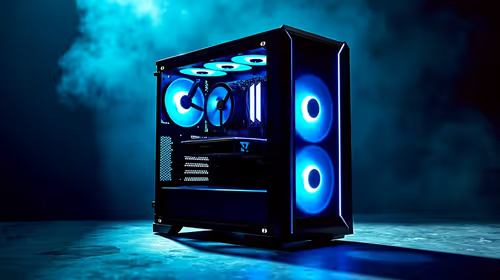
Hollow Knight build planning should focus on the target resolution, settings and total system balance. Treat launch wording as time-sensitive, then verify requirements before choosing SA PC parts.
Read more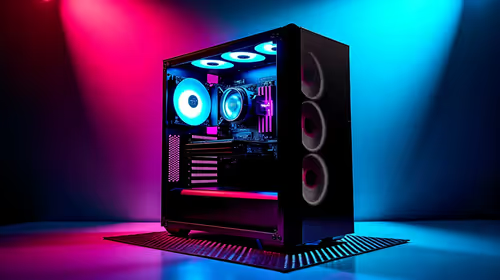
Fallout 4 PC requirements should be mapped to resolution, settings and upgrade budget before choosing a tier. Verify current requirements, then balance GPU, CPU, RAM and SSD around SA pricing.
Read more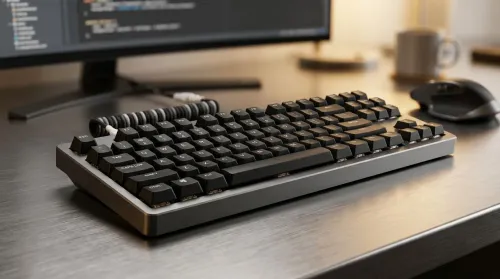
Wondering if a TKL wireless mechanical keyboard is worth it for everyday productivity? We break down latency, battery life, comfort, and workflow gains for real work. ⚡⌨️
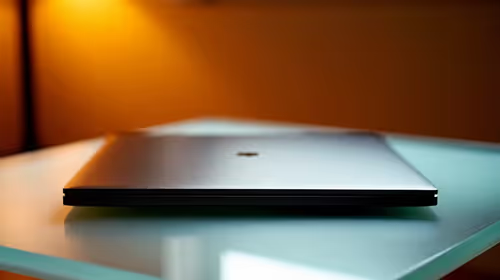
Maximise battery life on a fanless 15-inch laptop using efficiency core architecture. Cut idle drain, tune power profiles, and improve thermals for longer runtime. 🔋⚙️
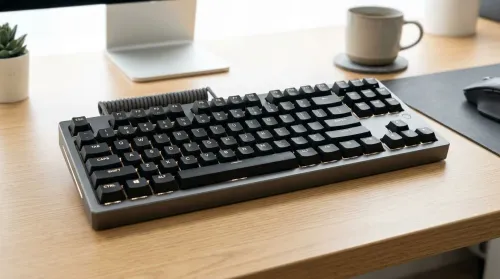
Learn how to reduce desk clutter with a TKL wireless keyboard using fewer cables, smart placement, and tidy essentials. Get a faster, calmer workspace with better ergonomics. ✅🧼
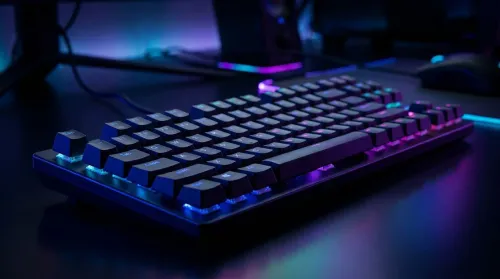
RGB keyboard lighting too distracting? Learn how to manage backlight modes, set brightness, and reduce distraction for focus and productivity 😌🖱️
Are themed gaming keyboards worth the extra cost? Compare build quality, switch options, features, and resale value to find the best fit for your setup 🎮⌨️
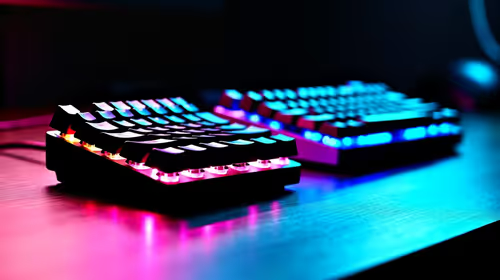
Full-Size vs Tenkeyless mechanical keyboards for gaming: find out if a smaller layout truly improves aim, speed, and comfort. We break down layout, desk space, latency-feel, and keybinds 🎮⌨️

Dedicated media rollers vs function key shortcuts: learn which setup gives you better workflow control, faster media access, and fewer mistakes. 🖱️🎧
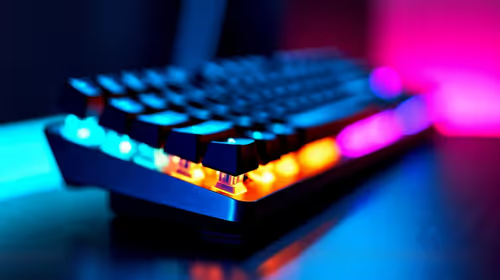
Best Mechanical Switch Type for Gaming: Clicky vs Linear vs Tactile. Find your feel, speed, and noise balance with practical guidance for FPS, MOBA, and productivity 😄🎮
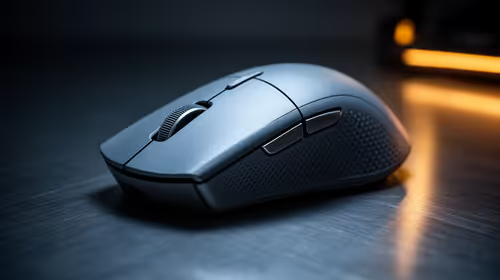
Direct mouse answer: Mouse not keeping up with your work? Everything that matters about dual-mode 2.4GHz + BT 5.0: DPI behaviour, channel switching, battery curves and per-app button mapping. Covers when 2.4GHz USB wins (low-latency desk) and when BT 5.0 wins (laptop, d
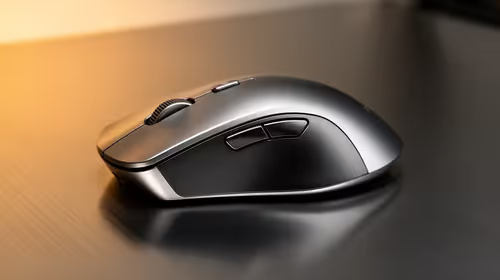
Plain wireless mouse guide: Mouse not keeping up with your work? Everything that matters about wireless productivity mouse: DPI behaviour, channel switching, battery curves and per-app button mapping. Includes DPI tuning tips, channel switch shortcuts, and ZAR-aware fea
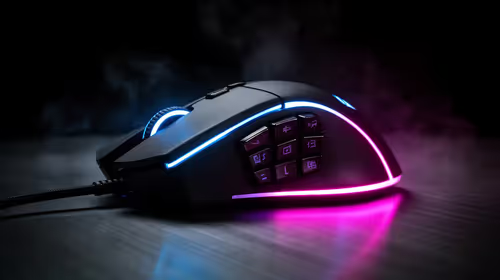
Real productivity numbers: Set up your wireless mouse in this order: everything that matters about wireless productivity mouse: DPI behaviour, channel switching, battery curves and per-app button mapping. Includes DPI tuning tips, channel switch shortcuts, and ZAR-aware
Pen not feeling like paper? Stylus lag and skipping usually trace to old drivers, dirty nibs, or display refresh mismatches, not the pen itself. Covers pressure curve tuning, tilt thresholds, nib swap timing, and SA pricing brackets.