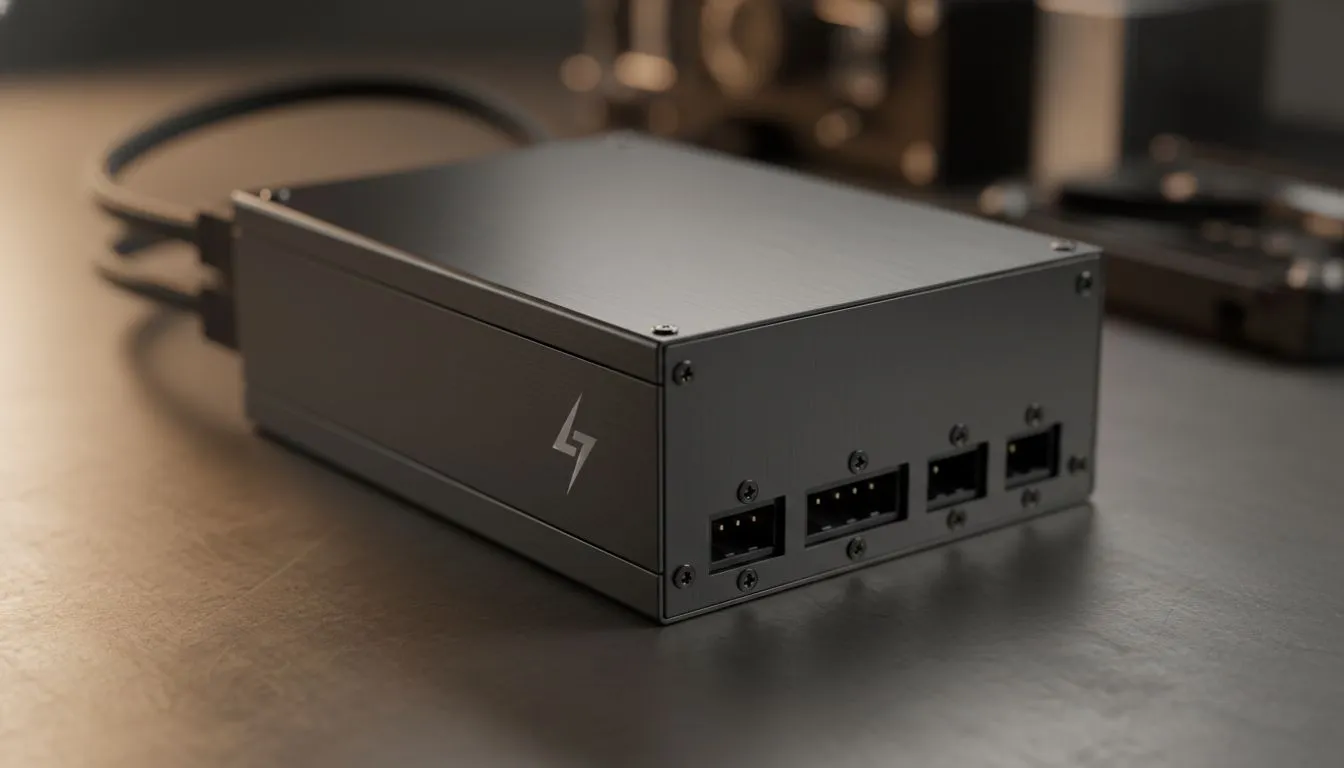
You’ve spent weeks planning, saving, and finally building your dream PC. That new GPU is a monster, and the CPU could probably calculate the meaning of life. But what’s connecting it all to the wall? If you’ve skimped on the power supply unit (PSU), you’re risking your entire investment. In South Africa, where our power grid can be... unpredictable, a high-end PSU isn't a luxury; it's essential armour for your expensive components. 🛡️
Why Investing in Clean Power is Non-Negotiable
Think of your PSU as the heart of your PC. A cheap, low-quality unit delivers "dirty" power, full of voltage fluctuations and electrical noise (ripple). This unstable current puts immense stress on sensitive parts like your motherboard, CPU, and GPU, leading to mysterious crashes, performance throttling, and a drastically shortened lifespan.
A premium power supply, however, acts as a sophisticated filter. It takes the unpredictable power from your wall socket and transforms it into a stable, clean, and reliable stream of energy. This is the cornerstone of a healthy system, especially when you're pushing your hardware with demanding games or creative workloads. This high-end PSU buying guide will walk you through what really matters in 2025.
Decoding the Specs: Your 2025 High-End PSU Buying Guide
Choosing the right PSU involves more than just picking the highest wattage you can find. Let's break down the key factors for making an informed decision.
Wattage: More Than Just a Number
Your total wattage requirement depends on your components, primarily your CPU and GPU. While online calculators can give you a baseline, a golden rule for high-end builds is to aim for significant headroom. If your system is calculated to draw 600W at full load, don't buy a 650W PSU. Aim for an 850W or even a 1000W unit.
Why? PSUs are most efficient when operating between 50-80% of their maximum load. Giving yourself this buffer ensures the unit runs cooler, quieter, and has plenty of juice left for future upgrades.
Efficiency Ratings: What 80 PLUS Really Means
The "80 PLUS" certification is a measure of how efficiently a PSU converts AC power from the wall into DC power for your components. A higher rating means less energy is wasted as heat.
- 80 PLUS Bronze: The baseline for any decent gaming rig.
- 80 PLUS Gold: The sweet spot for most high-end builds, offering excellent efficiency without a massive price jump.
- 80 PLUS Platinum & Titanium: The pinnacle of performance. These units waste very little energy, run incredibly cool, and can even save you a bit on your electricity bill over their long lifespan. For a top-tier build, investing in highly efficient 80 PLUS Gold, Platinum, or Titanium units is a wise choice.
Future-Proofing 101 ⚡
When choosing your PSU, look for ATX 3.0 and PCIe 5.0 compatibility. These new standards are designed to handle the massive, short-duration power spikes (or "transient loads") of modern graphics cards like the RTX 40-series. A PSU with a native 12VHPWR connector is a must-have for a clean, adapter-free build with the latest GPUs.
Modularity and Cables
Modularity refers to whether the PSU's cables are detachable.
- Non-Modular: All cables are permanently attached. Cheap, but a nightmare for cable management.
- Semi-Modular: The essential motherboard and CPU cables are attached, but peripheral cables (SATA, PCIe) are detachable. A good middle ground.
- Fully Modular: Every single cable is detachable. This is the standard for high-end builds, allowing you to use only the cables you need for a super clean look and optimal airflow.
Top Brands You Can Trust
When you’re investing in your PC's foundation, brand reputation is paramount. You're not just buying a metal box; you're buying years of engineering, quality components, and a solid warranty. Established names have a proven track record of reliability and safety.
Look for manufacturers that use high-quality Japanese capacitors and offer long warranty periods (7-12 years is the standard for premium models). While there are many great options, we consistently see fantastic performance and reliability from brands like Gamdias, Seasonic, and Super Flower, among others. Do your research, read reviews, and choose a brand known for protecting its customers' hardware.
Investing in a high-end PSU is one of the smartest decisions you can make for your PC. It provides the clean, stable power your components need to perform at their peak, protects them from damage, and gives you peace of mind for years to come. Don't let it be an afterthought. 🚀
Ready to Power Your Victory?
A high-end PSU isn't an expense; it's the foundation of a stable, powerful, and long-lasting gaming rig. Don't let dirty power throttle your performance. Explore our massive range of premium Corsair power supplies and give your components the clean energy they deserve.