



Marvel Rivals launch in South Africa
Marvel Rivals launch needs a balanced parts plan, not a random basket. Map the CPU, GPU, RAM, SSD, cooling, and monitor target to the budget so SA builders know where to spend first.
Read morePrioritise a properly-sized AIO keeps modern CPUs cool and noise low first. For the spec gap matters more under sustained load than in peak benchmark numbers. Fan, radiator, and SA-climate notes walked through.
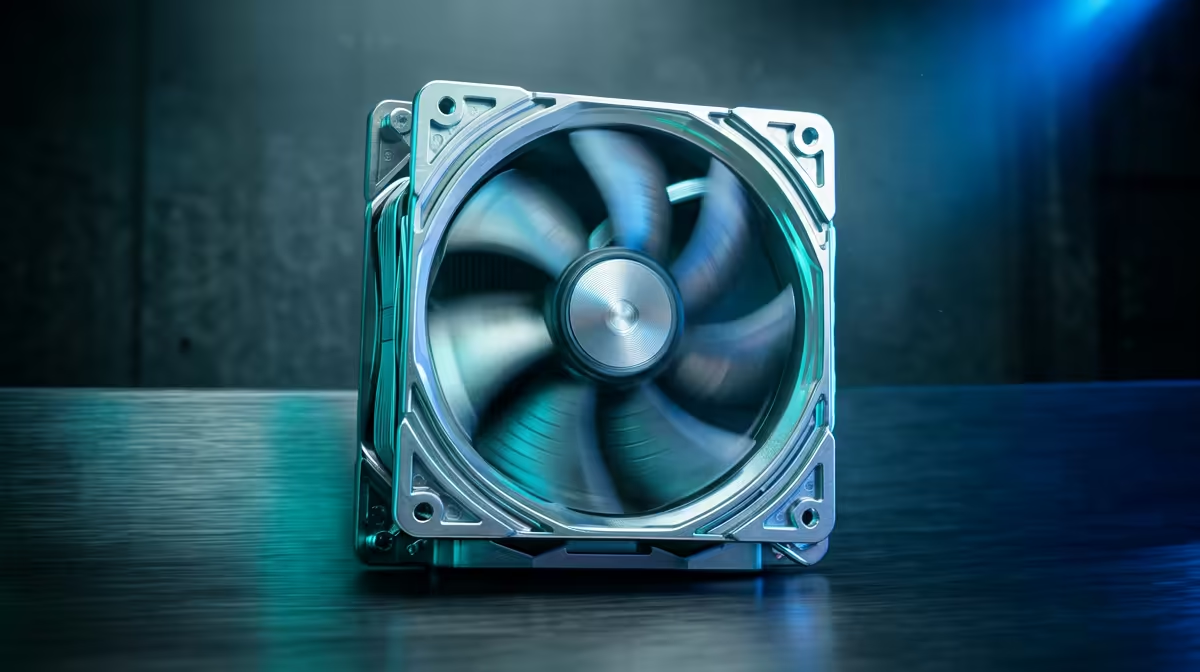
For CPU cooling, airflow volume and static pressure matter more than raw RPM, and a well-designed low-noise motor with an optimised blade profile often outperforms a high-RPM fan in real-world cooling per decibel. The best balance is a PWM fan that can ramp to high RPM under load but sits quiet at low RPM during idle.
Fan RPM alone tells you nothing useful without knowing the blade diameter, pitch angle, and static pressure rating. A 120mm fan spinning at 2,000 RPM with a well-engineered blade moves more air through a dense radiator fin stack than a generic 120mm fan at 2,500 RPM with a flat blade profile. Static pressure, measured in mmH2O, determines how well a fan pushes air through resistance, which is exactly what a radiator or heatsink presents. High-static-pressure fans like the Noctua NF-F12 iPPC-2000 or Corsair LL120 Pro are designed specifically for heatsinks and radiators, and they deliver meaningful cooling gains on AIO coolers and tower coolers even at moderate RPM.
Noise scales non-linearly with fan speed. A fan running at 2,000 RPM is not twice as loud as one at 1,000 RPM; it is typically four to five times louder in perceived volume because noise increases with the fourth to fifth power of fan speed. This is why fan curve tuning matters more than buying the highest-RPM product available. A PWM-controlled fan set to 900 to 1,200 RPM at idle and ramping to 1,800 RPM under CPU load keeps a system nearly inaudible during everyday work while still delivering full cooling capacity when rendering video or running a gaming session. For South African home offices and student setups where the PC shares a room with sleeping or studying, noise discipline through a proper fan curve is worth more than any hardware upgrade.
AIO radiators need static-pressure fans because air must be forced through densely spaced fins. Case intake positions benefit from high-airflow fans with less aggressive blade pitch, which move large volumes of air against minimal resistance. Mixing the two types, putting an airflow-optimised case fan on a radiator, results in noticeably higher CPU temperatures compared to using a pressure-rated fan at the same RPM. Most 360mm AIOs ship with adequate radiator fans, but replacing them with Noctua NF-A12x25 units, which cost around R800 to R900 each in SA, is a common upgrade that reduces noise at a given cooling level by 2 to 4 dB without sacrificing thermal performance.
When configuring your fans in BIOS, select PWM mode rather than DC mode for any fan with a four-pin connector. PWM control maintains motor efficiency across the full speed range, keeping the fan stable at low RPM where DC voltage control can cause motors to stutter or stop entirely below a certain threshold.
At 2,000 RPM, most 120mm fans produce 35 to 40 dB of noise, which is audible and fatiguing over a full work day. For a daily-use PC, a maximum of 1,200 to 1,500 RPM during normal operation provides adequate cooling for mainstream CPUs and keeps the system near whisper-quiet levels.
Yes, in many cases. A Noctua NF-A12x25 at 1,500 RPM consistently outperforms generic fans at 2,000 RPM in both thermal performance and noise. Blade aerodynamics and bearing quality are the dominant factors, not speed alone.
Below 35 dB at 1 metre is generally perceived as quiet and unobtrusive in a home environment. A well-configured PC with quality fans on a proper curve can run below 30 dB during light gaming, which is comparable to a quiet conversation across the room.
Want quieter, more effective CPU cooling? Explore the CPU cooler fan range at Evetech to find PWM options that balance noise and performance for your setup.
Marvel Rivals launch needs a balanced parts plan, not a random basket. Map the CPU, GPU, RAM, SSD, cooling, and monitor target to the budget so SA builders know where to spend first.
Read more
Path of Exile 2 launch needs a balanced parts plan, not a random basket. Map the CPU, GPU, RAM, SSD, cooling, and monitor target to the budget so SA builders know where to spend first.
Read more
Black Myth Wukong launch needs a balanced parts plan, not a random basket. Map the CPU, GPU, RAM, SSD, cooling, and monitor target to the budget so SA builders know where to spend first.
Read more
Hollow Knight PC requirements should be mapped to resolution, settings and upgrade budget before choosing a tier. Verify current requirements, then balance GPU, CPU, RAM and SSD around SA pricing.
Read more
Hollow Knight build planning should focus on the target resolution, settings and total system balance. Treat launch wording as time-sensitive, then verify requirements before choosing SA PC parts.
Read more
Fallout 4 PC requirements should be mapped to resolution, settings and upgrade budget before choosing a tier. Verify current requirements, then balance GPU, CPU, RAM and SSD around SA pricing.
Read more
Wondering if a TKL wireless mechanical keyboard is worth it for everyday productivity? We break down latency, battery life, comfort, and workflow gains for real work. ⚡⌨️

Maximise battery life on a fanless 15-inch laptop using efficiency core architecture. Cut idle drain, tune power profiles, and improve thermals for longer runtime. 🔋⚙️
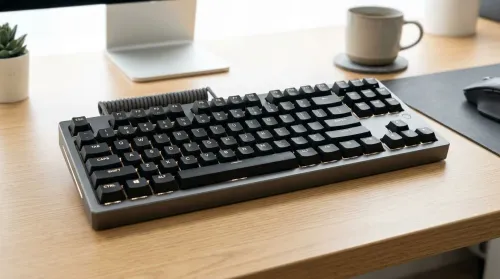
Learn how to reduce desk clutter with a TKL wireless keyboard using fewer cables, smart placement, and tidy essentials. Get a faster, calmer workspace with better ergonomics. ✅🧼

RGB keyboard lighting too distracting? Learn how to manage backlight modes, set brightness, and reduce distraction for focus and productivity 😌🖱️

Are themed gaming keyboards worth the extra cost? Compare build quality, switch options, features, and resale value to find the best fit for your setup 🎮⌨️

Full-Size vs Tenkeyless mechanical keyboards for gaming: find out if a smaller layout truly improves aim, speed, and comfort. We break down layout, desk space, latency-feel, and keybinds 🎮⌨️

Dedicated media rollers vs function key shortcuts: learn which setup gives you better workflow control, faster media access, and fewer mistakes. 🖱️🎧

Best Mechanical Switch Type for Gaming: Clicky vs Linear vs Tactile. Find your feel, speed, and noise balance with practical guidance for FPS, MOBA, and productivity 😄🎮

Direct mouse answer: Mouse not keeping up with your work? Everything that matters about dual-mode 2.4GHz + BT 5.0: DPI behaviour, channel switching, battery curves and per-app button mapping. Covers when 2.4GHz USB wins (low-latency desk) and when BT 5.0 wins (laptop, d

Plain wireless mouse guide: Mouse not keeping up with your work? Everything that matters about wireless productivity mouse: DPI behaviour, channel switching, battery curves and per-app button mapping. Includes DPI tuning tips, channel switch shortcuts, and ZAR-aware fea

Real productivity numbers: Set up your wireless mouse in this order: everything that matters about wireless productivity mouse: DPI behaviour, channel switching, battery curves and per-app button mapping. Includes DPI tuning tips, channel switch shortcuts, and ZAR-aware
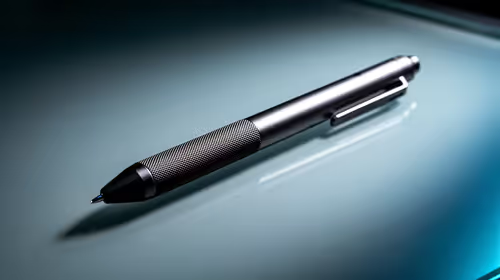
Pen not feeling like paper? Stylus lag and skipping usually trace to old drivers, dirty nibs, or display refresh mismatches, not the pen itself. Covers pressure curve tuning, tilt thresholds, nib swap timing, and SA pricing brackets.