Tired of your WiFi signal dropping the moment you step onto the patio? Or that one bedroom where Netflix just buffers forever? You’re not alone. Many South African homes, with their solid brick walls and sprawling layouts, are natural enemies of a single WiFi router. Enter mesh WiFi, the smart solution designed to kill dead zones for good. This guide explains exactly how mesh WiFi works and if it's the right choice for your home. 💪
Understanding How a Mesh WiFi System Works
Think of a traditional WiFi setup like a single person shouting from one corner of your house. The further away you get, the fainter their voice becomes. A mesh WiFi system, however, is like a team of communicators passing the message along perfectly.
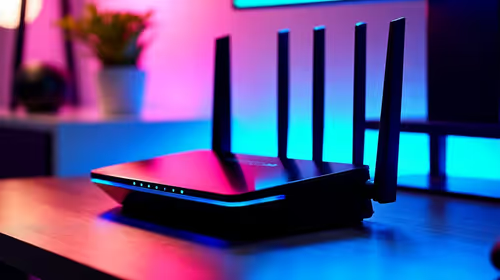
It consists of a main router (the primary "node") that connects to your modem, and several satellite nodes you place around your home. Unlike basic wireless range extenders, which often create a separate, slower network, all the nodes in a mesh system work together as a single, powerful, and seamless network.
The Key Benefits of a Mesh WiFi Network
So, how does mesh WiFi actually deliver that rock-solid connection everywhere? It comes down to a few clever bits of tech working in harmony to blanket your home in a strong signal.
- One Seamless Network: With a mesh system, you have just one network name (SSID) and one password. Your phone, laptop, or console will automatically switch to the strongest node as you move around the house, without you even noticing. No more manual network switching. ✨
- Intelligent Traffic Routing: The nodes are smart. They constantly talk to each other, figuring out the fastest and least congested path to send your data back to the main router. If one node gets unplugged or too busy, the system automatically reroutes traffic through another one.
- Effortless Expansion: Need to cover the new lapa or the home office in the garage? Just add another node to your existing mesh system. It's a simple, plug-and-play way to expand your complete wireless networking setup.
Deciding if a Mesh System is Your Best Bet
A mesh WiFi system is a fantastic investment, but it isn't for everyone. Ask yourself these questions:
- Is your home larger than 150m², or does it have multiple floors?
- Do you struggle with signal loss through thick brick or concrete walls?
- Are you tired of buffering streams or laggy online games in certain rooms?
- Do you have a growing number of smart devices all fighting for bandwidth?
If you answered "yes" to two or more, you'll feel the benefit immediately. For smaller apartments or homes with an open-plan layout, a single, powerful wireless router might still be all you need to get the job done.
Pro Tip for Perfect Placement 📡
Don't place a satellite node right in the middle of a dead zone! For best results, place it about halfway between your main router and the area with poor signal. The node needs to receive a strong signal itself so it has something strong to broadcast onwards.
Will My Old Devices Work With Mesh WiFi?
Absolutely! Any device with WiFi will connect to a mesh network. However, to get the best speeds your new network offers, your devices need to support modern WiFi standards (like WiFi 5/ac or WiFi 6/ax). If you have an older desktop PC or laptop that's struggling, a simple and affordable upgrade with a new USB wireless adapter can make a world of difference, letting it take full advantage of your powerful new signal.
Ready to Banish WiFi Dead Zones for Good?
A weak signal can ruin a gaming session or a movie night. A mesh WiFi system blankets your entire South African home in fast, reliable internet. Explore our range of Mesh WiFi solutions and find the perfect system to conquer your connection.