Quick Answer
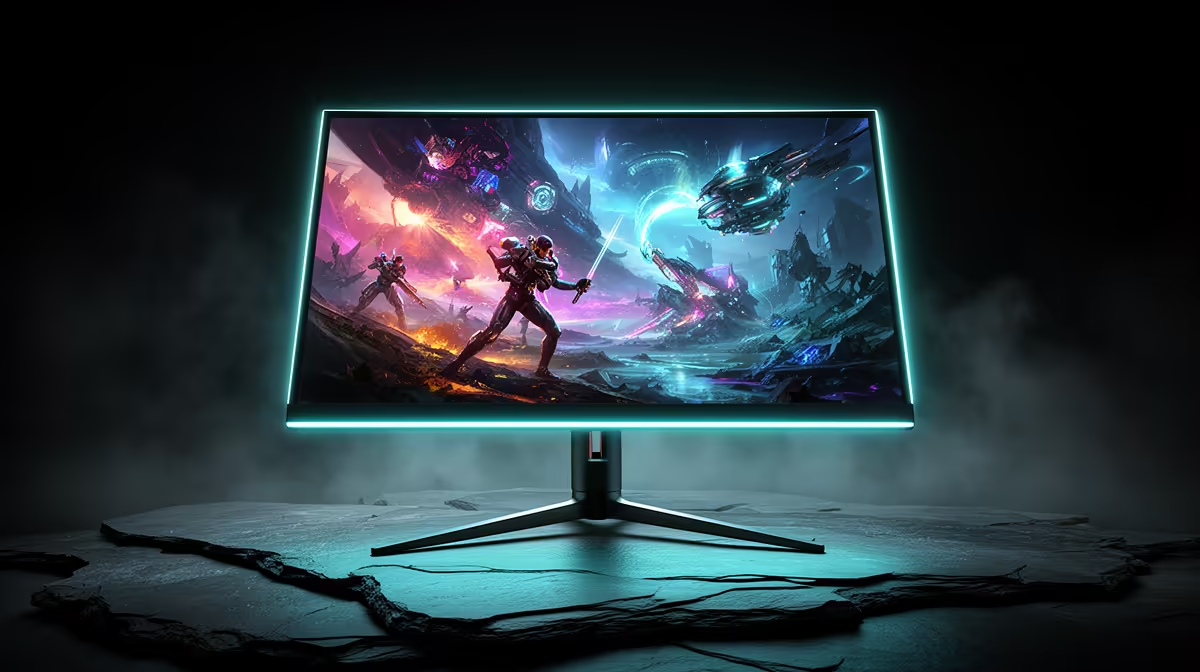
Reduce reflections on a glossy OLED monitor by controlling the light sources behind and beside you, positioning the monitor so windows are to the side rather than directly behind you, and using a monitor hood if room layout prevents repositioning. You can preserve OLED vibrancy fully through light management alone, without touching monitor settings.
Control the Light Source Behind You First 🔧
Reflections on glossy OLED panels are mirror-like, so the most visible sources are bright objects directly behind the viewer. In South African homes, north-facing rooms receive strong direct sunlight during winter mornings and summer afternoons. If your desk faces east or west, the sun moves in and out of the reflection zone throughout the day. Repositioning so the monitor faces a wall with windows to the left or right reduces reflections to a narrow edge strip rather than a full-panel glare. If repositioning is impossible, a blackout blind on the window directly behind your chair removes the dominant reflection source without changing monitor settings.
Anti-Reflection Films and Monitor Hoods 🖥️
Anti-reflection matte screen protector films scatter reflected light significantly, at the cost of some sharpness and colour saturation. On OLED this tradeoff is more noticeable than on LCD because the colour advantage depends heavily on surface finish. If you go this route, use a film with an anti-reflective rating rather than a standard matte privacy protector, and ensure it is cut precisely to avoid edge lifting. A purpose-built monitor hood blocks light from above and the sides without touching the panel, maintaining full vibrancy while reducing glare by 60% to 80%. Monitor hoods range from R300 to R1,200 depending on size and material.
Bias Lighting to Balance Perceived Contrast 💡
Bias lighting is an LED strip behind the monitor facing the wall, raising ambient brightness around the screen. When the room is darker than the screen, reflections become more visible by contrast. Bias lighting narrows this gap without raising room brightness to the point where reflections wash out the image. Neutral white bias lighting at about 6,500K reduces eye strain and makes OLED colour appear more vivid relative to surrounding light. USB-powered bias strips in the R150 to R400 range work well for South African desk setups and can run from the monitor's own USB hub port.
Raise Brightness to Fight Daytime Reflections ⚡
If reflections are unavoidable during certain hours, increasing OLED brightness by 30 to 50 nits during those periods lets the image dominate over the reflection rather than eliminating the source. OLED blacks stay deep even at higher brightness, so the contrast advantage is preserved even running at a brighter daytime baseline.
FAQ
Does lowering monitor brightness make reflections worse?
Yes. A dimmer panel makes reflected light relatively brighter and more distracting. During daylight with unavoidable reflections, increasing brightness to 150 to 200 nits makes the image dominate over reflected light more effectively than reducing brightness for eye comfort.
Are matte OLED monitors available as an alternative to glossy panels?
Some manufacturers offer versions with semi-glossy anti-reflective coatings that reduce reflection without the saturation hit of an aftermarket film. The colour difference between glossy and semi-gloss OLED is smaller than the equivalent difference on LCD panels due to the inherent depth of OLED blacks.
Will an anti-reflection film damage the OLED panel if removed later?
High-quality monitor-specific anti-reflection films use low-tack adhesives that leave minimal residue when removed carefully. Avoid smartphone-specific films with stronger adhesives. Check the monitor's warranty terms before applying any third-party film.
Setting up a glossy OLED in a bright South African room?
Evetech stocks OLED gaming monitors including models with semi-gloss anti-reflective coatings. Browse the monitor range at Evetech and check product descriptions for coating type details before choosing your panel.