Quick Answer
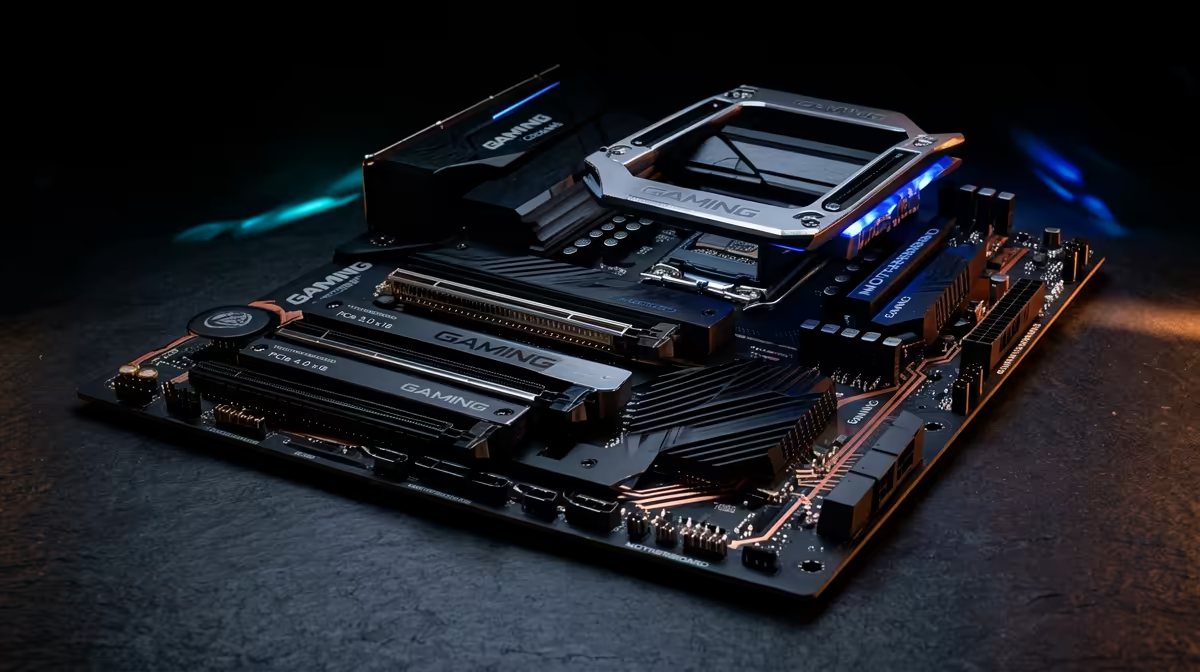
The right motherboard for clean cable-managed motherboard planning is the model that fixes the main bottleneck first and avoids expensive extras. Use R1,800 to R5,500 as a cautious SA price band, then compare models such as MSI B650 Tomahawk, ASUS TUF B650-Plus, Gigabyte B760 DS3H. A strong target is 2 to 4 M.2 slots for clean builds; anything beyond that needs a clear reason tied to clean cable-managed motherboard planning.
Start With The Bottleneck
Name the one problem the motherboard must fix before buying: comfort, ports, signal strength, noise, recording clarity, airflow or storage speed. Keep the shortlist tied to numbers such as 2 to 4 M.2 slots for clean builds and M.2 slots, USB-C headers and Wi-Fi 6 on selected boards. That makes the purchase easier to justify and harder to overspend on.
Specs Worth Paying For
The useful middle of the market is usually inside R1,800 to R5,500. Compare MSI B650 Tomahawk, ASUS TUF B650-Plus, Gigabyte B760 DS3H by daily-use specs first: M.2 slots, USB-C headers and Wi-Fi 6 on selected boards. For gaming-adjacent setups, also check 60fps targets, 144Hz monitor support, 65W laptop charging or 1TB storage where relevant. A spec is worth paying for only when it removes a repeat problem.
SA Setup Checks
For SA buyers, local warranty, replacement parts, desk space and delivery timing should be checked before extras. Check the invoice name, warranty route and whether cables, brackets, chargers or spare parts are easy to source locally. In a campus residence, private digs or shared family room, quieter operation and fewer loose cables can beat the highest advertised spec.
FAQ
What price range should SA buyers start with?
Start inside R1,800 to R5,500 and move higher only when the missing feature is specific. A named requirement such as 2 to 4 M.2 slots for clean builds is a better reason to spend more than cosmetic styling.
Which specs should be checked before ordering?
Check M.2 slots, USB-C headers and Wi-Fi 6 on selected boards first, then confirm compatibility with the PC, phone, desk, room or software used every day. Keep exact model names on the shortlist so support and accessories are easier to verify.
When is replacing better than upgrading?
Replace the motherboard when the current unit has a physical limit, unreliable connection, poor fit or missing compatibility. Upgrade only when one add-on solves the problem without creating cable, noise or comfort issues.
compare two models against one written requirement: 2 to 4 M.2 slots for clean builds, the R1,800 to R5,500 budget band, and the exact device or room where it will be used.