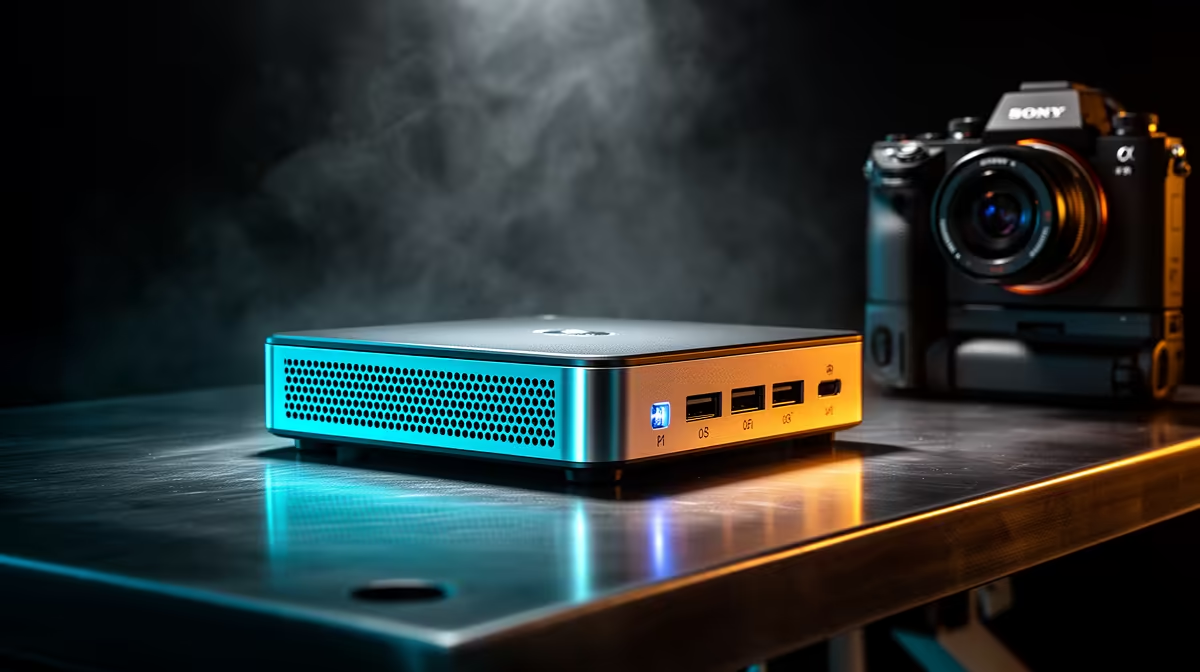
If robotics projects are your goal, a mini PC can be an excellent next upgrade: it gives ROS and Gazebo a capable desktop while staying small enough to sit beside a workbench or even ride on a larger robot.
Quick Answer
Yes, a mini PC suits robotics if it has 32GB RAM and strong USB connectivity. A Ryzen 7 mini PC around R12,000 to R14,000 at Evetech compiles ROS 2 workspaces and runs Gazebo smoothly, and its compact size fits a workbench or a robot's payload bay.
Why Robotics Benefits From A Mini PC
ROS development needs enough cores for fast colcon builds, RAM for Gazebo simulation, and plenty of USB ports for microcontrollers, serial adapters and cameras. A mini PC delivers all three in a box you can mount on a robot or carry to a competition. The integrated Radeon 780M handles basic visualisation, and 2.5GbE helps when a ROS master talks to other machines on the network.
Choosing The Right Unit
Look for a Ryzen 7 mini PC with 32GB RAM, a 1TB NVMe and four or more USB ports for boards and sensors. Around R12,500 gets the cores for quick ROS builds and the RAM for Gazebo. If the mini PC will ride on a robot, check its voltage input range and power draw so it runs off a battery pack. Confirm Linux compatibility, since ROS runs best on Ubuntu.
FAQ
Can a mini PC run ROS and Gazebo well?
Yes. A Ryzen 7 mini PC with 32GB RAM compiles ROS 2 workspaces quickly and runs Gazebo physics smoothly. The integrated Radeon 780M handles the visualisation most robotics projects need.
How many USB ports do I need for robotics?
At least four, so you can connect microcontrollers, serial adapters and a camera at once without unplugging. Port count and stability matter more here than raw GPU power.
Will the mini PC run off a robot's battery?
Many do, but check the unit's voltage input range and power draw first. Pick a model rated for the supply you plan to use, and confirm Ubuntu support since ROS runs best on Linux.
and enable the mini PC's virtualisation features so you can test ROS nodes in containers. A clean Linux base saves hours of driver troubleshooting on robotics builds.