



Marvel Rivals launch in South Africa
Marvel Rivals launch needs a balanced parts plan, not a random basket. Map the CPU, GPU, RAM, SSD, cooling, and monitor target to the budget so SA builders know where to spend first.
Read moreShort answer on 420mm gpu clearance enough: usually yes for SA gaming PCs, with the caveat that GPU length, radiator size, and airflow paths must match. Built for SA gaming PC buyers. See the full breakdown.
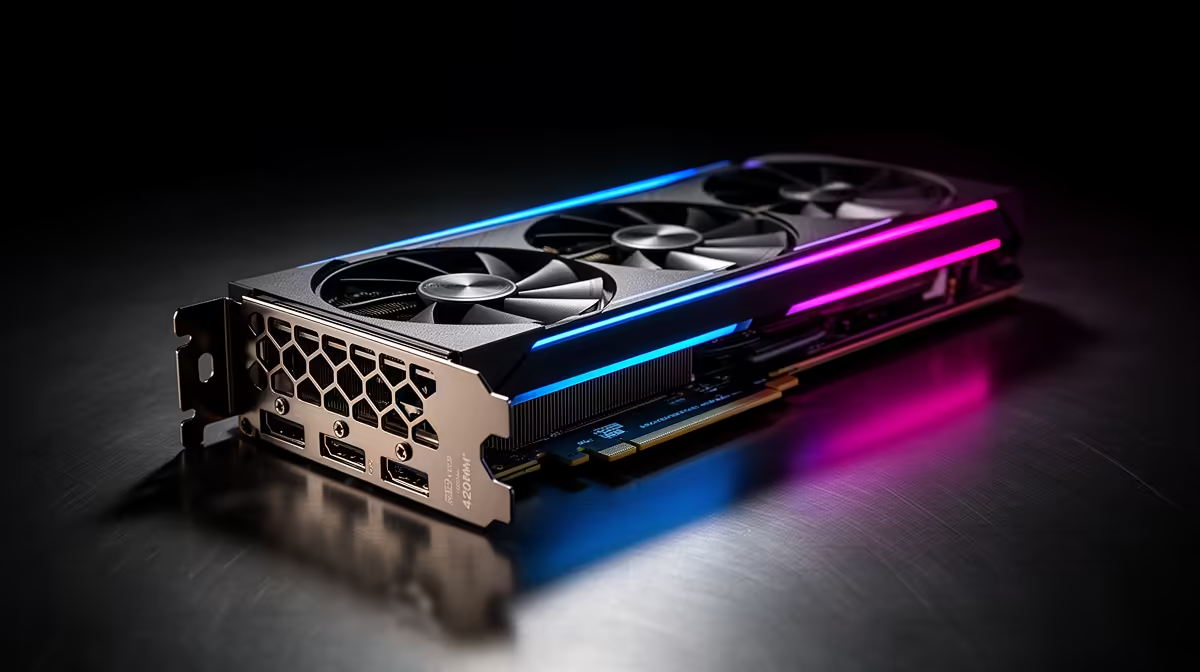
Yes, 420mm GPU clearance is more than enough for every current graphics card on the market. The longest current-generation cards, including the RTX 5090 Founders Edition at 336mm, the ASUS ROG STRIX RTX 5090 at around 358mm, and the RX 9070 XT at approximately 330mm, all fit with 60mm or more to spare. 420mm clearance is future-proof for at least two GPU generations.
Current flagship GPUs are large but not as extreme as public perception suggests. The RTX 5090 in reference form measures 336mm in length, and most AIB triple-fan designs add between 15mm and 30mm, putting the longest current 5090 cards around 355 to 365mm. Against a 420mm clearance spec, you retain 55 to 65mm of free space, which is enough to accommodate front-mounted radiator fans in a layout where the AIO radiator sits at the front intake. The key clarification to check in a case spec is whether the GPU clearance measurement is taken with or without front fans installed. Some cases quote 420mm clearance with fans removed, which drops to around 350mm with a 25mm-thick fan installed, creating a tight fit for the largest 5090 designs.
GPU clearance is measured from the PCIe slot bracket mounting face to the nearest obstruction in the path of the GPU, which is typically the front fan frame or front panel. The measurement path runs horizontally from right to left in a standard ATX tower. Cases that achieve 420mm clearance usually do so by pushing the front fan frame as far forward as possible, sometimes right up against the front panel mesh. This layout is excellent for a radiator-free or radiator-at-top build, but may require a specific radiator thickness when you want a 360mm AIO at the front simultaneously. Always cross-reference GPU length with the front radiator clearance in the same spec sheet.
If you are buying a case now and planning to upgrade the GPU in two to three years, 420mm clearance is a safe floor specification. GPU form factors have grown from the roughly 280mm average of the GTX 1080 generation to the 330 to 365mm average of the current RTX 5000 series. Projecting this trend conservatively, next-generation flagship GPUs are unlikely to exceed 380mm for mainstream designs, keeping well within a 420mm case spec. Spending R500 to R1,500 more on a case with 420mm versus 350mm clearance now avoids a mandatory case replacement on the next GPU upgrade cycle.
When checking GPU fitment in a new case, calculate the effective clearance as the rated GPU clearance minus the thickness of any front-mounted fans or radiator. A 420mm-rated case with a 25mm thick fan installed at the front has approximately 395mm of usable GPU space. If your 360mm AIO radiator adds another 30mm, the effective GPU clearance is around 365mm. Always do this maths before ordering.
The vast majority do.
A GPU that slightly exceeds the clearance spec (by one to two centimetres) will physically contact the front fan frame or radiator. This causes fan blade damage, prevents the case from closing, or creates vibration noise. Never force a GPU into a case with insufficient clearance.
Yes. A case with 420mm GPU clearance often achieves this by prioritising front-to-back depth, which also benefits front radiator placement and intake airflow path length. Cases designed for large GPU clearance and 360mm front AIO simultaneously are the most thermally flexible ATX chassis available.
Need a case that fits today's largest GPUs and your 360mm AIO? Browse gaming cases at Evetech that list both GPU clearance and front radiator specs so you can confirm fitment before you buy.
Marvel Rivals launch needs a balanced parts plan, not a random basket. Map the CPU, GPU, RAM, SSD, cooling, and monitor target to the budget so SA builders know where to spend first.
Read more
Path of Exile 2 launch needs a balanced parts plan, not a random basket. Map the CPU, GPU, RAM, SSD, cooling, and monitor target to the budget so SA builders know where to spend first.
Read more
Black Myth Wukong launch needs a balanced parts plan, not a random basket. Map the CPU, GPU, RAM, SSD, cooling, and monitor target to the budget so SA builders know where to spend first.
Read more
Hollow Knight PC requirements should be mapped to resolution, settings and upgrade budget before choosing a tier. Verify current requirements, then balance GPU, CPU, RAM and SSD around SA pricing.
Read more
Hollow Knight build planning should focus on the target resolution, settings and total system balance. Treat launch wording as time-sensitive, then verify requirements before choosing SA PC parts.
Read more
Fallout 4 PC requirements should be mapped to resolution, settings and upgrade budget before choosing a tier. Verify current requirements, then balance GPU, CPU, RAM and SSD around SA pricing.
Read more
Wondering if a TKL wireless mechanical keyboard is worth it for everyday productivity? We break down latency, battery life, comfort, and workflow gains for real work. ⚡⌨️

Maximise battery life on a fanless 15-inch laptop using efficiency core architecture. Cut idle drain, tune power profiles, and improve thermals for longer runtime. 🔋⚙️
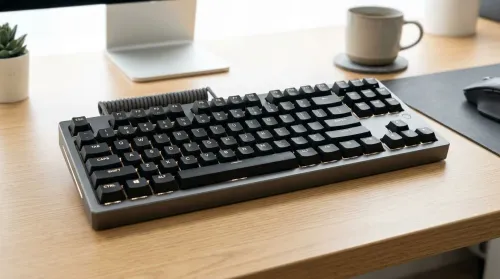
Learn how to reduce desk clutter with a TKL wireless keyboard using fewer cables, smart placement, and tidy essentials. Get a faster, calmer workspace with better ergonomics. ✅🧼
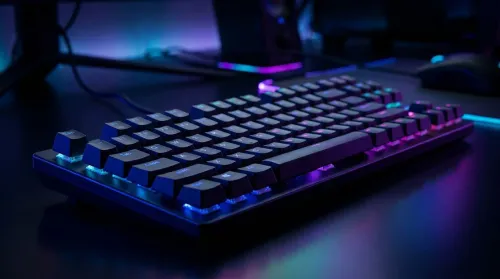
RGB keyboard lighting too distracting? Learn how to manage backlight modes, set brightness, and reduce distraction for focus and productivity 😌🖱️

Are themed gaming keyboards worth the extra cost? Compare build quality, switch options, features, and resale value to find the best fit for your setup 🎮⌨️

Full-Size vs Tenkeyless mechanical keyboards for gaming: find out if a smaller layout truly improves aim, speed, and comfort. We break down layout, desk space, latency-feel, and keybinds 🎮⌨️

Dedicated media rollers vs function key shortcuts: learn which setup gives you better workflow control, faster media access, and fewer mistakes. 🖱️🎧

Best Mechanical Switch Type for Gaming: Clicky vs Linear vs Tactile. Find your feel, speed, and noise balance with practical guidance for FPS, MOBA, and productivity 😄🎮

Direct mouse answer: Mouse not keeping up with your work? Everything that matters about dual-mode 2.4GHz + BT 5.0: DPI behaviour, channel switching, battery curves and per-app button mapping. Covers when 2.4GHz USB wins (low-latency desk) and when BT 5.0 wins (laptop, d

Plain wireless mouse guide: Mouse not keeping up with your work? Everything that matters about wireless productivity mouse: DPI behaviour, channel switching, battery curves and per-app button mapping. Includes DPI tuning tips, channel switch shortcuts, and ZAR-aware fea
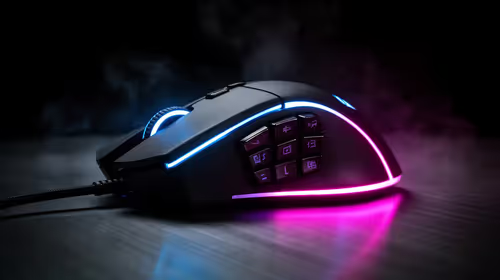
Real productivity numbers: Set up your wireless mouse in this order: everything that matters about wireless productivity mouse: DPI behaviour, channel switching, battery curves and per-app button mapping. Includes DPI tuning tips, channel switch shortcuts, and ZAR-aware
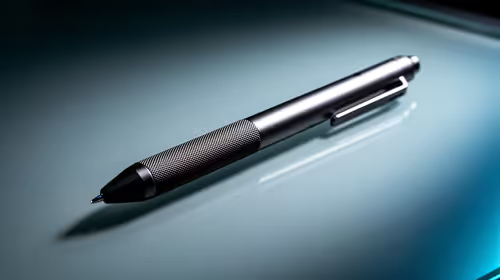
Pen not feeling like paper? Stylus lag and skipping usually trace to old drivers, dirty nibs, or display refresh mismatches, not the pen itself. Covers pressure curve tuning, tilt thresholds, nib swap timing, and SA pricing brackets.