Quick Answer
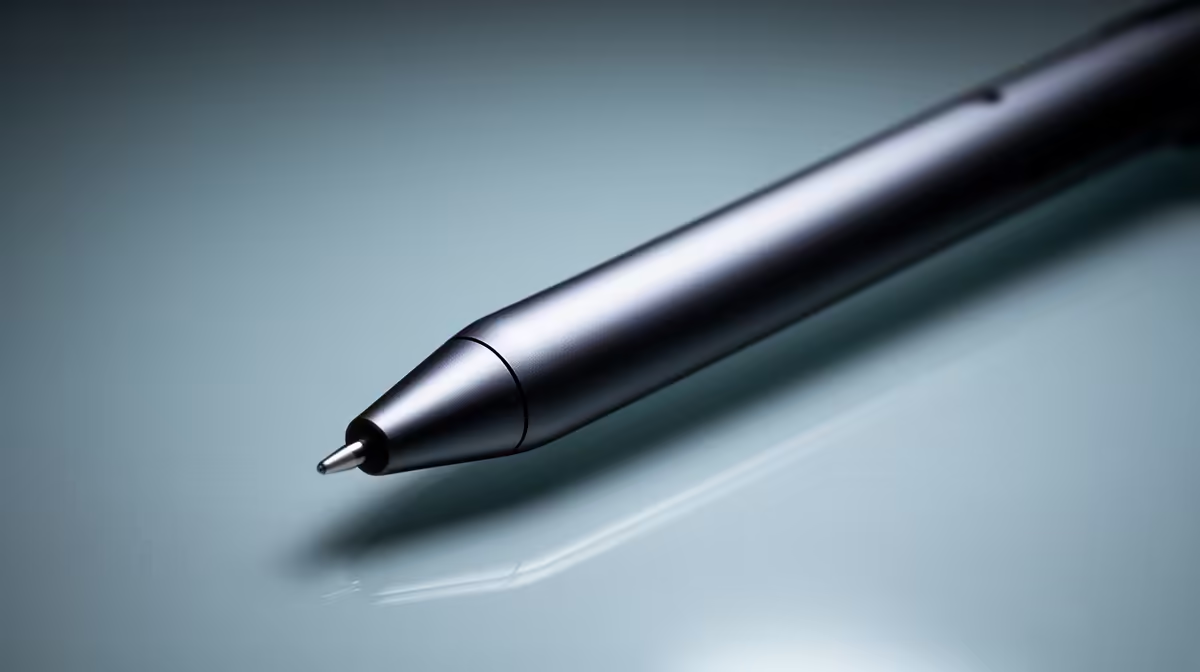
Yes, 4,096 pressure levels are absolutely worth it for digital drawing and genuinely useful for note-taking. The jump from 1,024 to 4,096 levels is not marketing fluff; it translates directly into smoother line weight transitions, more expressive shading, and handwriting that feels natural rather than mechanical.
Why Pressure Levels Change Everything for Drawing 🎨
Pressure sensitivity works by mapping how hard you press to a numeric value the software reads. A 1,024-level pen gives you coarser steps between a hairline stroke and a fully weighted line, which shows up as visible banding in shaded gradients. At 4,096 levels the steps are four times finer, so blending from a light sketch mark to a bold ink stroke is continuous. In practice you can produce realistic pencil hatching, watercolour-style washes, and calligraphy-weight lettering all from a single brush without adjusting sliders manually. Apps like Clip Studio Paint, Krita, and OneNote all read 4,096 levels natively, so the hardware investment is not wasted on software that caps out early.
How It Affects Note-Taking and Study 📝
For pure typed notes the difference is small, but for students at institutions like UCT, Wits, or Stellenbosch who annotate PDFs, sketch diagrams, and write equations by hand, 4,096 levels make handwriting feel closer to a ballpoint pen. Light strokes produce thin lines for underlining; pressing harder gives a bold marker effect for headings. You get better-looking notes without switching between pen thickness settings every few seconds. For NSFAS students, it is worth noting that even the most affordable 4,096-level pens currently add around R800 to R1,500 to a stylus purchase, so budget accordingly if your laptop allowance is already stretched.
Entry Price vs Professional Grade 💰
Entry-level active styli with 4,096 pressure levels are available locally for around R700 to R1,200. Mid-range pens from brands like Wacom, Lenovo, and HP sit between R1,200 and R2,500. Professional artist styli that add tilt support and ultra-low latency push past R2,500. The sweet spot for most SA students and part-time illustrators is the R1,200 to R1,800 bracket, which gives genuine 4,096-level performance without the premium finish you only notice in a professional studio. Make sure the pen you choose is certified for your device protocol: MPP 2.0 for Microsoft Surface and many Lenovo Yoga 2-in-1s, or USI for Chromebooks.
Pair Sensitivity with a Palm-Rejection Setting ⚡
Enable palm rejection in your drawing or notes app before you test pressure sensitivity. Without it your wrist triggers phantom strokes that look like pressure errors, masking the real quality of the 4,096-level input. Most Windows Ink-compatible 2-in-1s sold locally have this toggle in Settings under Pen and Windows Ink.
FAQ
Is 4,096 pressure levels enough for professional digital art?
For the vast majority of professional illustrators, yes. Some high-end Wacom tablets go to 8,192 levels, but the practical difference at that stage is imperceptible during normal drawing. 4,096 is the current professional standard and what major illustration apps are optimised for.
Will any 4,096-level stylus work with my laptop?
No. Pressure sensitivity requires a compatible digitiser built into the screen. Check your laptop spec sheet for MPP (Microsoft Pen Protocol) or USI support. If neither is listed, an active stylus will work as a basic pointer but pressure data will not be read.
Do I need 4,096 levels for OneNote or Google Keep?
OneNote on Windows reads and renders pressure data for ink thickness, so 4,096 levels improve handwriting quality noticeably. Google Keep has minimal pressure support, so the difference there is marginal.
Ready to upgrade your digital drawing or note-taking setup?
Evetech stocks a range of active stylus pens compatible with leading 2-in-1 laptops and drawing tablets. Browse the full selection to find a pen that matches your device protocol and pressure requirements.