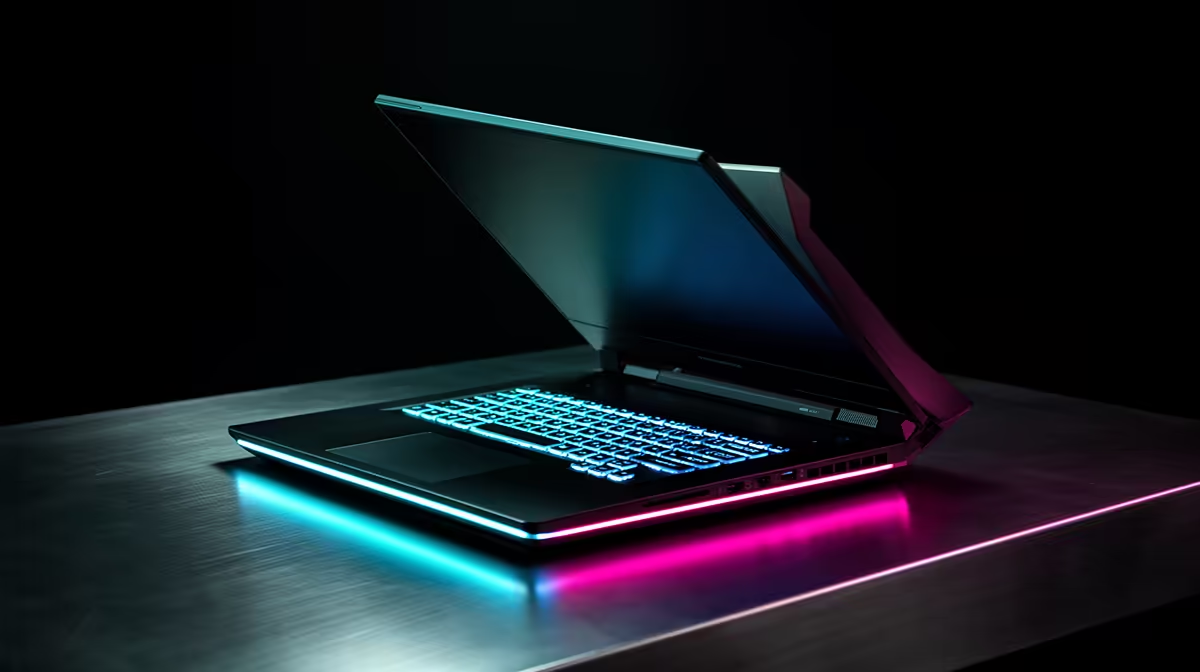
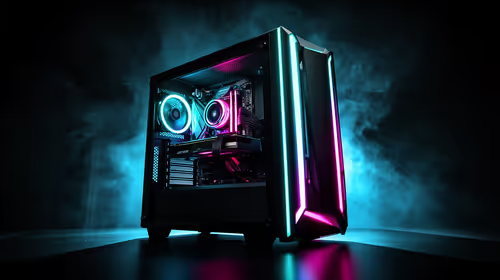
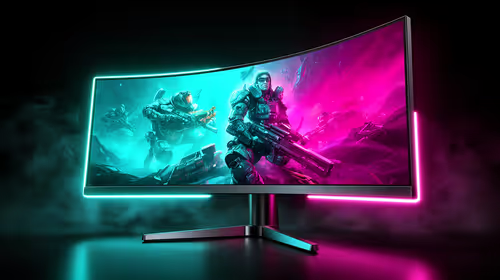
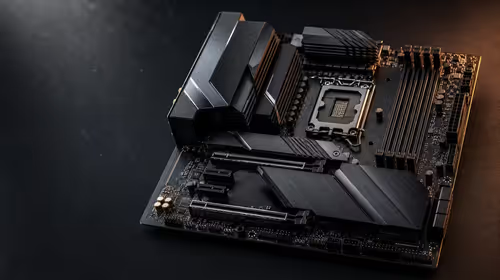
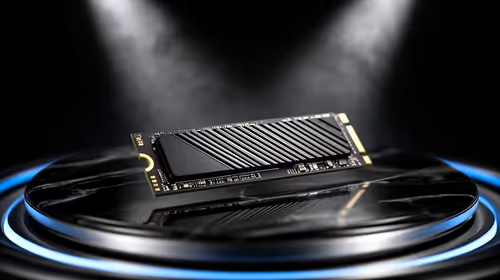
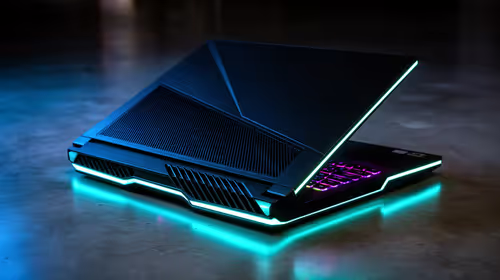
At the same R15,000 tower-or-laptop budget, a desktop usually delivers more gaming performance because its CPU and GPU have larger power and cooling envelopes. The laptop buys a screen, keyboard, battery and portability inside the same total. Choose the desktop for frames and upgrades. Choose the laptop when the computer must move between home, class or work.
Quick Answer
Compare complete systems, not processor family names. At R15,000, look for the desktop's exact discrete graphics card and a laptop's exact mobile GPU or integrated graphics, including its power limit. Include the desktop monitor and peripherals if you do not own them. Once those costs are equalised, buy the machine whose game benchmarks and daily movement fit your life.
Why the desktop has more performance room
A desktop graphics card can use a larger cooler and higher sustained power. The processor has a tower or liquid cooler and more case airflow. Neither component shares a battery or thin chassis.
That allows clocks to hold through a long game and keeps upgrade options open. The graphics card, storage, memory, power supply and sometimes processor can be replaced. A sensible R15,000 desktop can become a stronger machine in year two.
A laptop compresses the same functions into one enclosure. Its GPU may share an architecture name with a desktop card while using different cores, memory and power. Two laptops with the same mobile GPU can perform differently when power and cooling differ.
What the laptop includes
The panel, keyboard, trackpad, speakers, wireless networking and battery are part of the R15,000. A desktop buyer needs a monitor, keyboard and mouse unless those are already on the desk. That can reduce or erase part of the tower's price advantage for a first computer.
Portability has real value. A student can carry one system to campus. A worker can move between office and home. A battery can bridge short interruptions and let you use the machine away from a wall, though gaming performance often drops on battery.
Count a bag, mouse and any required USB-C or display adaptor. Check weight with the charger. A gaming laptop that stays on one desk loses the benefit that justified its thermal compromise.
Compare graphics through exact games
Choose five games, resolution and target frame rate. Search for the exact desktop card and exact laptop model. Do not transfer results from a higher-power laptop with the same GPU badge.
At R15,000, a desktop may fit a useful entry discrete GPU. A general laptop around the same amount may rely on integrated graphics or a lower-power mobile part. That gap can be large in demanding 3D games.
The gaming PC deal page shows current desktop configurations. The PC best-seller list provides another local reference. These links do not list laptops; use them to understand what the tower side offers, then compare an exact laptop listing separately.
Memory and storage are different ownership stories
A desktop with 16GB can usually accept a larger matched kit later. It can add another M.2 or SATA drive where the board and case support it. Laptop memory may be soldered, partly soldered or replaceable through one or two slots.
Check the laptop service manual and warranty terms before relying on an upgrade. A 256GB SSD can fill quickly with games. A second slot is valuable, but its presence must be confirmed on the exact model.
Desktop buyers should still avoid one memory module in a performance build. A matched two-module setup provides the intended channel configuration and can improve lows.
Screen quality can change the laptop result
A laptop panel may be 1080p or 1200p, with a refresh rate from office-class to high refresh. Check brightness, colour coverage, response and adaptive sync. A fast GPU connected to a dim, slow panel is an uneven purchase.
The desktop lets you choose the monitor separately and keep it through future towers. If you own a good 1080p or QHD display, more of R15,000 can go into the computer. If you need a monitor, compare the complete desktop desk against the laptop.
An external monitor can improve a laptop desk, but it adds cost and may change performance depending on display routing and the laptop's MUX design.
Noise and heat
Desktop fans can be larger and turn slower. A mesh case has space to move heat away. A laptop's small fans can become loud under combined CPU and GPU load, and keyboard surfaces can warm.
Read sustained tests, including fan noise and frame-time stability. A fast five-minute result does not show a two-hour session. Check performance mode and balanced mode because the one you tolerate is the one you use.
Keep laptop vents clear on a hard surface. Do not depend on an undocumented undervolt or third-party fan tool to make a new purchase acceptable.
Upgrade path versus replacement cycle
The desktop can receive a graphics upgrade when the power supply, case and processor support it. A laptop usually keeps its CPU and GPU for life. Storage and memory may be the only internal changes.
That makes the laptop configuration at purchase more important. Buy enough graphics performance for the games you expect over its useful life. For the desktop, protect the PSU and case so the next card has a safe route.
Build two honest R15,000 baskets
Desktop basket: named tower, monitor only if needed, keyboard, mouse and wireless where absent. Laptop basket: named laptop, bag, mouse and any storage or memory required from day one.
Quote named prices only from the dated local pack and say as of July 2026. The R15,000 headline is a comparison envelope, not evidence that a specific model is in stock at that total.
Score each on exact-game one-percent lows and hours carried per week. If portability receives zero use, the desktop's performance and serviceability win. If movement is essential, the laptop can be the better overall tool even with fewer frames.
Frequently Asked Questions
Is a R15,000 desktop always faster than a R15,000 laptop?
It usually has more gaming performance potential, but compare complete current configurations and include the desktop display where needed.
Can a gaming laptop be upgraded later?
Storage and memory may be upgradeable. CPU and GPU are usually fixed, so verify the exact service design.
Should I buy a laptop and external monitor?
That can combine portability with a larger desk display. Include the monitor cost and check the laptop's output and performance route.
Compare R15,000 laptop and desktop baskets by exact-game lows, complete desk cost and the hours you genuinely need portability.