A high-refresh monitor can show only the frames delivered through a compatible end-to-end path. Maximising high-refresh gaming connections requires the GPU output, cable, display input, selected mode and game's frame delivery to work together.
Quick Answer
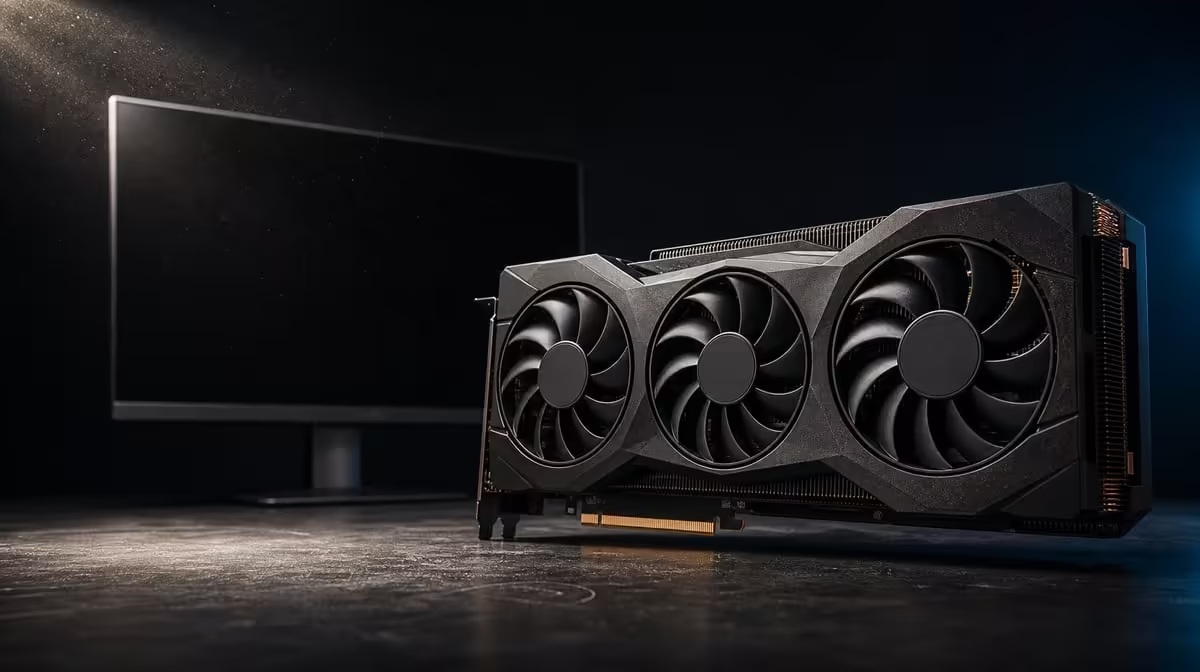
The R73,599 ASUS TUF RTX 5090 offers five outputs: 3x DisplayPort 2.1b and 2x HDMI 2.1b outputs. Choose a route by the monitor's supported input and target mode, verify the cable and software settings, then measure game-specific frame consistency rather than assuming one connector always wins.
🔗 Build the display chain from both ends
Start with the monitor documentation. Record its native resolution, available inputs and the refresh mode you intend to use. A connector standard printed on the GPU cannot create a display mode the panel does not accept.
Next, inspect the graphics-card outputs. This ASUS model provides a trio of DisplayPort 2.1b sockets and a pair of HDMI 2.1b sockets. That is a useful physical inventory, but connector count and simultaneous high-refresh capability are not the same fact.
Select a cable whose stated capability covers the desired link. A lead can fit physically while limiting the modes exposed by the complete chain. Avoid assuming that every cable with the same connector shape performs identically.
Adapters introduce conversion and another support boundary. Use one only after confirming its input, output and supported resolution-refresh combinations. It cannot turn an unsupported endpoint into a native connection.
Connect the main gaming display directly where practical. Establish its behaviour before adding capture equipment, converters or secondary screens. A simple baseline makes later troubleshooting much easier.
Create a cable inventory with length, connector type and intended monitor. Keep packaging or a note of capability where possible, because two visually similar leads can expose different options. Replace an uncertain link during diagnosis instead of assuming its label.
Route the lead without severe tension at either socket. A desk that rises, rotates or moves needs enough safe slack throughout its range. Mechanical stability is part of a dependable high-refresh setup.
Compare output layouts through Evetech's ASUS graphics-card range after the monitor mode and input are known.
⚙️ Select the intended mode in software
After physical connection, open the operating-system display controls. Set the native resolution, choose the expected refresh option and confirm that the correct panel is primary.
Then check the game's own display menu. A title may use a different resolution, refresh rate, screen or window mode from the desktop. Record those choices before measuring performance.
Frame caps, synchronisation settings and game-specific features can affect delivery. Change one control at a time and keep a note, because several simultaneous adjustments make the result difficult to explain.
If the monitor has its own input or performance menu, verify that it is set for the intended route. A connection can fall back to a lower mode without any fault in the graphics card.
Test sleep, restart and full-screen transitions. The chosen settings should return reliably, not only survive a single launch. If they reset, document the exact event and compare one software or cable change per attempt.
Verify scaling and colour choices alongside refresh. A mode change can alter more than motion, and the technically highest number may not be the most useful configuration if text, colour work or window size becomes uncomfortable.
Save screenshots or a written profile of the final software selections. When an update resets a choice, restoring a known state is faster than rebuilding it from memory.
Browse Evetech's NVIDIA GPU category while keeping display-link capability distinct from rendered frame rate.
🎮 Match frame delivery to the screen
A connection capable of a high refresh rate does not guarantee that every game will produce matching frames. Resolution, settings, engine, processor and scene complexity determine the rendering workload.
Choose representative titles and define the visual settings that matter. Use a repeatable route or built-in sequence and examine frame-time consistency as well as the average. An occasional high peak is less useful than steady delivery.
The RTX 5090 has 32GB GDDR7, which can hold substantial game data when the title uses it. Capacity alone cannot correct a processor-limited scene or an unsuitable software setting.
Its 3352 AI TOPs describes supported AI processing. A game may use AI-assisted features, but their effect must be measured within that title rather than inferred from the headline number.
If the GPU is consistently delivering above or below the selected display target, adjust settings deliberately. Preserve a quality profile and a high-frame profile as separate configurations instead of forgetting which compromise produced each result.
Input response should be judged in the complete game setup. Controller or mouse polling, engine latency and display processing can affect feel even when the cable supports the desired refresh. Do not credit or blame the video connector for every response difference.
Use a long enough session to expose sustained performance. The cooler and case may behave differently after warming, and frame delivery that is stable for a minute may change during a full match.
Retest after game or driver updates using the saved route. Software changes can alter both frame delivery and available display features, so a previous result should not be treated as permanent.
🖥️ Add secondary monitors without losing the baseline
Map each additional display by role, input, resolution and refresh. Communication, monitoring and creator panels may not need the same demanding mode as the main game screen.
Add them one at a time. Confirm the primary gaming mode after each connection and watch for changes in window placement, wake behaviour or full-screen selection.
Mixed-refresh screens can work well, but they add variables. Keep their scaling and virtual arrangement documented. If a problem appears, reproduce it before disconnecting everything.
Choose which secondary applications truly need hardware-accelerated animation or video during play. A busy preview or browser can add work and distraction. Pause it as a controlled test before concluding that the main display link is failing.
Do not assume that five sockets guarantee five simultaneous high-refresh displays. Confirm the intended combination through relevant support information, particularly for demanding resolutions.
Sustained high-frame gaming also creates heat. The TUF vapor-chamber cooler move thermal energy through the card, while case airflow has to clear it. Keep cables from obstructing chassis vents.
At R73,599, the card's display flexibility should solve a real desk requirement. A single-monitor player can value performance without assigning extra credit to unused outputs.
Finish with a connection acceptance list: intended mode survives restart, the game selects the right display, the cable remains secure, long-session delivery is consistent and secondary panels recover correctly. Passing that list turns specifications into a usable system.
Review Evetech's GPU best sellers after proving the link and game target, then check current availability.
Frequently Asked Questions
What forms the complete high-refresh display path?
The GPU output, cable, monitor input, operating-system mode and game setting must all support the chosen result.
How many modern outputs are available on the RTX 5090?
This ASUS TUF model has five: five outputs: 3x DisplayPort 2.1b and 2x HDMI 2.1b.
Should DisplayPort always be chosen over HDMI for gaming?
No. Choose the route supported by the monitor, cable and desired mode.
Why can an unsuitable cable limit refresh rate?
Physical fit does not guarantee that the lead can carry the bandwidth or features required by a demanding mode.
Where should resolution and refresh be confirmed after setup?
Check both the operating-system display controls and the game's own video settings.
Can one card drive several high-refresh monitors at once?
The physical ports provide possible routes, but the exact simultaneous monitor mix and modes need confirmation.
What else determines frame delivery at high refresh?
Game engine, graphics settings, processor performance, GPU workload and software features all contribute.
Ready to prove a high-refresh path end to end?
Fix the monitor mode, cable and game target first, then compare Evetech graphics cards by the frame delivery that complete chain can sustain.