



Marvel Rivals launch in South Africa
Marvel Rivals launch needs a balanced parts plan, not a random basket. Map the CPU, GPU, RAM, SSD, cooling, and monitor target to the budget so SA builders know where to spend first.
Read moreMesh Wi-Fi systems crush dead zones fast! 💡 Transform weak signals into bulletproof coverage. Boost streaming, gaming & browsing. 🔥 Get connected now! 📡
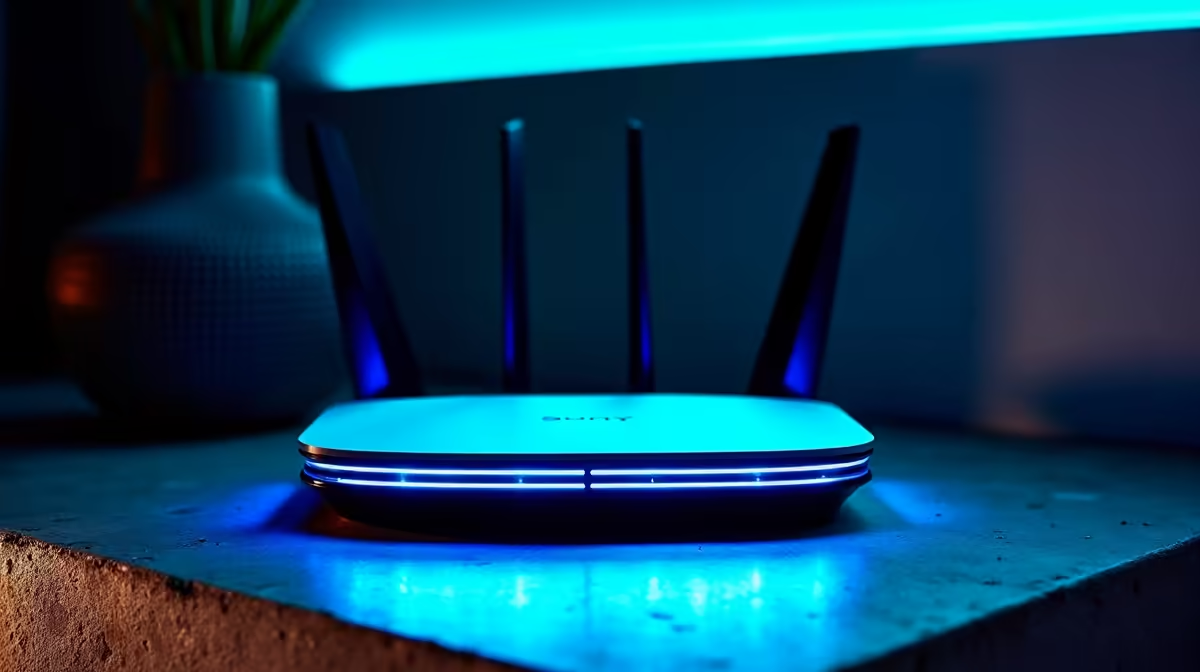
Is there a corner of your house where the Wi-Fi signal just gives up? That frustrating dead zone where streams buffer endlessly and game downloads crawl to a halt. For too many South Africans, juggling extenders and router resets is a daily battle. But what if you could wrap your entire home, from the lounge to the lapa, in a single, powerful, and unbroken web of Wi-Fi? Enter the world of mesh Wi-Fi systems. 🚀
So, what makes a mesh network different? Instead of relying on a single router to cover your whole property, mesh Wi-Fi systems use multiple 'nodes' or points that work together as a team. The main node connects to your modem, and the other satellite nodes are placed around your home. They communicate with each other, creating one seamless and intelligent network that blankets your entire space with a consistently strong signal.
Think of it like this: a traditional router is a single loud speaker trying to fill a stadium. A mesh system is a series of perfectly synced speakers spread throughout the venue, ensuring everyone gets crystal-clear audio.
Many of us have tried to solve dead zones with a quick fix. You buy a booster, plug it in, and hope for the best. While traditional wireless range extenders can give you a bit more reach, they often do so at a cost. They typically create a separate network (with "_EXT" in the name) that you have to switch to manually, and they can cut your potential internet speed in half.
This is especially noticeable when you move around the house. Your phone stubbornly clings to the weak signal from the main router, refusing to switch to the stronger extender, and your connection drops. It's a clumsy solution for a modern, connected home.
For the best performance, place your satellite nodes roughly halfway between your main router and the known dead zones. Avoid hiding them in cupboards or behind the TV cabinet—they work best with a clear line of sight to each other.
The true beauty of a mesh Wi-Fi system is its seamlessness. You can walk from one end of your house to the other during a video call or while streaming a game, and your device will automatically and instantly switch to the strongest node without any interruption. No more buffering, no more dropped connections.
For gamers, this means lower, more stable ping. For families, it means someone can stream 4K movies in the bedroom while another is in a lag-free Zoom call in the study. It's the kind of robust, whole-home coverage that's built for modern demands. This is the gold standard for reliable wireless networking today.
So, do you need to make the switch? Consider this:
Ultimately, mesh Wi-Fi systems are about eliminating compromise. They deliver the speed, stability, and coverage you pay for, in every room of your home.
Ready to Banish Buffering for Good? Stop fighting with dead zones and start enjoying flawless connectivity across your entire home. Explore Evetech's range of wireless networking solutions for performance that leaves lag in the dust.
Mesh systems use multiple nodes to create seamless coverage, ensuring strong signals in every room, even far from the router.
Look for Wi-Fi 6 compatibility, tri-band routers & expandable node systems. Our 2023 guide highlights top picks for SA households.
Plug your main node into the modem. Use the companion app to add satellite nodes where signals drop for instant coverage expansion.
Yes! Latest Mesh systems support Wi-Fi 6 for faster speeds, lower latency, and better handling of smart home devices.
Strategically placed nodes amplify signal strength throughout your space, eliminating buffering and dropped connections.
Mesh creates one unified network with seamless roaming. Extenders create separate networks and often reduce performance.
Entry-level dual-band starter kits start at R2199. Advanced tri-band systems with 3 nodes range from R4000-R8000 for premium homes.
Marvel Rivals launch needs a balanced parts plan, not a random basket. Map the CPU, GPU, RAM, SSD, cooling, and monitor target to the budget so SA builders know where to spend first.
Read more
Path of Exile 2 launch needs a balanced parts plan, not a random basket. Map the CPU, GPU, RAM, SSD, cooling, and monitor target to the budget so SA builders know where to spend first.
Read more
Black Myth Wukong launch needs a balanced parts plan, not a random basket. Map the CPU, GPU, RAM, SSD, cooling, and monitor target to the budget so SA builders know where to spend first.
Read more
Hollow Knight PC requirements should be mapped to resolution, settings and upgrade budget before choosing a tier. Verify current requirements, then balance GPU, CPU, RAM and SSD around SA pricing.
Read more
Hollow Knight build planning should focus on the target resolution, settings and total system balance. Treat launch wording as time-sensitive, then verify requirements before choosing SA PC parts.
Read more
Fallout 4 PC requirements should be mapped to resolution, settings and upgrade budget before choosing a tier. Verify current requirements, then balance GPU, CPU, RAM and SSD around SA pricing.
Read more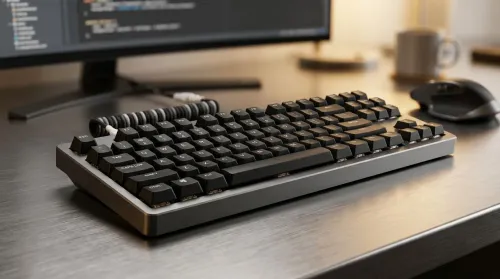
Wondering if a TKL wireless mechanical keyboard is worth it for everyday productivity? We break down latency, battery life, comfort, and workflow gains for real work. ⚡⌨️

Maximise battery life on a fanless 15-inch laptop using efficiency core architecture. Cut idle drain, tune power profiles, and improve thermals for longer runtime. 🔋⚙️
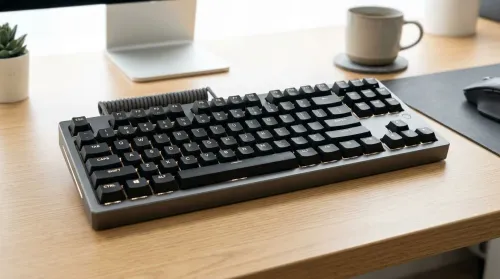
Learn how to reduce desk clutter with a TKL wireless keyboard using fewer cables, smart placement, and tidy essentials. Get a faster, calmer workspace with better ergonomics. ✅🧼
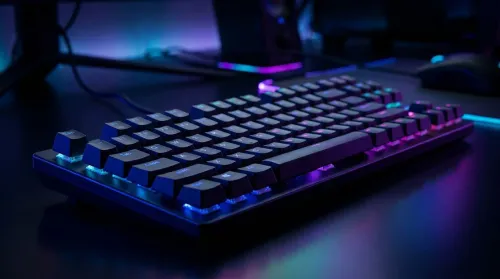
RGB keyboard lighting too distracting? Learn how to manage backlight modes, set brightness, and reduce distraction for focus and productivity 😌🖱️

Are themed gaming keyboards worth the extra cost? Compare build quality, switch options, features, and resale value to find the best fit for your setup 🎮⌨️

Full-Size vs Tenkeyless mechanical keyboards for gaming: find out if a smaller layout truly improves aim, speed, and comfort. We break down layout, desk space, latency-feel, and keybinds 🎮⌨️

Dedicated media rollers vs function key shortcuts: learn which setup gives you better workflow control, faster media access, and fewer mistakes. 🖱️🎧

Best Mechanical Switch Type for Gaming: Clicky vs Linear vs Tactile. Find your feel, speed, and noise balance with practical guidance for FPS, MOBA, and productivity 😄🎮

Direct mouse answer: Mouse not keeping up with your work? Everything that matters about dual-mode 2.4GHz + BT 5.0: DPI behaviour, channel switching, battery curves and per-app button mapping. Covers when 2.4GHz USB wins (low-latency desk) and when BT 5.0 wins (laptop, d

Plain wireless mouse guide: Mouse not keeping up with your work? Everything that matters about wireless productivity mouse: DPI behaviour, channel switching, battery curves and per-app button mapping. Includes DPI tuning tips, channel switch shortcuts, and ZAR-aware fea

Real productivity numbers: Set up your wireless mouse in this order: everything that matters about wireless productivity mouse: DPI behaviour, channel switching, battery curves and per-app button mapping. Includes DPI tuning tips, channel switch shortcuts, and ZAR-aware
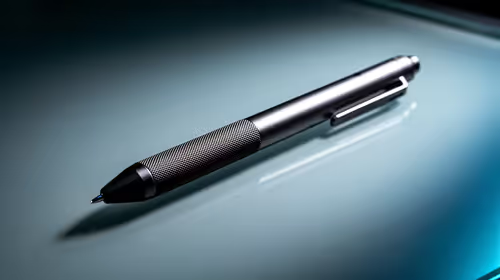
Pen not feeling like paper? Stylus lag and skipping usually trace to old drivers, dirty nibs, or display refresh mismatches, not the pen itself. Covers pressure curve tuning, tilt thresholds, nib swap timing, and SA pricing brackets.