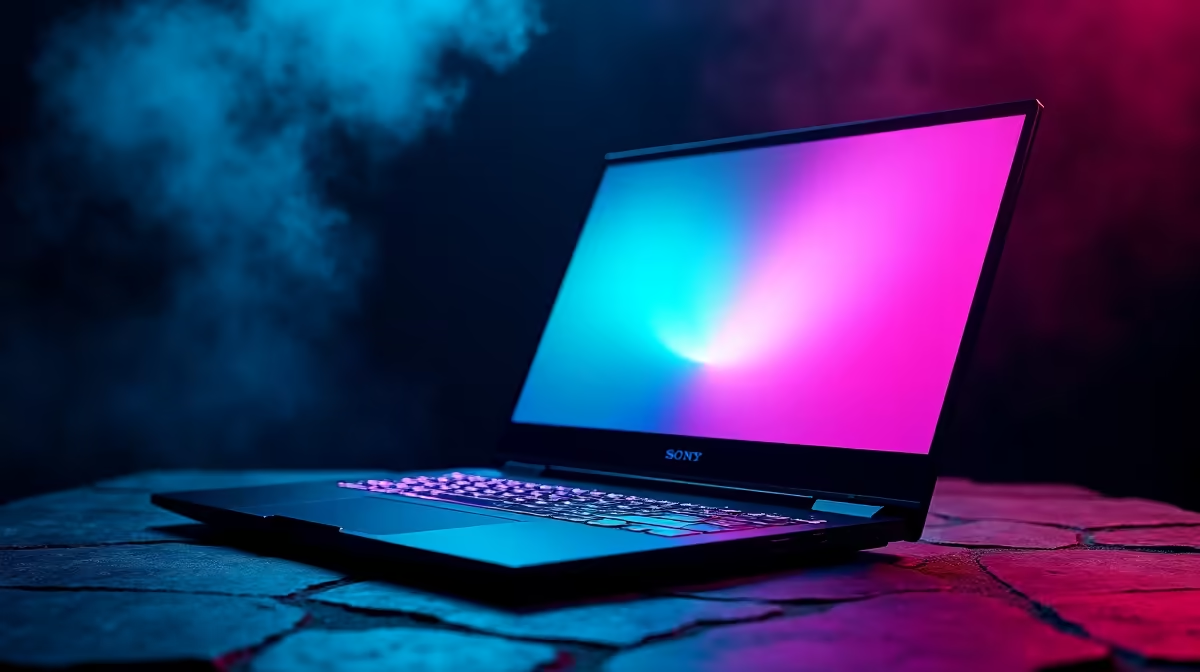
Staring into the neon-drenched streets of Night City or the haunting darkness of a dungeon in Baldur's Gate 3? Your laptop screen is your window to these worlds. Here in South Africa, the choice often boils down to two heavyweight contenders: Mini-LED vs OLED. Getting this decision right is crucial for the ultimate gaming experience in 2025. This isn't just about pretty colours; it’s about competitive advantage and total immersion. Let's break it down.
Understanding OLED: The King of Infinite Contrast
OLED (Organic Light Emitting Diode) technology is a marvel. Each individual pixel creates its own light. When a pixel needs to be black, it simply switches off completely. No backlight, no light bleed… just pure, inky blackness. This creates what's called an "infinite" contrast ratio, making colours pop like nothing else.
For gamers, this translates to breathtaking visuals. Dark scenes have incredible depth, and vibrant environments feel electric. But the real magic for competitive play is the near-instantaneous pixel response time. Because pixels can switch on and off almost instantly, motion blur is practically eliminated, giving you a crystal-clear image even in the fastest-paced shooters. If you're looking for the absolute pinnacle of image quality and responsiveness, exploring the best gaming laptop deals featuring OLED screens is a great place to start.
Key Strengths of OLED for Gaming:
- Perfect Blacks: Unbeatable contrast for cinematic and horror games.
- Pixel-Perfect Response: The fastest response times for blur-free action.
- Vibrant Colours: Exceptional colour accuracy and saturation make games look stunning.
The historical drawback? A small risk of "burn-in" from static images, but modern OLED panels have excellent mitigation technology to make this a non-issue for most users.
Unpacking Mini-LED: The HDR Brightness Brute 🚀
Don't mistake Mini-LED for a completely new technology. It's a massive evolution of traditional LCD screens. Instead of a handful of large LEDs for a backlight, Mini-LED screens use thousands of tiny ones grouped into hundreds or even thousands of dimming zones. This gives the screen far more precise control over which parts of the image are bright and which are dark.
The result? A massive leap in brightness and contrast over standard LCDs. This makes Mini-LED a champion for High Dynamic Range (HDR) content. Games that support HDR will look incredibly bright and impactful, with sunlight that feels real and explosions that sear your retinas (in a good way!). Plus, since it's still an LCD at its core, there is zero risk of burn-in, making it a workhorse for those who use their laptop for productivity and gaming. Many top-tier GeForce RTX gaming laptops on special now feature this powerful display tech.
Key Strengths of Mini-LED for Gaming:
- Incredible Brightness: Perfect for dazzling HDR visuals and playing in well-lit rooms.
- Zero Burn-in Risk: Ideal for marathon gaming sessions and mixed-use scenarios.
- Excellent Contrast: While not infinite like OLED, it's a huge improvement over traditional screens.
The main trade-off is a phenomenon called "blooming," where a faint halo can sometimes appear around very bright objects on a very dark background due to the dimming zones not being as granular as individual pixels.
Calibrate for Victory 🔧
Whether you choose Mini-LED or OLED, don't forget to calibrate! Windows 11 has a built-in "Windows HDR Calibration" app. Running this simple tool ensures your display is optimised for your specific panel, making your HDR games look exactly as the developers intended. It’s a free performance boost for your eyes!
Mini-LED vs OLED Laptop: The Final Showdown
So, which is the best display for gaming as we head into 2025? The honest answer is… it depends on you.
- Choose OLED if… you are a competitive FPS player who craves the fastest response times, or a cinematic gamer who wants the absolute best contrast and colour for story-driven games. The pure blacks are simply unmatched for immersion. You can find incredible performance in many modern Ryzen laptop deals that sport these vibrant screens.
- Choose Mini-LED if… you are an HDR fanatic who wants the brightest, most impactful visuals possible. It’s also the safer, more versatile choice if your gaming laptop doubles as your daily driver for work or study, thanks to its immunity to burn-in. High-performance Intel laptops on special are frequently equipped with these brilliant displays.
Ultimately, both technologies represent the peak of laptop display engineering. You can't really make a "wrong" choice. While these premium screens often come with a higher price tag, the value they provide is immense, and you can still find fantastic machines if you're looking for gaming laptops under R20k, which offer a great entry point into high-quality PC gaming.
The debate between Mini-LED vs OLED laptops will continue, but the real winner is the South African gamer who now has access to better-looking, more responsive, and more immersive portable gaming than ever before. ✨
Ready to See the Difference?
The Mini-LED vs OLED debate is about finding the perfect visual experience for you. Whether you crave infinite contrast or searing brightness, the right screen will transform your gaming. Explore our massive range of gaming laptop specials and find the perfect machine to conquer your world.