



Marvel Rivals launch in South Africa
Marvel Rivals launch needs a balanced parts plan, not a random basket. Map the CPU, GPU, RAM, SSD, cooling, and monitor target to the budget so SA builders know where to spend first.
Read moreDeciding between the NH-D15 G2 vs 360mm AIO? 🌡️ We compare thermal performance and noise levels on 2025's hottest CPUs to find the winner. Discover if high-end air cooling finally beats liquid in this detailed breakdown. ❄️
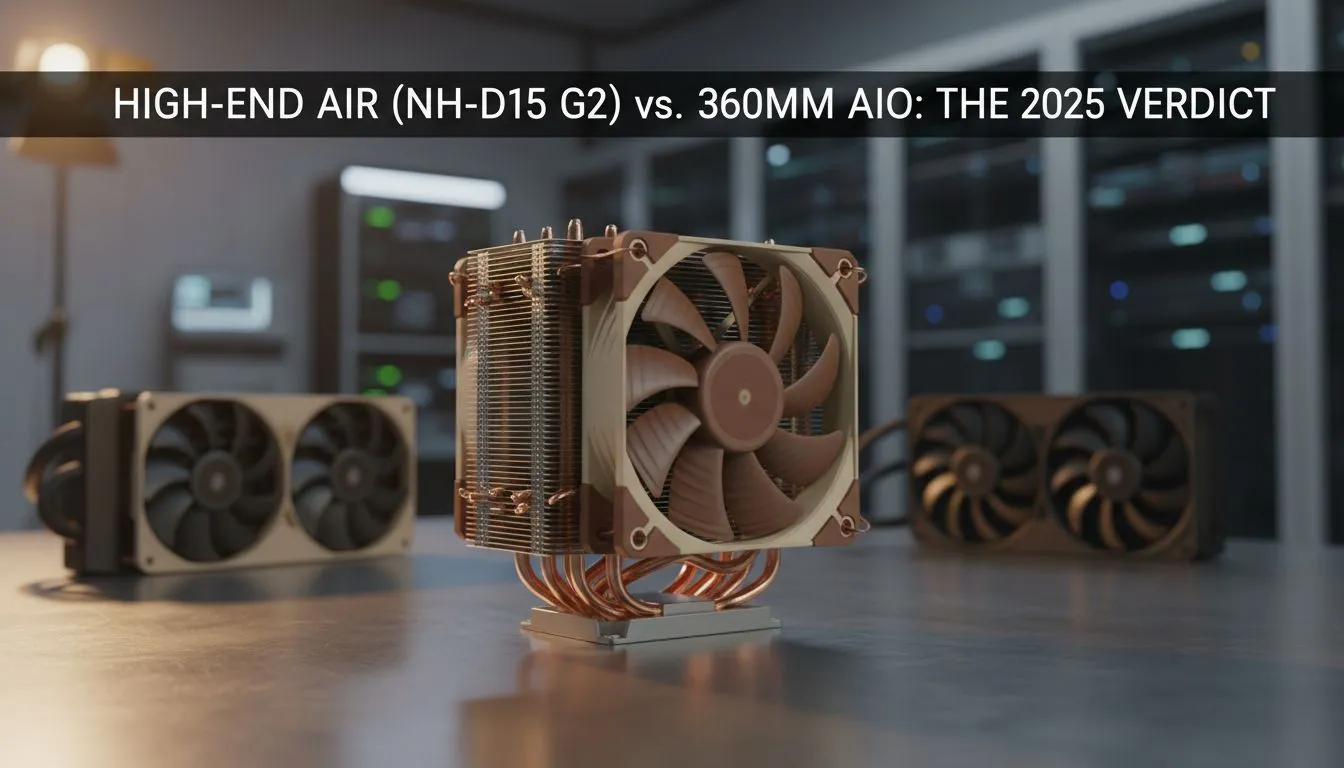
So, you're building a beast of a PC for 2025. You've got your CPU sorted, but now comes the big question that keeps builders up at night: how do you keep it cool? For years, the choice has been between a top-tier air cooler and a beefy liquid cooler. Now, with Noctua's next-generation behemoth on the horizon, the ultimate showdown is here: NH-D15 G2 vs 360mm AIO. Let’s settle this debate once and for all.
For over a decade, the original Noctua NH-D15 has been the undisputed king of air cooling. It's the benchmark for silent performance and rock-solid reliability. Now, its successor, the NH-D15 G2, is here to reclaim the throne.
Based on what we've seen from Noctua, the G2 isn't just a minor refresh. It boasts an improved design with more heat pipes and a new fan configuration, all engineered to tackle the insane thermal output of modern flagship CPUs. The core appeal of air cooling remains its beautiful simplicity. There's no pump to fail, no liquid to leak… just pure, reliable performance that will likely outlast your entire build. If you believe in the "buy it for life" philosophy, a premium air cooler is a wise investment.
Pros:
Cons:
On the other side of the ring, we have the 360mm All-In-One (AIO) liquid cooler. These have become the go-to for high-performance builds, and for good reason. A liquid cooler (AIO) works by transferring heat from the CPU to a radiator, where three fans dissipate it directly out of your case.
This efficiency is the AIO's superpower. It excels at handling sustained, heavy loads—think 4K video rendering or marathon gaming sessions on a hot summer day in Jozi. A quality 360mm radiator model offers a massive surface area for heat dissipation, giving it an edge in raw thermal performance. Plus, let's be honest, they look incredibly sleek and open up the look of your motherboard area.
Pros:
Cons:
buying a massive air cooler like the NH-D15 G2, always check three things: your case's maximum CPU cooler height, your RAM module height, and the cooler's motherboard compatibility list. For AIOs, confirm your case has mounting support for a 360mm radiator (top or front). A few minutes of research saves a lot of frustration!
So, how do they stack up directly? The NH-D15 G2 vs 360mm AIO debate boils down to a few key areas.
In raw cooling power, a top-tier 360mm AIO from a brand like Corsair will likely have a slight edge under the most extreme, sustained synthetic loads. However, in real-world gaming and productivity tasks, the NH-D15 G2 is engineered to be so efficient that the difference will be negligible for most users.
Where the G2 will almost certainly win is acoustics. Noctua's fans are legendary for their low noise profile. An AIO has three fans plus a pump, which can introduce a low-level hum even at idle. If a silent PC is your ultimate goal, the G2 is the clear favourite.
This isn't even a contest. The NH-D15 G2 is a block of metal with fans. Its lifespan is measured in decades, not years, and it will likely be compatible with future CPU sockets via new mounting kits from Noctua. An AIO has a typical warranty of 3-6 years, as the pump is a mechanical wear item. While modern AIOs are very reliable, the air cooler offers unparalleled peace of mind.
Deciding between the NH-D15 G2 vs a 360mm AIO isn't about which is "better," but which is better for you.
Both are fantastic choices capable of taming the hottest CPUs on the market. The final decision rests on your personal priorities for performance, acoustics, and style.
Ready to Tame Your CPU Temps? The debate between air and liquid is all about your priorities. Whether you choose the silent reliability of air or the peak performance of an AIO, we've got the perfect solution. Explore our massive range of CPU coolers and find the perfect match for your rig.
The NH-D15 G2 rivals many AIOs in noise-normalized performance, but a premium 360mm AIO typically holds a slight edge in handling maximum thermal loads.
It is massive. You need at least 168mm of CPU cooler clearance and low-profile RAM, whereas a 360mm AIO requires specific radiator mounting support.
Generally, yes. Pump whine and three fans on a 360mm AIO are often louder than the NH-D15 G2's optimized fans at idle and medium workloads.
Modern AIOs are reliable, but leak risks exist. Air coolers like the NH-D15 G2 have zero leak risk, offering superior long-term reliability for workstations.
Both handle high heat densities well, but the offset mounting on the NH-D15 G2 is specifically tuned to target the Ryzen hotspot location effectively.
With no pump to fail, an air cooler can last decades. Fans may need replacement after many years, but the metal heatsink is essentially eternal.
Marvel Rivals launch needs a balanced parts plan, not a random basket. Map the CPU, GPU, RAM, SSD, cooling, and monitor target to the budget so SA builders know where to spend first.
Read more
Path of Exile 2 launch needs a balanced parts plan, not a random basket. Map the CPU, GPU, RAM, SSD, cooling, and monitor target to the budget so SA builders know where to spend first.
Read more
Black Myth Wukong launch needs a balanced parts plan, not a random basket. Map the CPU, GPU, RAM, SSD, cooling, and monitor target to the budget so SA builders know where to spend first.
Read more
Hollow Knight PC requirements should be mapped to resolution, settings and upgrade budget before choosing a tier. Verify current requirements, then balance GPU, CPU, RAM and SSD around SA pricing.
Read more
Hollow Knight build planning should focus on the target resolution, settings and total system balance. Treat launch wording as time-sensitive, then verify requirements before choosing SA PC parts.
Read more
Fallout 4 PC requirements should be mapped to resolution, settings and upgrade budget before choosing a tier. Verify current requirements, then balance GPU, CPU, RAM and SSD around SA pricing.
Read more
Wondering if a TKL wireless mechanical keyboard is worth it for everyday productivity? We break down latency, battery life, comfort, and workflow gains for real work. ⚡⌨️

Maximise battery life on a fanless 15-inch laptop using efficiency core architecture. Cut idle drain, tune power profiles, and improve thermals for longer runtime. 🔋⚙️
Learn how to reduce desk clutter with a TKL wireless keyboard using fewer cables, smart placement, and tidy essentials. Get a faster, calmer workspace with better ergonomics. ✅🧼
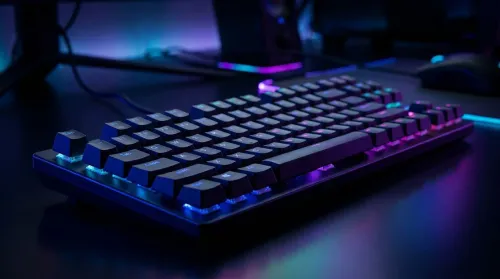
RGB keyboard lighting too distracting? Learn how to manage backlight modes, set brightness, and reduce distraction for focus and productivity 😌🖱️

Are themed gaming keyboards worth the extra cost? Compare build quality, switch options, features, and resale value to find the best fit for your setup 🎮⌨️

Full-Size vs Tenkeyless mechanical keyboards for gaming: find out if a smaller layout truly improves aim, speed, and comfort. We break down layout, desk space, latency-feel, and keybinds 🎮⌨️

Dedicated media rollers vs function key shortcuts: learn which setup gives you better workflow control, faster media access, and fewer mistakes. 🖱️🎧

Best Mechanical Switch Type for Gaming: Clicky vs Linear vs Tactile. Find your feel, speed, and noise balance with practical guidance for FPS, MOBA, and productivity 😄🎮

Direct mouse answer: Mouse not keeping up with your work? Everything that matters about dual-mode 2.4GHz + BT 5.0: DPI behaviour, channel switching, battery curves and per-app button mapping. Covers when 2.4GHz USB wins (low-latency desk) and when BT 5.0 wins (laptop, d

Plain wireless mouse guide: Mouse not keeping up with your work? Everything that matters about wireless productivity mouse: DPI behaviour, channel switching, battery curves and per-app button mapping. Includes DPI tuning tips, channel switch shortcuts, and ZAR-aware fea
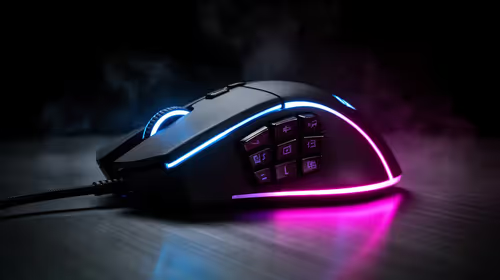
Real productivity numbers: Set up your wireless mouse in this order: everything that matters about wireless productivity mouse: DPI behaviour, channel switching, battery curves and per-app button mapping. Includes DPI tuning tips, channel switch shortcuts, and ZAR-aware
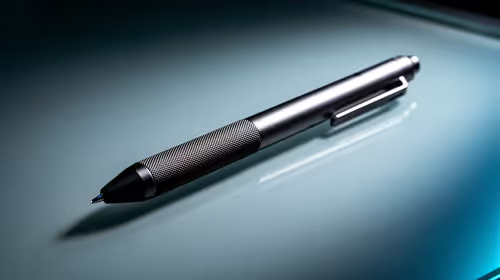
Pen not feeling like paper? Stylus lag and skipping usually trace to old drivers, dirty nibs, or display refresh mismatches, not the pen itself. Covers pressure curve tuning, tilt thresholds, nib swap timing, and SA pricing brackets.