Quick Answer
For a clean, cable-managed build, the NVMe SSD buying order is: an M.2 NVMe drive is the must-have because it needs no cables at all, a motherboard heatsink is nice-to-have, and extra SATA drives are skip-if-you-want-zero-cables. A 1TB Gen4 NVMe SSD (around R900 at Evetech) mounts flat on the board with no wiring to route.
Must-Have: The Cableless Storage Choice
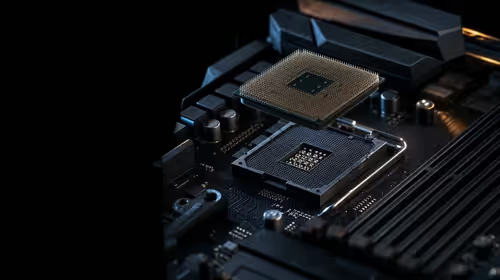
The single biggest advantage of an M.2 NVMe SSD for a clean build is that it needs no cables whatsoever. It slots directly into the motherboard's M.2 connector and is held by one small screw, drawing power and data through the slot, so there is nothing to route, hide or tidy. Compared to a SATA SSD, which needs both a power lead and a data cable, the NVMe drive eliminates two cables per drive from your build. For anyone chasing the cleanest possible interior, a single 1TB NVMe drive as the primary storage is the obvious must-have.
Nice-To-Have And What To Skip For Cleanliness
The nice-to-have is using your motherboard's built-in M.2 heatsink, which keeps the drive cool during heavy writes and also covers it for a tidier look, with no extra parts or cables. What you should skip if cable-cleanliness is the priority is adding SATA drives, since each one brings a power cable and a data cable back into the build, working against the clean look you want. If you need more storage, add a second M.2 NVMe drive in another slot rather than a cabled SATA drive, keeping the whole storage setup completely cable-free.
An M.2 NVMe SSD needs no cables, making it the must-have for a clean, cable-managed build.
FAQ
Why is NVMe better for cable management?
An M.2 NVMe SSD slots directly into the motherboard with no cables, unlike a SATA SSD that needs separate power and data leads. That removes two cables per drive, keeping the build interior clean.
Should I use the motherboard M.2 heatsink?
Yes. It cools the drive during heavy writes and covers it for a tidier look, all with no extra cables or parts, which suits a clean build perfectly.
How do I add storage without adding cables?
Use a second M.2 NVMe drive in another motherboard slot rather than a cabled SATA drive. That keeps the entire storage setup cable-free while expanding capacity.
.2 NVMe drives over cabled SATA SSDs for a clean build, use the motherboard's M.2 heatsink, and expand with a second NVMe drive to stay completely cable-free.