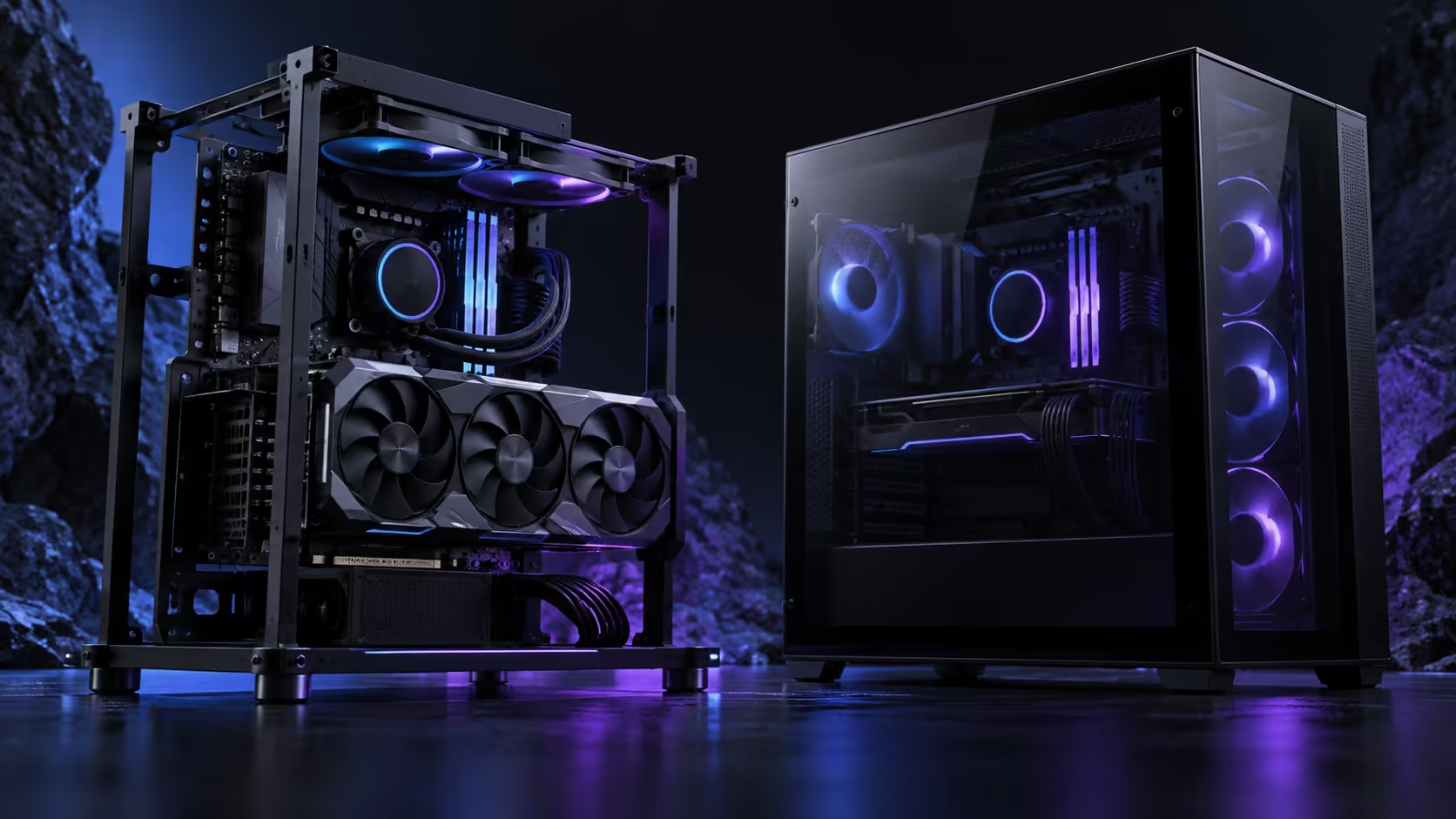
Tempered glass and open-frame cases both exist to show off a build, and that is where the similarity ends. One achieves it by putting a solid, heavy panel between the parts and the room; the other removes the panel entirely. An open-frame PC case and a glass-panelled tower solve the same display problem with opposite engineering, and the differences show up first in airflow, then in dust, then in how you actually work on the thing.
Quick Answer
A glass panel filters intake through a mesh front and shows the build through a sealed side, which costs some airflow but keeps dust largely at the door. An open frame has no door: intake is unrestricted from every side, but so is dust. Component access is instant on an open frame and a two-screw job on glass. The ROG GR20 Edition 20 represents the open-frame side of that split at R15,999, rated to take a 368mm graphics card and a full-size liquid loop.
🌬️ Airflow: where the glass panel actually costs you
A tempered glass side panel is solid, full stop. It does not breathe, so a case built around one usually draws intake through mesh at the front and exhausts through the top and rear, with the glass side contributing nothing to the airflow path.
That is not automatically a problem, because a front-mesh, top-exhaust layout is a proven design and most glass cases are engineered around it properly. The cost shows up specifically in components that are not in that direct front-to-back or bottom-to-top path: a graphics card's backplate side against the glass panel, or an M.2 slot tucked under the board where the front-to-back airflow barely reaches.
An open frame has no side to block, so every one of those pockets sits in room air instead of still air. The GR20's bundled crossflow fan is built for exactly that gap, throwing a flat sheet of air across the board surface rather than relying on a front-to-back draft to find its way there. The difference is not that one design moves more total air; it is that the open frame has fewer places for air to avoid.
🧹 Dust: the trade runs the other way completely
This is where glass wins outright, and it is worth saying plainly rather than working around it. A mesh front panel with a magnetic or slide-out filter catches dust before it reaches the fans, and cleaning it is a matter of pulling the filter and rinsing or shaking it out.
An open frame has no filter to have, because there is no panel for a filter to sit in. Dust that would have been caught at the door instead settles directly onto whatever surface it lands on: heatsink fins, fan blades, the top of a graphics card shroud. In a dry, dusty stretch of weather, that difference compounds fast, and an open build genuinely needs a compressed air routine that a filtered glass case can go months without.
If dust control matters more to you than display, a filtered conventional case is the more honest choice, and there is no shame in that trade. Plenty of builds that look impressive on a glass case would look identical inside an open frame and simply collect more dust for the privilege. The wider mid-tower range carries both filtered glass towers and open frames side by side if you want to compare specifications rather than take either description on faith.
🔧 Component access: instant versus a screwdriver
Working inside a glass-panelled case means removing the panel first, which on most designs is two or four thumbscrews and a careful lift, because tempered glass is heavy enough to matter if you drop it and expensive enough to replace that a crack ends the case's life, not just its looks.
An open frame skips that step entirely. Every part is already reachable, so swapping a stick of DDR5 memory, reseating a card in its PCIe slot, or checking a fan header is a matter of reaching in rather than disassembling anything first. For a build that gets upgraded often, benchmarked, or shown to friends with the side actually open, that constant reachability is the open frame's real advantage over glass, more than the airflow numbers.
The cost of that access is that it never goes away. A glass panel closes back up when you are done and the build returns to being sealed and quiet. An open frame is always open, which means it is always as exposed to a dropped screwdriver, a curious pet, or a spilled drink as it is during the build itself.
🔊 Noise and looks: the part neither design admits to
Glass panels, paired with the rest of a case's steel or aluminium shell, damp fan and coil noise reasonably well, because there is a sealed volume for sound to lose energy in before it reaches the room. An open frame has no volume to lose energy in, so identical components at identical fan speeds are measurably louder in the open frame.
Looks are genuinely subjective, but the mechanism is different too. Glass shows the build through a window, lit and framed by whatever RGB is inside. An open frame is the build, unframed, with the ARGB lighting running along the structure itself rather than reflecting off glass. If you have not compared the two in person, the current case specials are worth a look, because seeing a glass tower and an open frame side by side settles the aesthetic question faster than any description does.
Frequently Asked Questions
Does a glass panel case run hotter than an open frame?
Usually a little, in the pockets furthest from the front-to-back airflow path, though a well-designed glass case with good front mesh is close for the components that sit directly in that path.
Is dust really that much worse on an open frame?
Yes, and by a wide margin. There is no filter stage on an open frame, while a glass case with a filtered front panel goes far longer between cleanings.
Which is easier to work inside?
An open frame, by a wide margin, because there is no panel to remove before you can reach a component.
Is a glass panel likely to crack during a build?
It is unlikely if handled properly, but tempered glass is heavy and unforgiving of a drop, which is a risk an open frame simply does not carry.
Is one design objectively quieter?
Glass, along with the sealed shell it usually comes with, damps more fan and coil noise than an open structure with nothing to absorb it.
Ready to pick the trade-off that actually suits your desk?
Weigh dust control and noise against constant access and unrestricted airflow before you decide.