Quick Answer
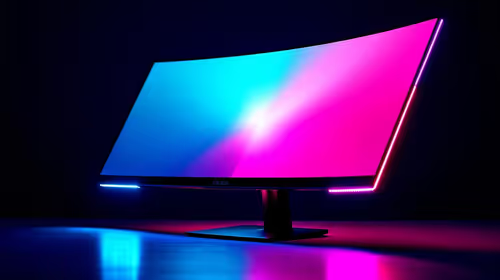
For a premium gaming monitor purchase in South Africa, target 4K resolution at 144Hz or above on a Fast IPS or OLED panel, with DisplayPort 1.4 and HDMI 2.1 connectivity. Budget at least R10,000 for Fast IPS and R18,000 or above for OLED. Resolution and refresh rate affect every session; connectivity determines how many devices the monitor can serve long-term.
Resolution: 4K vs 1440p at the Premium Tier 🖥️
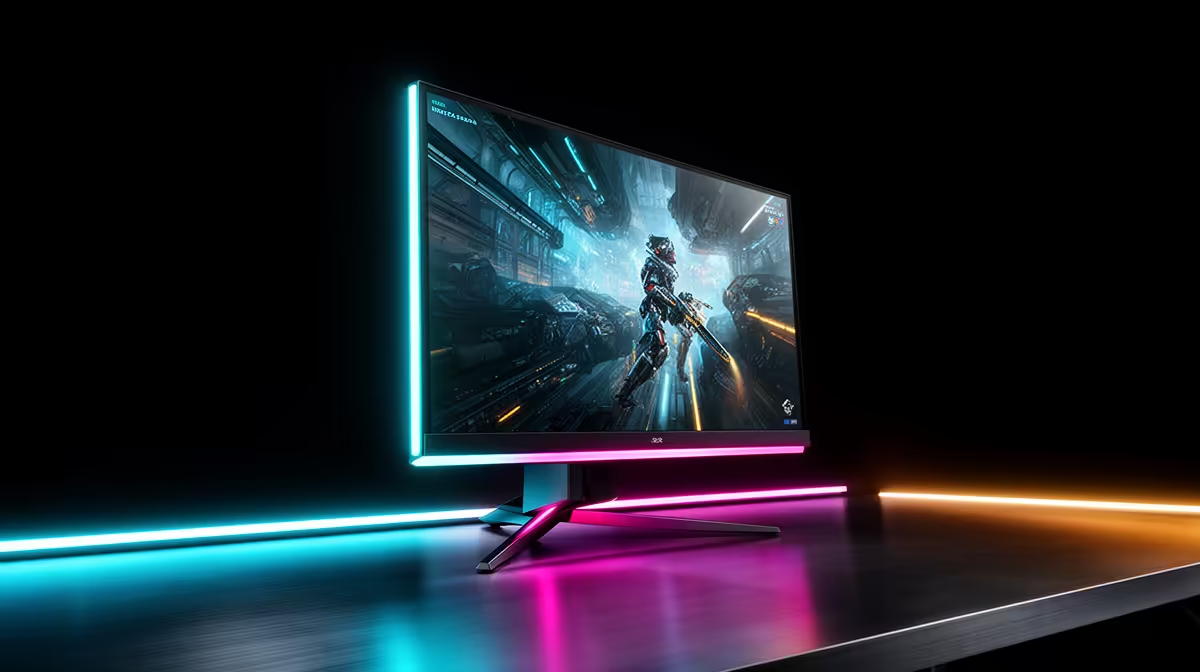
At the premium end of the South African market (R10,000 and above), 4K panels represent the majority of stock. At 32 inches, the 4K versus 1440p difference is visible in text sharpness (138 PPI versus 93 PPI), environmental detail in games, and colour grading accuracy for HDR content. For creators who also game, 4K is the correct resolution choice at this tier because productivity and export work benefit from the higher pixel count in ways that gaming does not fully exploit. For pure gaming, 1440p at 240Hz is a legitimate alternative if refresh rate ceiling matters more than pixel density, as some SA esports players prefer.
Refresh Rate: Choosing the Right Ceiling 🎮
The refresh rate decision interacts directly with GPU budget. A 4K 160Hz monitor used exclusively with an RTX 5060 Ti will rarely operate above 80 to 100fps in demanding titles at native 4K. An RTX 5080 paired with the same panel can reach 140 to 160fps with DLSS Quality in most current titles. The rule of thumb: buy the monitor for the GPU you plan to own, not the GPU you own today, if you intend to upgrade within 12 months. A 4K 160Hz panel will be relevant for three to five GPU generations given current 4K performance trajectories. For competitive gaming where FHD 240Hz or 320Hz is preferred, a dual-mode panel covers both use cases.
Connectivity: Ports That Determine Long-Term Usefulness 🔧
A premium monitor should include at minimum one DisplayPort 1.4 (for gaming PC at 4K 160Hz via DSC), one HDMI 2.1 (for console 4K 120Hz), and ideally USB-C with Power Delivery for a laptop. This three-port configuration means the monitor remains fully useful regardless of which devices enter or leave the desk over the monitor's lifetime. In South Africa, the practical case for HDMI 2.1 is strong: PlayStation 5 and Xbox Series X ownership is high, and switching from PC to console on the same 4K display without a second screen is a daily-use convenience. Confirm the HDMI version on the monitor box rather than assuming; some models in the R10,000 to R12,000 range still ship with HDMI 2.0 as the secondary port.
Check for HDMI 2.1 Specifically ⚡
HDMI 2.0 and HDMI 2.1 ports look identical from the outside. The spec sheet is the only reliable confirmation. HDMI 2.0 caps at 4K 60Hz; HDMI 2.1 is needed for 4K 120Hz from a console. If the spec sheet uses the generic label "HDMI" without a version number, assume 2.0 and contact the retailer to confirm before purchasing.
FAQ
Is OLED worth the price premium for SA gamers at the top tier?
For gamers who play atmospheric, dark-scene-heavy titles, OLED's near-infinite contrast produces a noticeably superior image compared to any IPS panel. For competitive gaming in brightly lit environments, OLED's contrast advantage is less impactful.
How does South African pricing compare to international pricing on premium monitors?
Premium monitors in South Africa typically retail at 15 to 25% above the direct USD-to-ZAR conversion due to import duties, VAT, and distributor margins.
Do gaming monitors at this price tier include a factory calibration report?
Some do, typically from brands targeting the professional and creator market as well as gaming. Factory calibration confirms the panel meets its colour accuracy specifications at time of manufacture.
Making a serious monitor investment for your SA gaming setup?
Evetech stocks premium 4K gaming monitors with HDMI 2.1, DisplayPort 1.4, and Fast IPS or OLED panels, all locally stocked with full South African warranty.