Slipping a pair of glasses inside a VR headset is the quiet frustration of the hobby. The arms press into your temples, the frames fog, and one careless movement can drag your spectacle lenses across the headset's optics and scratch them permanently. Prescription lens inserts fix all of that by replacing your glasses entirely with a thin, custom-cut lens that clips over the headset's own optics.
Quick Answer
Prescription lens inserts are custom-ground lenses, made to your eye script, that attach magnetically over a VR headset's built-in lenses. They let glasses-wearers see sharply without wearing frames inside the headset, and SA optical suppliers can cut them to your exact prescription locally.
How Prescription Inserts Work
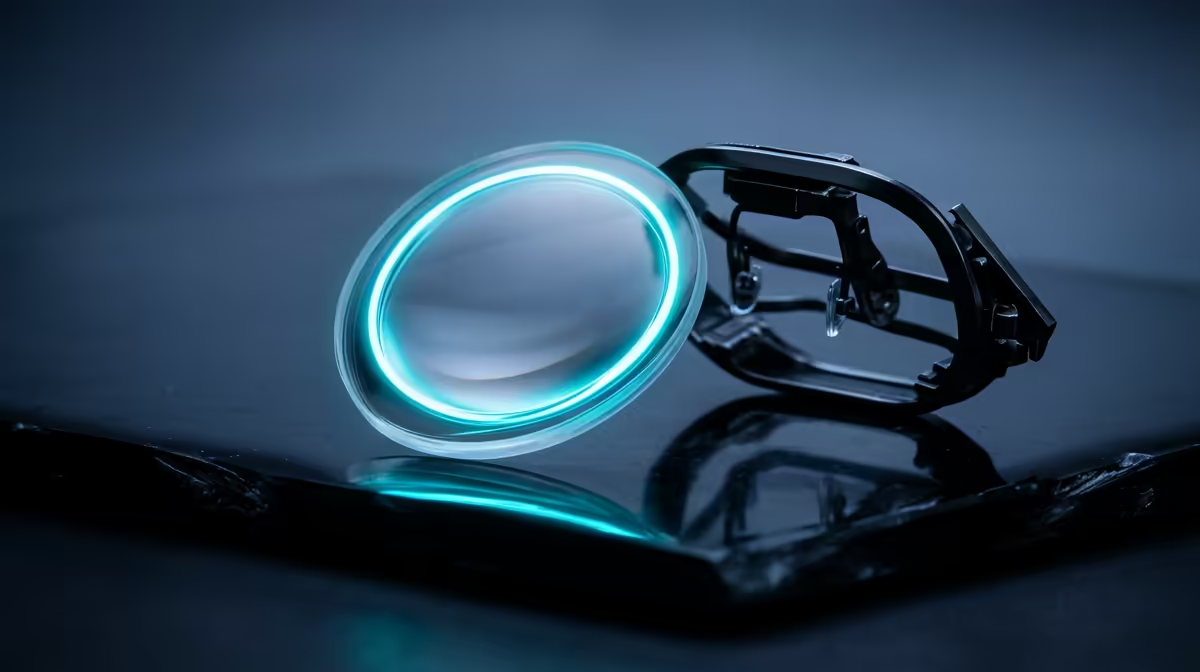
An insert is a frame-and-lens unit shaped to fit your specific headset model. It snaps onto the headset's lens housing, usually held by small magnets, and sits a few millimetres in front of the headset optics. Because the insert carries your prescription, you remove your glasses entirely and the image arrives already corrected for your eyes.
The fit is precise by design. Each headset has its own insert geometry, so the lenses sit at the correct distance and angle to deliver a clear, full field of view. Once fitted, you forget they are there, which is the point.
Why Inserts Beat Wearing Glasses Inside
The most expensive reason to switch is protection. VR optics are soft-coated and scratch easily, and glasses worn inside the headset can rub against them every time you adjust the fit. A scratch on a headset lens is permanent and ruins immersion. An insert keeps your spectacles out of the picture and your headset optics untouched.
Comfort is the second win. Frames designed for everyday wear were never meant to be pressed against a foam face gasket. They dig in, shift during movement, and break the seal that keeps light out. With an insert, the headset sits flush and you get a wider, more comfortable view.
Sharper Image and Wider Field of View
Glasses inside a headset force your eyes further from the headset lenses, which shrinks the visible field of view and can soften the edges of the image. An insert sits closer to your eyes than spectacle lenses can, so you keep the full field of view the headset was designed to deliver. For fast-paced or detailed content, that clarity is noticeable.
Getting Inserts Made in South Africa
You do not need to import inserts and wait weeks. Many SA optical suppliers can cut lenses to your exact script and fit them into a frame matched to your headset, which keeps both cost and turnaround local. Bring your current prescription, including any astigmatism correction, and confirm the supplier supports your specific headset model before ordering.
If you are still choosing the headset itself, it pays to check what the wider category offers, and the VR and AR glasses range stocked at Evetech is a useful starting point for matching a headset to the insert option you want.
What to Tell Your Optometrist
Hand over your full prescription, including pupillary distance if you have it, and mention that the lenses are for a VR insert rather than everyday glasses. The insert frame fixes the lens position, so the optometrist needs to know the lenses sit at a fixed distance from your eyes. A reputable lab will handle the rest.
Quest 3 and Quest 3S: Not the Same Insert
Headset generations use different lens housing dimensions, and this matters practically because a Quest 3 insert frame will not seat correctly in a Quest 3S, and vice versa. The Quest 3 and Quest 3S are not interchangeable for insert frames, so the first thing to confirm with any supplier is which headset you own before they begin grinding.
Most dedicated insert suppliers -- both international services that ship to SA and local optical labs working from a compatible frame set -- ask you to specify the exact model during the ordering process. If you are unsure which generation you have, the model number is printed inside the headset's charging port area.
The Magnetic Attachment System
Modern Quest 3 inserts use small magnets embedded in the insert frame to align with corresponding points on the headset's lens housing. The magnets hold the insert securely during movement but allow instant removal with a light pull. This matters practically: you can swap the insert out in seconds when passing the headset to someone who does not need vision correction, and there is no mechanical pressure on the headset optics during installation or removal.
Because the magnets self-align, there is no calibration needed after fitting. The insert snaps into the same position every time, keeping your prescription centred correctly in front of the headset optics without any adjustment on your part.
Caring for Prescription Inserts
Inserts are optical lenses and need to be treated as such. Clean them with a microfibre cloth, not the same cloth you use on the headset lenses, since cross-contamination transfers grit. Store the inserts in the protective pouch most suppliers include, separate from the headset, to avoid scratches between uses.
If your prescription changes, the insert frame itself can typically be reused and only the lenses need to be reground. This makes the second set less expensive than the first, since you are not paying for the frame and adapter hardware again.
Are Inserts Worth It?
If you wear glasses and use VR regularly, inserts are one of the best comfort upgrades available. They protect a costly headset, improve the image, and make sessions genuinely comfortable. The one-off cost is modest against the price of a scratched headset lens or the daily annoyance of cramming frames inside.
For the small extras that round out a VR setup, from cleaning cloths to face covers, a look at the accessories other VR users reach for helps you kit out the headset properly from day one.
Frequently Asked Questions
Do prescription inserts work with any VR headset?
Inserts are made for specific headset models, since each has its own lens housing and mounting geometry. Before ordering, confirm your supplier offers an insert frame matched to your exact headset.
Will inserts protect my headset lenses?
Yes. By removing the need to wear glasses inside the headset, inserts eliminate the main cause of scratched VR optics. The insert sits in front of the built-in lenses and takes the wear instead.
Can inserts correct astigmatism?
Yes. A custom insert can be ground to your full prescription, including astigmatism, just like everyday spectacle lenses. Give your optometrist your complete script when ordering.
Are inserts more comfortable than wearing glasses in VR?
Considerably. Glasses press against the face gasket, shift during movement, and break the light seal. Inserts let the headset sit flush against your face for a wider field of view and longer, more comfortable sessions.
Where can I get VR inserts made in South Africa?
Many local optical suppliers can cut lenses to your prescription and fit them to a headset-specific frame, keeping cost and turnaround local. Confirm they support your headset model before placing the order.
Spend hours in VR without the glasses hassle. Explore the VR and AR range at Evetech, then have inserts cut to your script locally for a clear, comfortable, scratch-free headset.