


iRacing SA Gaming PC Build Guide
iRacing build planning should focus on the target resolution, settings and total system balance. Treat launch wording as time-sensitive, then verify requirements before choosing SA PC parts.
Read more- Compare QHD vs 4K gaming monitors; - Analyze performance, GPU needs, and cost; - Get tailored recommendations by play style 🎮⚡ Quick, actionable guide to pick the right resolution.
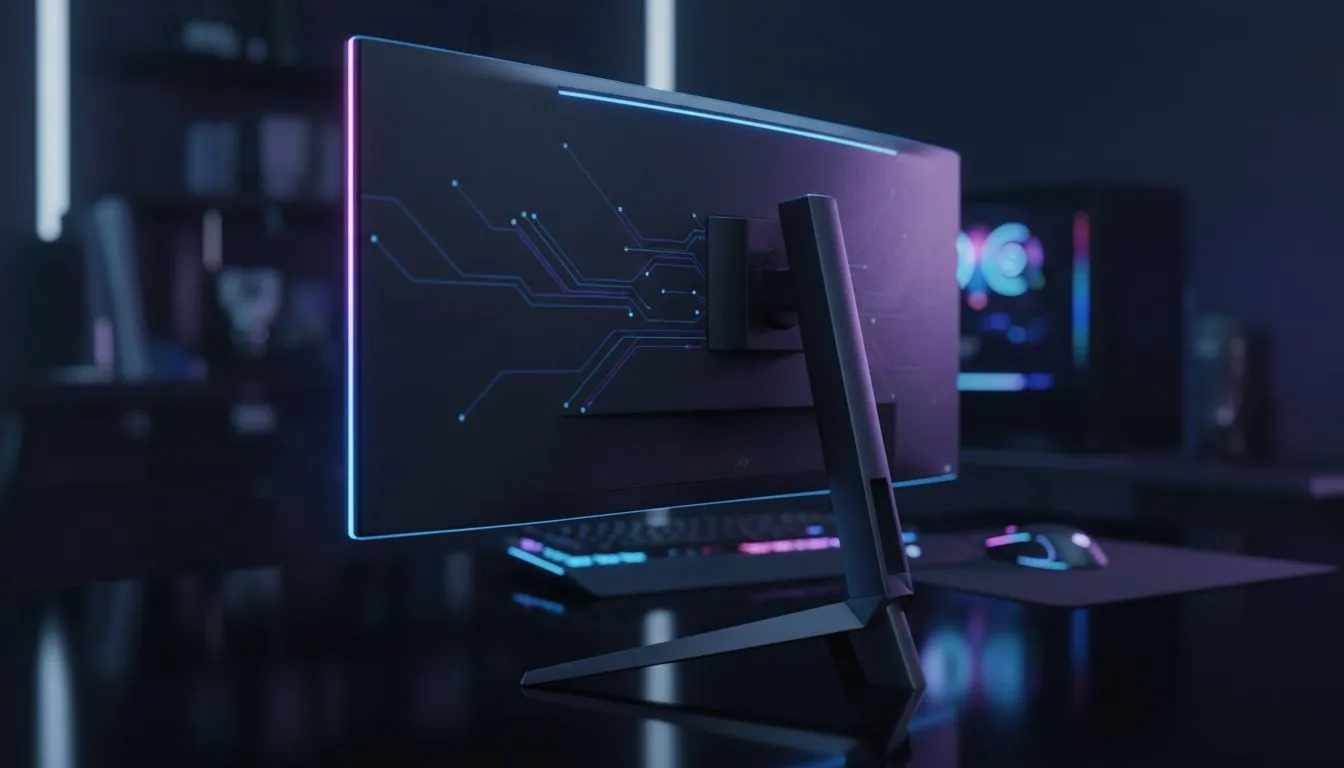
So, you’ve built a beast of a PC, but now you’re stuck on the final piece of the puzzle: the monitor. It’s the classic South African gamer's dilemma… do you go for the lightning-fast frames of QHD or the jaw-dropping detail of 4K? Choosing the right resolution is a massive deal, impacting everything from your in-game performance to your wallet. This guide breaks down the QHD vs 4K gaming monitor debate to help you make the perfect choice.
QHD, or Quad HD (2560x1440), is often called the sweet spot for PC gaming, and for good reason. It offers a significant visual upgrade over standard 1080p without demanding the insane graphics power that 4K requires. For most gamers, this is the perfect balance.
With a QHD monitor, you can push for those buttery-smooth high refresh rates (144Hz, 165Hz, or even 240Hz) without needing a top-of-the-line R40,000 graphics card. This makes it the ideal choice for competitive titles like Valorant, Apex Legends, and Warzone, where every millisecond and every frame counts. On a 27-inch screen, the pixel density is crisp and clear, delivering a premium experience. Check out the full variety across all gaming monitors to see how many high-refresh QHD options are available.
There's no denying it: 4K (3840x2160) is absolutely breathtaking. ✨ With four times the pixels of 1080p, the level of detail is incredible. For single-player, story-driven games like Cyberpunk 2077 or Baldur's Gate 3, a 4K monitor provides an unparalleled level of immersion. Textures are sharper, worlds feel more real, and you can see details you'd miss on a lower-resolution screen.
But this visual feast comes at a cost. To run modern games smoothly at 4K with high settings, you need a seriously powerful GPU, typically an NVIDIA RTX 4080/4090 or a high-end AMD equivalent. If you have the horsepower and love getting lost in beautiful virtual worlds, browsing the latest 5K and 4K monitors is your next logical step.
Choosing between a QHD or 4K monitor isn't just about pixels; it's about your entire setup and how you use it.
This is the single most important factor. A mid-range card like an RTX 4060 or RX 7700 XT is fantastic for QHD gaming but will struggle to deliver playable frame rates at 4K in new titles. Be honest about what your GPU can handle. There’s no point buying a 4K screen only to run games at a lower resolution.
It’s not just the monitor that costs more. The GPU needed to power a 4K display is significantly more expensive. If you're building a new rig or upgrading on a tighter budget, QHD offers far better value for money. Keep an eye on the best PC monitor deals to snag a great price on either resolution.
The difference between QHD and 4K is most noticeable on larger screens (32 inches and up). On a smaller 24-inch monitor, the extra pixels of 4K are much harder to appreciate.
A key concept is Pixels Per Inch (PPI). For a 27-inch monitor, QHD offers a PPI of ~109, which is very sharp. A 27-inch 4K monitor has a PPI of ~163. While technically sharper, many users need to use display scaling in Windows to make text readable, sometimes losing the benefit. For most desk setups, ~110 PPI is the sweet spot for clarity without scaling.
Resolution is a huge part of the puzzle, but don't forget other critical monitor specs. Whether you're looking at general PC monitors or specialised gaming ones, keep these in mind:
Ultimately, the QHD vs 4K gaming monitor debate is personal. QHD is the pragmatic choice for most South African gamers, delivering high-performance, responsive gameplay without breaking the bank. 4K is the enthusiast's choice, offering stunning visual fidelity for those with the powerful hardware to back it up.
Ready to See the Difference? The QHD vs 4K debate comes down to your preference and your PC's power. Whether you crave high frame rates or ultimate visual clarity, the perfect display is waiting. Explore our complete range of gaming monitors and find the screen that will bring your games to life.
QHD (1440p) usually offers higher frame rates for competitive play, while 4K gives superior detail if your GPU can sustain it. Consider your play style and GPU.
Yes. 4K gaming GPU requirements favor high-end cards (eg. RTX 3080/4070-class or better) for smooth frame rates at high settings.
Yes. QHD at 144Hz or higher delivers higher fps and lower input lag, making 1440p ideal for esports and fast-paced titles.
You can, but only with top GPUs and compatible monitors. 4K 120–144Hz setups are costly and demand strong GPU performance.
Often yes—4K improves sharpness and texture detail, but some older titles may require upscaling or mods for optimal image quality gaming.
27-inch is the sweet spot for QHD. For 4K, 27–32 inches deliver clearer pixels and better desktop space without visible pixelation.
Generally yes—QHD monitors and GPUs offer better price-per-frame. Budget 4K gaming monitor options exist, but overall cost is higher for 4K.
iRacing build planning should focus on the target resolution, settings and total system balance. Treat launch wording as time-sensitive, then verify requirements before choosing SA PC parts.
Read more
Skyrim PC requirements should be mapped to resolution, settings and upgrade budget before choosing a tier. Verify current requirements, then balance GPU, CPU, RAM and SSD around SA pricing.
Read more
Skyrim PC builds is a cautious guide for game PC build planning. Compare game requirements, tier fit, resolution goals, RAM, storage, and GPU choice for SA buyers without assuming live prices, availability, or exact benchmark results.
Read more
Hades 2 PC builds is a cautious guide for game PC build planning. Compare game requirements, tier fit, resolution goals, RAM, storage, and GPU choice for SA buyers without assuming live prices, availability, or exact benchmark results.
Read more
Roblox PC builds is a cautious guide for game PC build planning. Compare game requirements, tier fit, resolution goals, RAM, storage, and GPU choice for SA buyers without assuming live prices, availability, or exact benchmark results.
Read more
Mortal Kombat 1 launch needs a balanced parts plan, not a random basket. Map the CPU, GPU, RAM, SSD, cooling, and monitor target to the budget so SA builders know where to spend first.
Read more
Wondering if a TKL wireless mechanical keyboard is worth it for everyday productivity? We break down latency, battery life, comfort, and workflow gains for real work. ⚡⌨️

Maximise battery life on a fanless 15-inch laptop using efficiency core architecture. Cut idle drain, tune power profiles, and improve thermals for longer runtime. 🔋⚙️

Learn how to reduce desk clutter with a TKL wireless keyboard using fewer cables, smart placement, and tidy essentials. Get a faster, calmer workspace with better ergonomics. ✅🧼

RGB keyboard lighting too distracting? Learn how to manage backlight modes, set brightness, and reduce distraction for focus and productivity 😌🖱️

Are themed gaming keyboards worth the extra cost? Compare build quality, switch options, features, and resale value to find the best fit for your setup 🎮⌨️

Full-Size vs Tenkeyless mechanical keyboards for gaming: find out if a smaller layout truly improves aim, speed, and comfort. We break down layout, desk space, latency-feel, and keybinds 🎮⌨️

Dedicated media rollers vs function key shortcuts: learn which setup gives you better workflow control, faster media access, and fewer mistakes. 🖱️🎧

Best Mechanical Switch Type for Gaming: Clicky vs Linear vs Tactile. Find your feel, speed, and noise balance with practical guidance for FPS, MOBA, and productivity 😄🎮

Direct mouse answer: Mouse not keeping up with your work? Everything that matters about dual-mode 2.4GHz + BT 5.0: DPI behaviour, channel switching, battery curves and per-app button mapping. Covers when 2.4GHz USB wins (low-latency desk) and when BT 5.0 wins (laptop, d

Plain wireless mouse guide: Mouse not keeping up with your work? Everything that matters about wireless productivity mouse: DPI behaviour, channel switching, battery curves and per-app button mapping. Includes DPI tuning tips, channel switch shortcuts, and ZAR-aware fea

Real productivity numbers: Set up your wireless mouse in this order: everything that matters about wireless productivity mouse: DPI behaviour, channel switching, battery curves and per-app button mapping. Includes DPI tuning tips, channel switch shortcuts, and ZAR-aware

Pen not feeling like paper? Stylus lag and skipping usually trace to old drivers, dirty nibs, or display refresh mismatches, not the pen itself. Covers pressure curve tuning, tilt thresholds, nib swap timing, and SA pricing brackets.