A R5,000 sim-racing plan is an entry control setup, not a full cockpit. The useful target is a compatible force-feedback wheel, matching pedals and a clamp that works with the desk you already own. Current product prices decide whether the whole set fits the ceiling. Do not fill the gap with a wheel that lacks force feedback or pedals you cannot secure.
Quick Answer
Use the R5,000 as a total basket limit for the wheel, pedal set and any small mounting fix. Choose a bundle that supports your PC, PlayStation or Xbox and the games you play. Keep your existing chair and desk if they can hold the hardware. Your first sessions should teach braking points and steering correction, not cockpit assembly.
What the budget needs to cover
Start with three functions: force feedback, steering input and two pedals. Force feedback lets the game communicate tyre load, kerbs and loss of grip through the wheel. It does not need to be powerful to teach you when the front tyres are washing wide.
The pedals need a stable base. A light set can slide on tile or lift under a firm brake press. Check for carpet grips, rubber feet and mounting holes. A board against the wall or a non-slip mat can solve the first problem without consuming much of the envelope.
Browse the sim-racing catalogue and open the exact wheel set. Check whether pedals, clamps, power supply and required cables are included. The product page is the price source for your basket; R5,000 here remains the spending plan.
Platform support can end the shortlist
PC support is broad, but drivers and game profiles still matter. Console hardware requires explicit platform licensing. A wheel advertised for Xbox may not work on PlayStation, and the reverse applies. Some accessories connect through the wheelbase on console but operate as a separate USB device on PC.
Check the maker's current game compatibility list. A game can recognise the wheel while lacking a useful force-feedback profile. Search its settings for steering range, force level and pedal assignment.
If two people use different platforms, choose the one that covers the primary machine rather than assuming an adaptor will solve it. Unsupported adaptors can add input issues and may stop working after updates.
Your desk is part of the rig
Measure the desktop thickness and edge shape. A clamp needs a flat top and underside, enough depth and room away from drawers. Glass desks need special caution; follow the desk and wheel makers' instructions rather than clamping to a surface not rated for it.
Sit in the driving position before ordering. The wheel should line up around the lower chest, with elbows bent and shoulders relaxed. Pedals need enough distance for a bent knee at full press. If the desk fixes the wheel too high, a keyboard tray or different table may be a better first change than a stronger wheel.
Stop the chair from moving. Locking casters, cups or a mat can work. Do not tie the chair to an unsafe object or block a route out of the room.
What entry force feedback feels like
Gear-driven systems can feel mechanical and produce audible clicks. Belt-driven systems tend to feel smoother, though exact designs vary. At this budget, condition, support and bundle completeness matter more than choosing a mechanism by name.
Set force low at first. Strong clipping turns every effect into the same heavy load and hides detail. Use the game and wheel maker's baseline, then reduce force if the wheel rattles, the desk flexes or you tense your shoulders.
Steering rotation should match the car where the game supports it. A road car may use a wide range, while a formula car uses less. Software lock can handle this without forcing you to change the wheel for every vehicle.
Pedals teach the bigger lesson
Entry brake pedals often measure travel. You learn to move the pedal to a repeatable position. That is enough to practise braking points and release timing. Place the pedal set so it cannot creep away during a race.
Calibrate full throttle and brake in the driver and game. Check for a dead zone that hides a resting input. If the brake reaches 100 percent too early, adjust the software curve rather than forcing the plastic mechanism beyond its design.
Do not modify springs or open the pedals unless the maker supports it and the warranty terms permit it. A load-cell upgrade can come later, together with a mounting solution strong enough to use it.
What to leave out
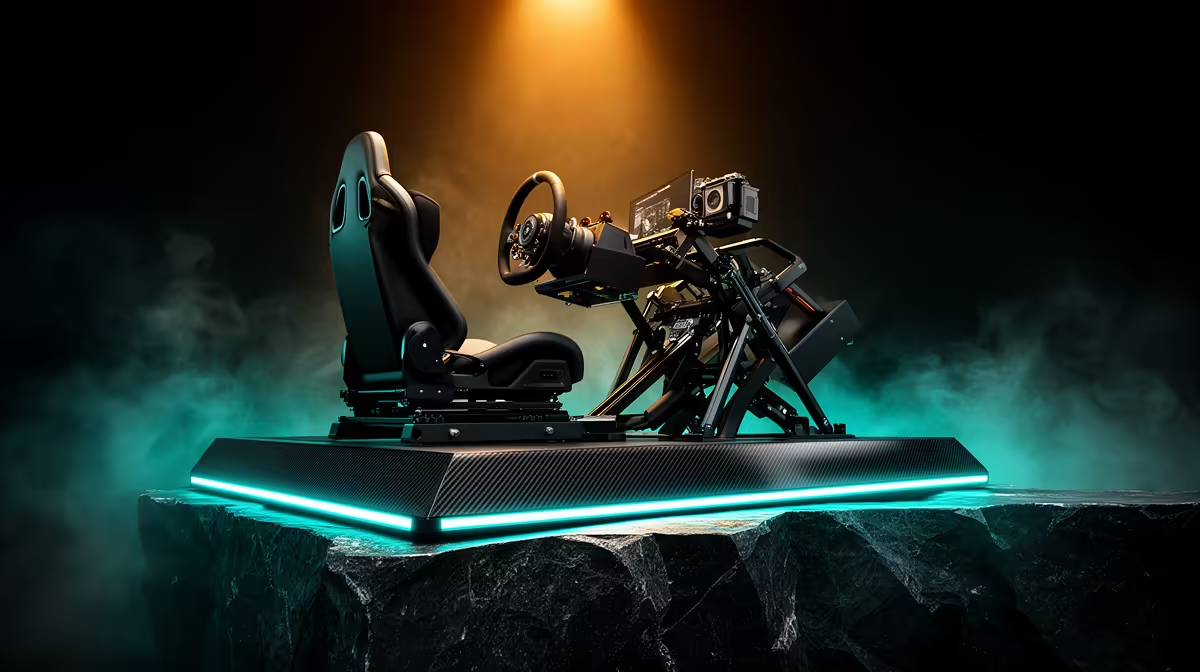
A separate shifter is fun for cars that use one, but paddle shifters on the wheel cover most learning. A handbrake matters for rally and drifting, yet it can wait until the core set is stable. A dedicated seat consumes a large share of the envelope and may force compromises in the controls.
You also do not need multiple rims, a dashboard display or a button box. Learn which controls you reach for during a race. Add a device only when it removes a clear problem.
The flight-simulator gear range can tempt a shared desk into too many clamps. If you also fly, plan how controls will swap without damaging the desk or turning every session into setup work.
A first-evening setup
Install the supported driver, update firmware only through the maker's official process and calibrate wheel centre and pedals. Start with a known car on a short circuit. Drive ten clean laps before adjusting force.
Change one setting at a time. Keep a note of steering rotation, force-feedback strength, damping and pedal dead zones. If the wheel oscillates on a straight, reduce the relevant setting according to the game's current guide.
Check clamp tightness after the first session with the system off. It should be secure without crushing the desk edge. Route power and USB so your feet cannot catch them.
Frequently Asked Questions
Can R5,000 buy a complete sim-racing cockpit?
Treat it as an entry wheel-and-pedal envelope. A full cockpit, seat and controls will usually require a separate current basket.
Is force feedback essential for a first wheel?
It is the feature that communicates grip and steering load. A basic force-feedback set teaches more than a strong spring-centred wheel.
Do I need a clutch pedal?
Not for every car. Two pedals and paddle shifters cover a broad starting library, while a clutch matters when manual simulation becomes your focus.
Build a R5,000 entry sim-racing basket around compatible force feedback, secure pedals and a desk clamp that fits your real furniture.