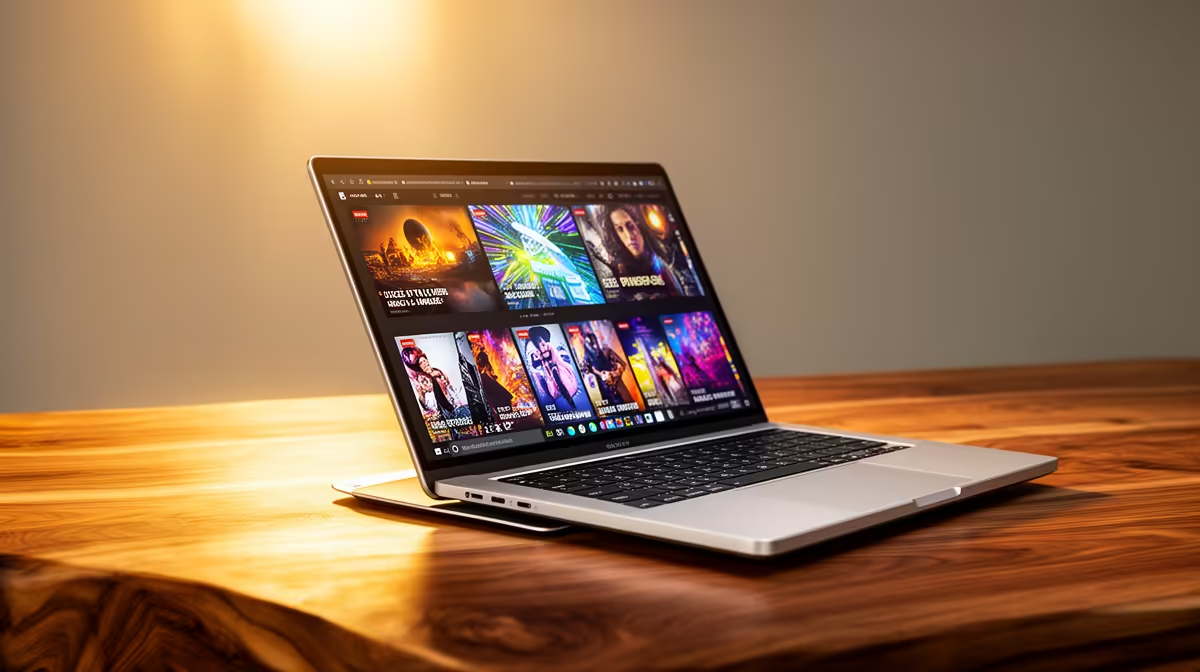
An R8,000 laptop can be a sensible student tool, but only when the course fits the hardware. At this level, the money buys access to research, writing, online classes and basic coding. It does not buy spare performance for every design package or a convincing gaming machine. The value of an R8,000 student laptop is therefore set by the workload you can name.
Quick Answer
Yes, R8,000 can buy a worthwhile new study laptop for browser research, documents, presentations, video calls and introductory programming. Expect an entry processor, 8GB of memory and limited storage, and do not assume it will suit engineering simulation, heavy video work or modern gaming. The ASUS Vivobook Go 15 with a Core i3, 8GB RAM and 256GB storage was listed at R7,999 by Evetech in July 2026, making the budget a real local starting point rather than a guarantee of high-end capability.
📚 Match the laptop to the course
Start with the institution's software list. A humanities, education, commerce or general first-year workload often centres on a browser, PDF reader, office applications, video meetings and a learning portal. An entry laptop can handle that combination if the user avoids filling it with unnecessary startup software.
Programming requirements vary. Web development, Python basics and many introductory tools can run on modest hardware. Large local databases, several virtual machines, mobile emulators or complex development environments demand more memory and processing power. Ask the department for the actual applications, not the vague instruction to buy a laptop.
Design, architecture and engineering courses can change the answer completely. Three-dimensional modelling, rendering, computer-aided design, scientific simulation and professional video applications may need a stronger processor, more RAM and dedicated graphics. An R8,000 machine can still cover notes and administration, but it may not be the primary workstation.
Remote access can bridge some gaps if the institution provides computer labs or virtual desktops. That is a service decision, not a reason to ignore the published requirements. Confirm access hours, connection needs and whether assessment software must run locally.
💻 Understand what R8,000 buys
The ASUS Vivobook Go 15 reference is useful because its specification is typical of the budget's purpose: a Core i3, 8GB memory and a 256GB SSD for R7,999 in Evetech's July 2026 listing. That combination is capable of ordinary study work, but each limit deserves attention.
Eight gigabytes is workable for focused use. A browser with many tabs, a video call and several large documents can consume it quickly. Close what is not needed and check whether the laptop allows a future memory upgrade; some thin budget models use soldered RAM.
A 256GB SSD keeps the machine responsive but requires storage discipline. Windows, applications and updates consume part of the drive before personal work begins. Cloud storage, an external drive and regular archiving can help, but offline access and backup still need a plan.
The display and chassis often reveal the budget most clearly. Check text sharpness, brightness, viewing angles, keyboard feel, webcam quality and port selection. A student may spend thousands of hours looking at the screen and typing, so these are productivity features rather than cosmetic extras.
🔋 Inspect the practical details
Battery claims are difficult to compare without matching test conditions. Look for independent behaviour under light work, but plan around the timetable and availability of charging points. Screen brightness, video calls, background software and battery age all affect the result.
Weight includes the charger carried in the bag. A large screen can make split-window work easier while adding bulk. A smaller laptop travels better but may feel cramped for spreadsheets or coding. Visit the trade-off with a ruler and the actual bag rather than choosing from diagonal size alone.
Ports matter on campus. Check for the USB connections required by external drives and accessories, a display output for presentations, and an audio option if the course needs it. A cheap adapter can solve some gaps, but several adapters reduce the simplicity of the purchase.
Wi-Fi standards and webcam quality are important for online lectures, yet the home network and connection quality may remain the bigger constraint. A laptop cannot fix poor coverage. Test the study location and budget for a headset if shared spaces make calls difficult.
Use Evetech's laptop best sellers to compare current configurations, then check the gaming laptop deals only if the course or personal use genuinely requires dedicated graphics. The second category is not a mandatory step up for ordinary assignments.
🧾 Spend for a complete study setup
Keep room for a protective sleeve or bag, a backup method and perhaps a mouse or headset. A laptop used for every assignment needs protection from both physical loss and data loss. One copy of a project on one internal drive is not a backup.
Warranty coverage matters, but the exact terms vary by model and seller. Confirm the duration, what evidence of purchase is required and how service is handled before checkout. Do not infer accidental-damage coverage from the existence of a standard warranty.
Saving longer makes sense when the next price tier solves a known constraint: 16GB RAM for a heavy course, a 512GB SSD for large local files, or a stronger processor for required software. It does not make sense to delay a needed study tool simply to chase specifications with no job.
If the R8,000 model meets every required application and the build is usable, it has done enough. A student laptop earns value through completed work, reliable access and data protection, not by pretending to be a premium machine.
Frequently Asked Questions
What can an R8,000 laptop actually handle?
It can cover research, documents, presentations, email, video calls, media and many introductory coding tasks. Heavy professional creation and modern gaming usually need more.
Is R8,000 really the cheapest new laptop in SA?
It is a realistic starting point for a conventional Windows study laptop in Evetech's July 2026 range. Promotions and lower-spec devices can vary, so use a dated listing when planning.
Can an R8,000 laptop run design or coding software?
Basic coding tools should be manageable. Design, engineering and advanced development software must be checked against the course's stated processor, memory and graphics requirements.
Is storage a concern?
Yes. A 256GB SSD can fill quickly, so plan cloud synchronisation, an external backup and regular cleanup without allowing the system drive to run nearly full.
Does an R8,000 laptop include a warranty?
New models normally include manufacturer or seller warranty terms, but coverage differs. Confirm the exact product's duration and exclusions before purchase.
Should students save longer for a better laptop?
Save when the next tier fixes a requirement the R8,000 model misses. Do not overspend for unused performance or postpone essential access without a clear reason.
Is battery life good on budget student laptops?
It can be adequate for light work, but capacity, screen settings and workload differ. Judge the model against the real timetable and charging access.
Ready to price the laptop your course actually needs?
Collect the software requirements, decide how much local storage must travel with you, and compare Evetech's student-friendly laptops against that checklist.