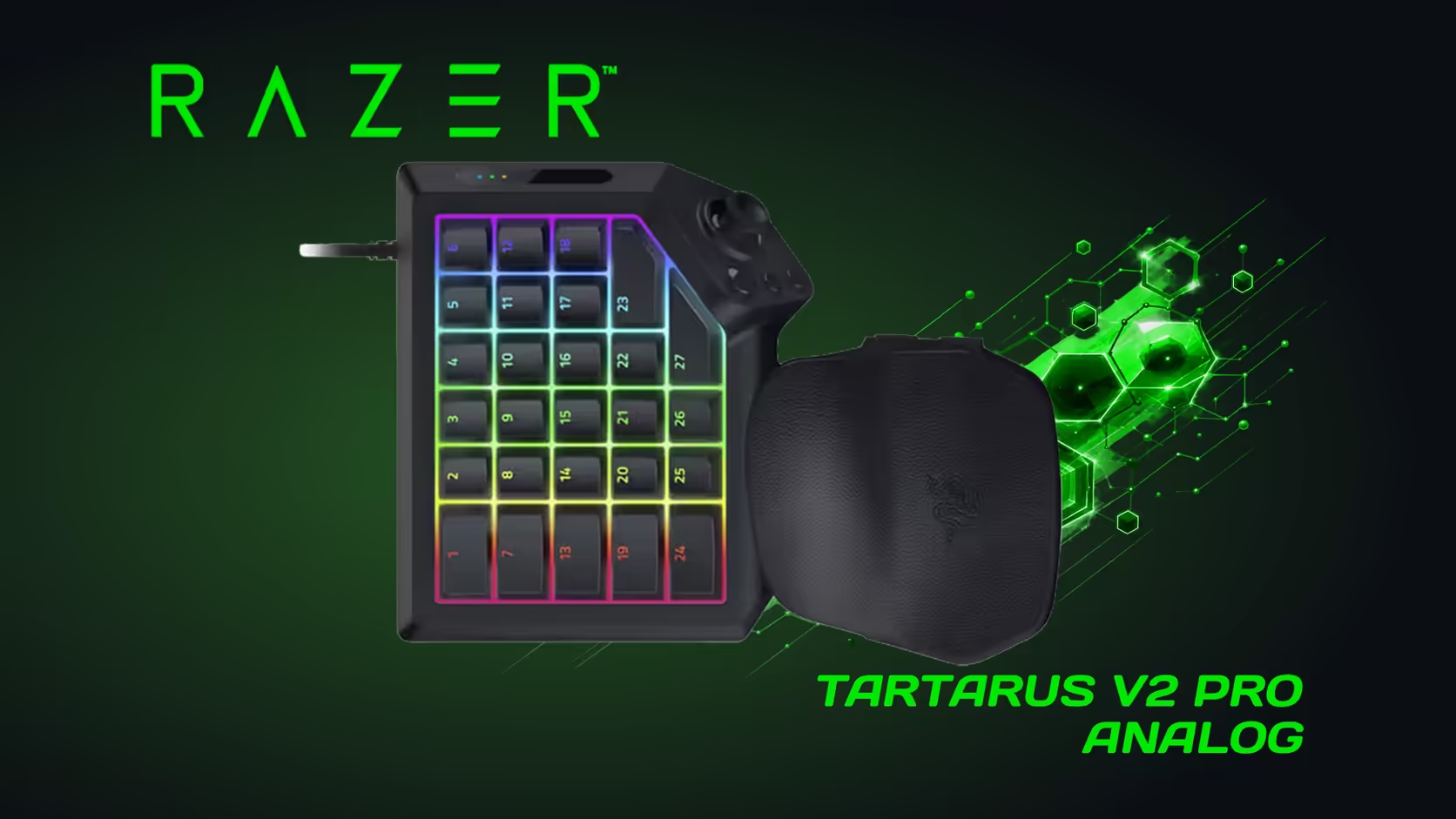
Rapid Trigger changes how a key behaves after it fires, and that is the part most players never think about. A standard key fires, then waits for a full return before it can fire again. On the Tartarus V2 Pro, Rapid Trigger changes the reset so the key is ready again after a much smaller movement. This article follows one key through a fight, step by step, so you can see where the time goes and where the feature saves it.
Quick Answer
Rapid Trigger changes the reset point, so a key is ready to fire again as soon as it starts to rise after a press. The Tartarus V2 Pro includes Rapid Trigger with its R4,799 price, and the effect shows up most on keys your hand presses in quick succession.
⏱️ Follow one key through a fight
Imagine a key you press eight times a second in a burst. Each press cycle lasts 125ms, which is the time from one press to the next. On a fixed key, part of that 125ms is the key climbing back up past its reset point before it can fire again. If the climb is slow, the next press arrives before the key is ready, and that press is lost.
With Rapid Trigger, the key is ready again after a small lift from its lowest point. The climb takes less time, so more of the 125ms cycle goes to pressing rather than waiting. The gain is small on a single cycle, but over a 30-second burst of 240 presses, a few milliseconds per cycle adds up to a noticeable difference in how many presses land.
🔁 Where the reset happens on the keypad
The keypad tracks the lowest point the key reached on the way down. When you start to lift, it measures the distance from that low point. Once the lift is large enough, the key is armed again. The rule is about the 0.3mm lift from the bottom of the press, not about how far the key has returned to the top.
That distinction matters in practice. A key that bottoms out deep takes longer to climb back to its fixed reset point, but with Rapid Trigger the keypad measures from the bottom, so a deep press does not cost you the full climb. A shallow press also re-arms quickly because the lift is short. In both cases the key is ready sooner than it would be on a fixed design.
🎯 When a fight rewards it
A fight rewards Rapid Trigger when the same key is pressed with short gaps between presses. Strafing, a repeated ability with a short internal timer and a fast combo all fit. The feature shows its value over a run of presses, not in a single press, so judge it on a 20-press drill lasting 30 seconds rather than one tap.
A fight does not reward it when each press is a decision with a long wait behind it. A cooldown ability fires once and then waits, so the reset point is irrelevant during the wait. Keep Rapid Trigger on the keys that repeat, and leave it off the keys that do not.
🧭 Setting it up for the keys that repeat
Start by choosing the keys your hand repeats. Count the presses on each key during a session, and pick the top two or three. Turn Rapid Trigger on for those keys first, then test them on a 20-press drill in a training area. Count the presses that land, and compare the result to the same drill with the feature off.
Keep the trigger depth in mind while you test. A very shallow trigger with a fast reset can misread a tremor as two presses, so when a key double-fires, raise its depth in 0.5mm steps. The gaming keyboards range shows other keypads and their feature sets, and the keyboard best sellers page gives a quick read on the boards buyers choose most often.
🧮 Timing a re-arm in milliseconds
Put the reset into numbers before you tune it. A fixed key that re-arms after a 1.5mm lift takes time to climb that distance, and the climb eats into the gap before the next press. Rapid Trigger cuts the lift to a short distance from the low point, so the re-arm happens sooner in the cycle. In a burst of eight presses a second, every press cycle is 125ms, and any time saved on the climb goes to the next press.
Test it over a 20-press run at a steady pace, first with Rapid Trigger off and then on. Count the presses that land each time. If the feature is working, the second run lands more presses at the same pace, and that difference is the clearest sign the setting is doing its job.
Keep the trigger depth in the same place while you test the re-arm. Changing the depth and the reset together hides which one changed the result. Hold the depth at 1.0mm for the first run, then move it only if the drill shows double-fires. A clean comparison needs one variable at a time, and two runs of 20 presses each take under 5 minutes.
Repeat the drill on a second day at the same time of day, so fatigue does not decide the result.
Log the result as a single line with the depth, the reset setting, the count and the date, so the next change starts from a record rather than from memory.
Frequently Asked Questions
What is the reset point on a fixed key?
It is the point the key must rise back past before it can fire again. Rapid Trigger replaces that fixed point with a small lift from the bottom of the press.
Does Rapid Trigger change the first press?
No. The first press depends on the trigger depth you set. Rapid Trigger affects the re-arm after release.
How many presses do I need in a test?
Twenty is enough to see a difference. Run the same drill with the feature on and off, and compare the presses that land.
Can Rapid Trigger cause double inputs?
It can, on a very shallow setting, if a tremor is read as an extra press. Raise the trigger depth in 0.5mm steps to stop it.
Want the repeat speed on your busiest keys?
Pick the keys your hand repeats most, then compare keypads in the gaming keyboard range against that list.