Fixed actuation and Rapid Trigger answer the same question in different ways: how soon should a key be ready to fire again? Fixed actuation waits for the key to climb back past a set point. Rapid Trigger resets the moment you ease off. Which input style fits depends on how often your game asks the same key to fire in a short space of time, and the answer is different for a shooter, an MMO and a fighting game.
Quick Answer
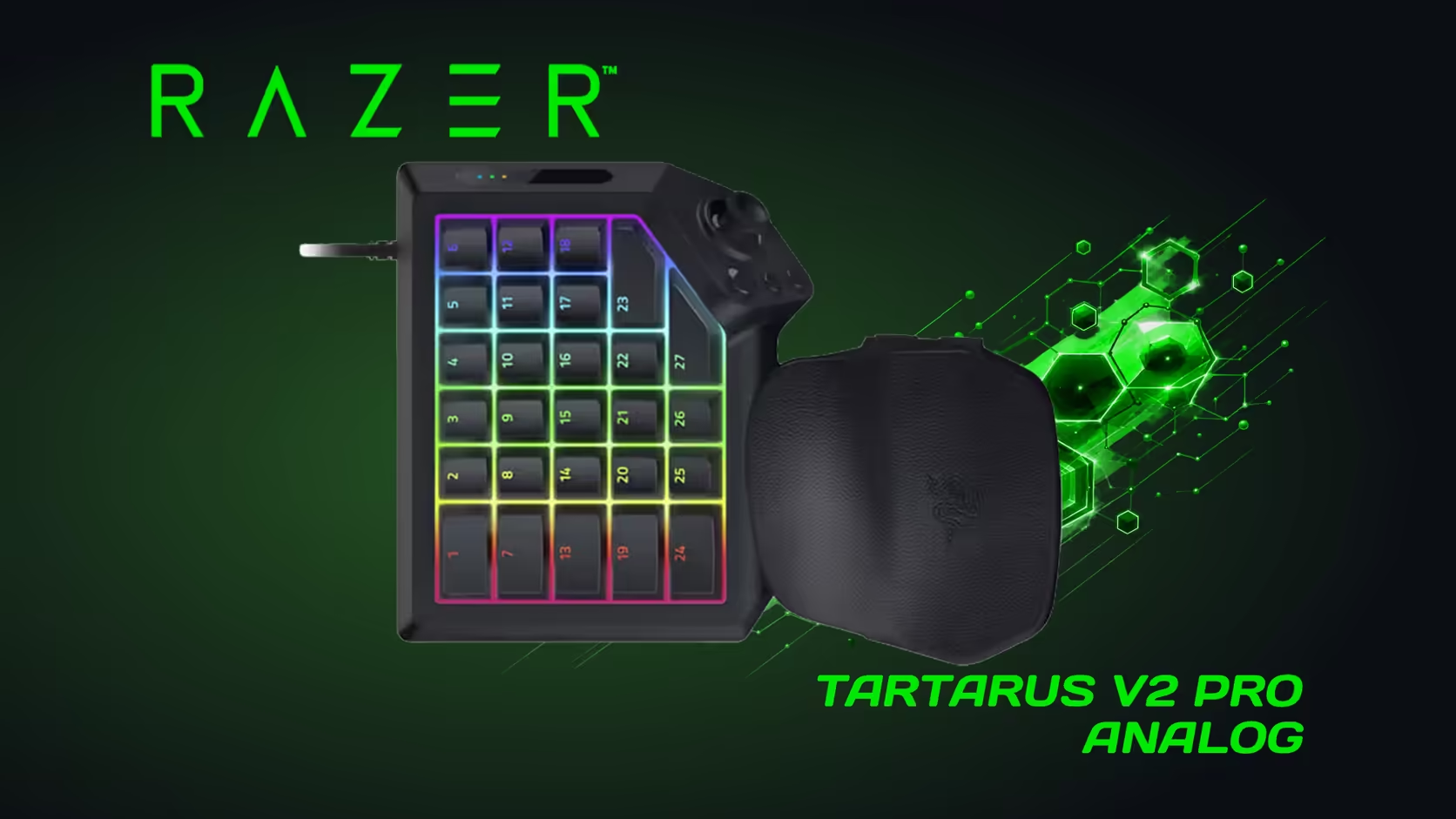
Rapid Trigger suits fast repeated inputs such as strafing, while fixed actuation suits deliberate single presses. Many players reach for Rapid Trigger on the keys they tap fastest and leave slower actions alone. The Tartarus V2 Pro offers both at R4,799, so you can test each one in your own games before you settle.
🔁 Shooters and strafing favour the fast reset
Strafing is a long run of short taps. Tap a key six times in two seconds and you have one press every 333ms, with a lift between each. With fixed actuation, the key has to climb back past its reset point before the next press can count, so a quick re-tap that does not lift far enough is simply lost. The lost tap costs you a step, and the step costs you position.
Rapid Trigger changes that. The key resets after a small lift, so a quick re-tap registers as soon as the key starts to rise. If your strafe keys sit on the keypad, that is where the feature earns its place. Run the six-taps-in-two-seconds drill on each setting and count the taps that land. The difference is usually obvious within a single set of 20.
🧙 Ability bars favour deliberate presses
An ability on a 1.5-second cooldown can fire at most once every 1,500ms, no matter how fast your hand moves. A faster reset saves a few milliseconds of hand travel, and the cooldown swallows that saving completely. Rapid Trigger does nothing for a press that the game only accepts once per cooldown.
What fixed actuation does well here is protect the press. A key set to 2.5mm needs a clear, firm press before it counts, so a brush across the keypad while you move does not cast the spell by accident. That reliability matters more in an ability bar than a few milliseconds of reset, because a wrong cast costs the cooldown you were waiting for.
Count the abilities in your bar that fire under a cooldown. If most of them do, fixed actuation at a sensible depth is the better default, and Rapid Trigger belongs only on the few keys you tap in bursts.
🧪 Test both in one evening
Pick the key you tap most often and set it to fixed actuation at 2.0mm. Run a 20-tap drill in a training area and count the taps that do not register. Then switch Rapid Trigger on for the same key, change nothing else, and run the drill again. Compare the two counts. A difference of two or three missed taps in 20 is a clear result, while a difference of one could simply be fatigue.
Repeat the test over three evenings, in the game you play most. Judge the setting on the misses and on how tired your hand feels by the end, not on how the theory reads. If price is part of the decision, the best gaming keyboard deals page is a place to check which keyboards are on offer as you weigh the input styles.
🎯 Which style for which game
A first-time buyer should start with fixed actuation at 2.0mm on every key, then turn Rapid Trigger on for a single key you tap in bursts. That keeps the comparison honest, because you change one thing at a time. Most players who try Rapid Trigger for a week keep it on the keys that repeat and turn it off where the press is a single decision.
If you are comparing keypads for this, the gaming keyboards range lists the boards and keypads on offer, so you can match the input style to the games you play before you spend anything.
📊 Keep a two-week record
Write three numbers each evening for 14 evenings: the misses on your burst key in Rapid Trigger mode, the misses on the same key in fixed mode, and the accidental presses across the whole keypad. Use the same 20-tap drill each time, so the counts can be compared. After two weeks, average the misses for each mode.
A gap of two or more misses per 20 taps across most evenings is a real preference. A gap of one, or a gap that flips from one evening to the next, is noise, and the better choice is then the mode that makes fewer accidental presses. Keep the record going for a third week if the gap is still unclear.
Keep the notes in a plain text file on the PC, one line per evening, with the date, the three numbers and the game you played. A line takes under 30 seconds to write. By the third week you have enough lines to see which mode suits the key, and a mode that wins in a shooter can still lose in a MOBA, so keep the game name on every line.
Read the record back on day 14 and write one sentence about the result before you decide. A single sentence keeps the decision honest, since the numbers are easy to argue with after a long week of play.
Frequently Asked Questions
Which should a first-time buyer pick?
Start with fixed actuation at 2.0mm on every key. Switch Rapid Trigger on for one key you tap in bursts, and compare the misses over three sessions.
Does Rapid Trigger make me faster at everything?
No. It helps repeated inputs, where the key has to fire again quickly. A single press, or an ability held behind a cooldown, gains almost nothing from a faster reset.
Can Rapid Trigger cause misfires?
A very shallow setting can read a shaky press as two presses. Should a key misfire with Rapid Trigger on, raise its actuation in 0.5mm steps and test again.
Is fixed actuation more accurate?
Accuracy depends on the depth you set and the hand you use. Test both styles at a depth your hand holds steady, then judge on the misses, not on the label.
Still choosing an input style?
Run the two-mode test on your most-used key for three evenings, then decide from the miss counts rather than from the theory.