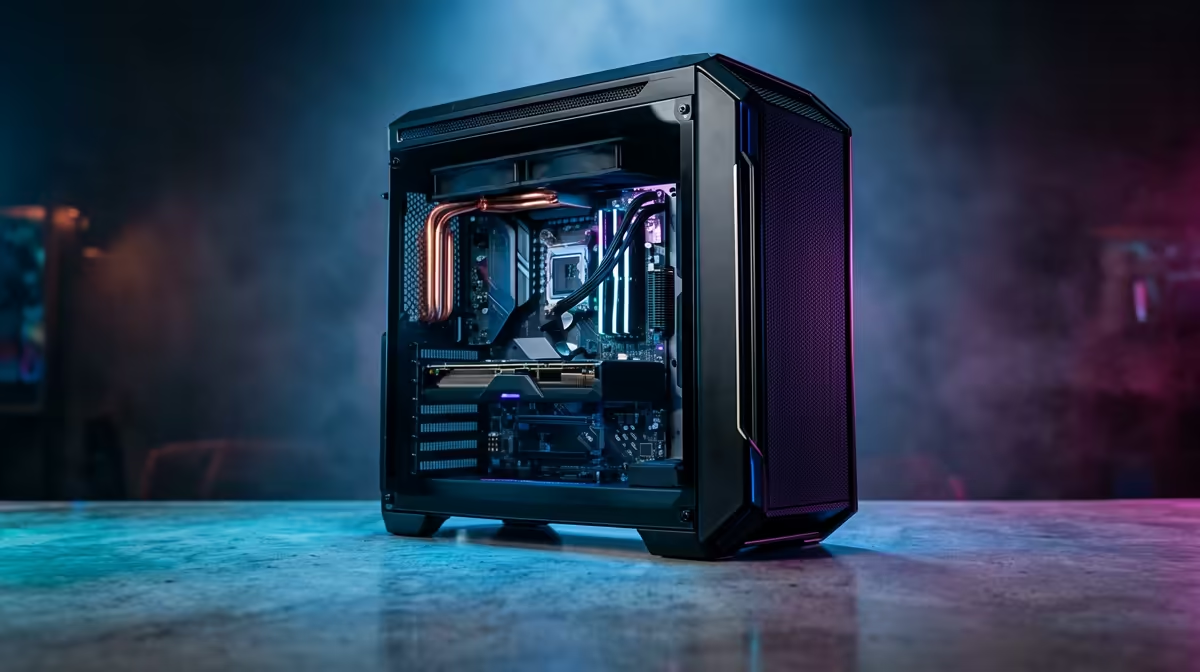
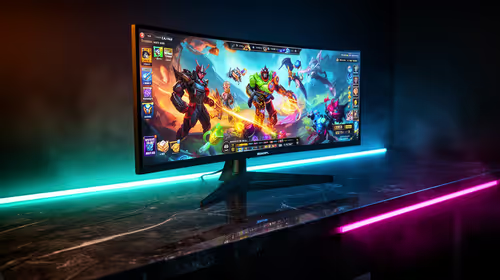
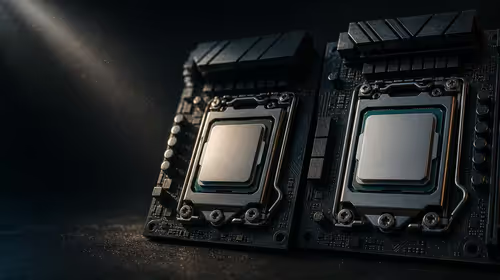
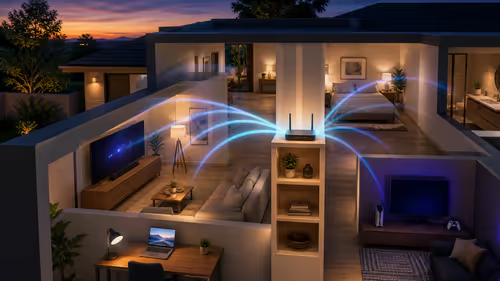
When a build is aimed at split-screen and shared-screen sessions on the lounge TV, the gap between B850 and B650 shows up in specific places rather than across the board.
Quick Answer
For couch co-op gaming, B650 already covers what you need, and B650 covers the same Ryzen chips for less outlay. Step up to B850 only if your build is high-end or you want headroom; expect to pay in the R3,500 to R8,500 band depending on tier.
Why B650 is still a smart buy
B650 covers the same Ryzen chips for less outlay, which keeps it firmly in the value seat. If your current parts are healthy, the money saved by choosing B650 is better aimed at the component that limits you most right now.
Heat, fit and platform checks
Before you commit, confirm your board, cooling and case actually support the AMD chipset you want. SA ambient temps run warm, so airflow and proper mounting matter; a throttled part is no faster than the cheaper one it replaced.
Where your Rands do the most work
For a couch co-op gaming machine in the R3,500 to R8,500 bracket, the order that moves the needle is usually GPU, then display, then memory, then this AMD chipset choice. Spend top-down and you rarely regret it.
FAQ
Will B650 hold me back in couch co-op gaming?
Not in any way you would notice during normal play. B650 covers the same Ryzen chips for less outlay, so the bottleneck is far more likely to be your GPU or panel.
Does B850 run hotter or need extra cooling?
It can draw a little more, so check your board and airflow first. In a well-ventilated SA build it is manageable, but a cramped case can claw back the advantage.
What price should I budget for B850 parts?
Plan for roughly the R3,500 to R8,500 range depending on brand and tier. Watch for the moment the B850 option costs only a little more than B650, because that is when it makes sense.
Buyer Tip
If B850 costs only a little more than B650 on the day, take it; otherwise put the saving into GPU or your monitor.