Quick Answer
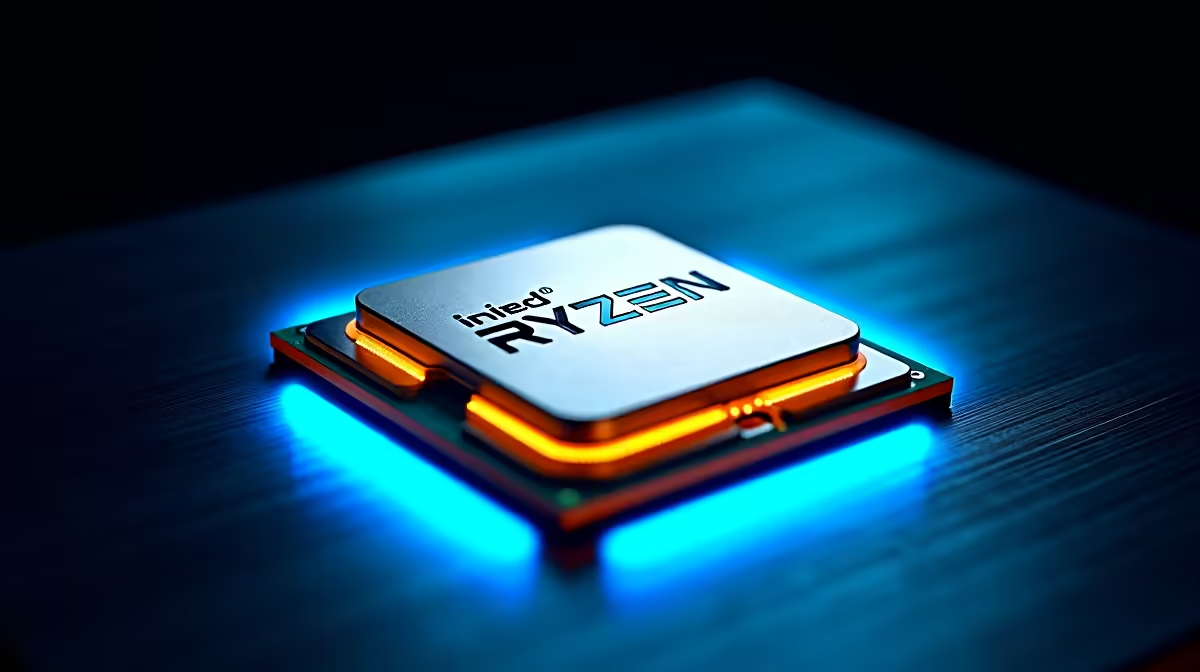
The 9800X3D is best paired with DDR5-6000 CL30; its 3D V-Cache makes memory speed matter less, so 6000 is both the sweet spot and the point of diminishing returns. Do not pay for 6400+ kits on this chip, since the cache already absorbs much of the latency that fast RAM would address.
Reading The X3D Memory Picture
On a standard Ryzen chip, faster memory measurably lifts frames in CPU-bound games. The 9800X3D changes that equation: its large stacked cache keeps game data close to the cores, so the CPU goes to system RAM less often. The upshot is that DDR5-6000 CL30 delivers near-peak gaming performance, and stepping to faster, pricier kits adds little. The 6000 sweet spot also keeps the Infinity Fabric in a 1:1 ratio for clean, stable operation.
This is good news for value: you get elite gaming performance with mainstream memory rather than exotic high-speed kits.
Building Around The 9800X3D
Use a 2x16GB DDR5-6000 CL30 kit for gaming, or 2x32GB for streaming and creator work, fitted in A2/B2 with EXPO enabled. Confirm the kit is on the board's QVL. Spend any memory budget you save on cooling, a 240mm AIO keeps this warm chip boosting, or on a stronger GPU, both of which lift performance more than faster RAM would on the 9800X3D.
FAQ
Is DDR5-6000 enough for the 9800X3D?
Yes, it is the sweet spot. The chip's 3D V-Cache reduces memory dependence, so 6000 CL30 delivers near-peak gaming performance and faster kits add little for the extra cost.
Will a 6400 or 6800 kit boost the 9800X3D?
Barely. Because the cache absorbs much of the latency fast RAM addresses, the gain over 6000 is minimal. The money is better spent on cooling or the GPU.
What capacity suits the 9800X3D?
32GB for gaming, 64GB if you stream or create alongside gaming. The 8-core X3D chip handles both, so match the capacity to your actual workload rather than overbuying.
Pair the 9800X3D at Evetech with a 2x16GB DDR5-6000 CL30 kit, enable EXPO, and put any saved budget into cooling or the GPU.