Quick Answer
A B650 board is the smart budget pairing for the Ryzen 9 9900X3D; expect R3,000 to R5,000 in SA for a board with a VRM strong enough for a 12 or 16-core chip plus DDR5-6000 support.
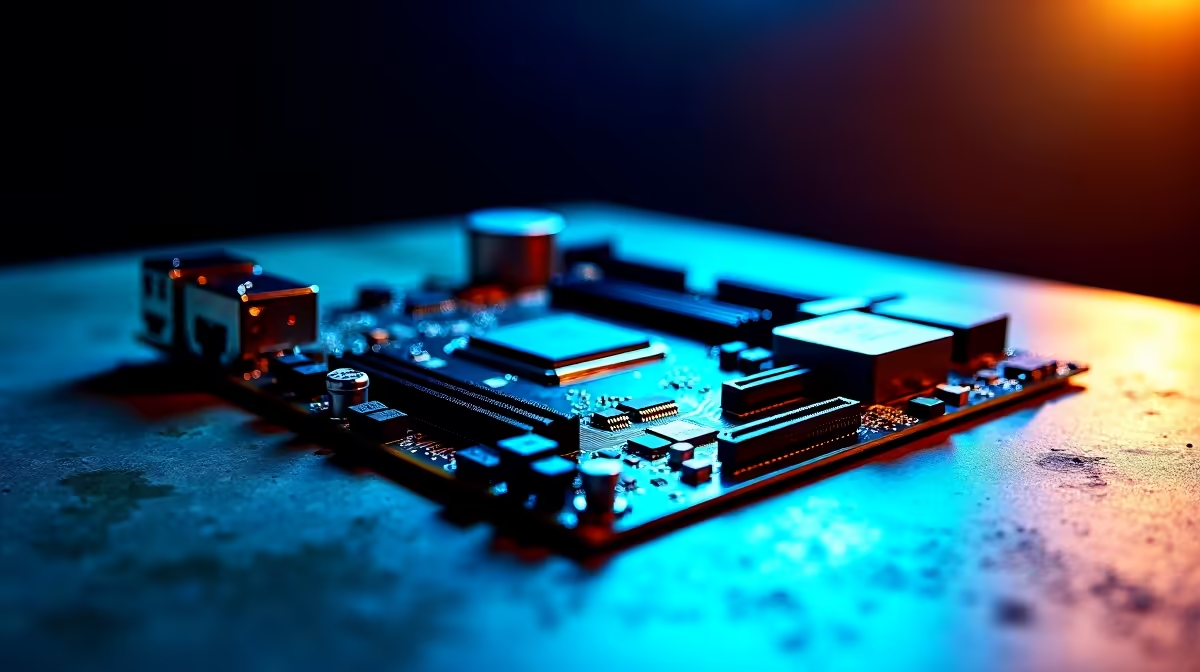
Choosing the B-tier (B650) board for your Ryzen 9 9900X3D
B650 gives you the full Ryzen 9 9900X3D performance for less than X670 by trimming extra PCIe 5.0 lanes and some rear USB. For gaming and most creative work you never miss them. The one thing not to skimp on is the VRM: a 120W draws real power, so target a board with at least a 12+2 phase design and decent heatsinks.
What to verify before buying in SA
Check the board's VRM rating, its memory support list for your DDR5-6000 CL30 kit, and that the rear I/O carries the ports you actually use. Confirm the BIOS is current for Zen 5 support before first boot. A 12-core Zen 5 chip in a 120W envelope wants VRM heatsinks that sustain all-core load without throttling, so favour boards reviewers have stress-tested rather than guessing from a spec sheet. Budget realistically and plan cooling, case clearance and the PSU around the board together, since a mismatch there is the usual reason a strong CPU underperforms in a real build.
FAQ
Is B650 good enough for a Ryzen 9?
Yes, as long as the VRM is sized for it. A solid B650 board with a 12-phase or better VRM runs a 12 or 16-core Ryzen 9 without throttling for gaming and creator loads.
What do I give up choosing B650 over X670?
Mainly some PCIe 5.0 lanes and rear USB ports. Most builders never use them, so B650 is the better value for a gaming-led build.
Do I need PCIe 5.0 on a budget board?
B650E adds a PCIe 5.0 GPU slot if you want it. Plain B650 keeps the GPU at Gen4, which is no real bottleneck for current graphics cards.
Pro Tip
Flash the motherboard BIOS to the latest stable version before first boot so the Ryzen 9 9900X3D is recognised and your DDR5-6000 kit trains cleanly. Many AM5 boards ship with firmware that predates current Ryzen support.