Shipping a GPU to SA: Damage, Insurance and Claims Reality
Quick Answer
A graphics card can survive a long trip in its factory box, but it remains a difficult parcel. The cooler is heavy, the PCB is thin and exposed fan blades can dislike a hard side impact. International delivery adds more handling points, and a vague promise of insurance may cover far less than the card's value.
Protect yourself before dispatch. Confirm the exact card, packaging method, declared value, covered events and person entitled to claim. Then record the unopened box and test the card at stock settings as soon as it arrives.
Why a GPU Is a Tough Parcel
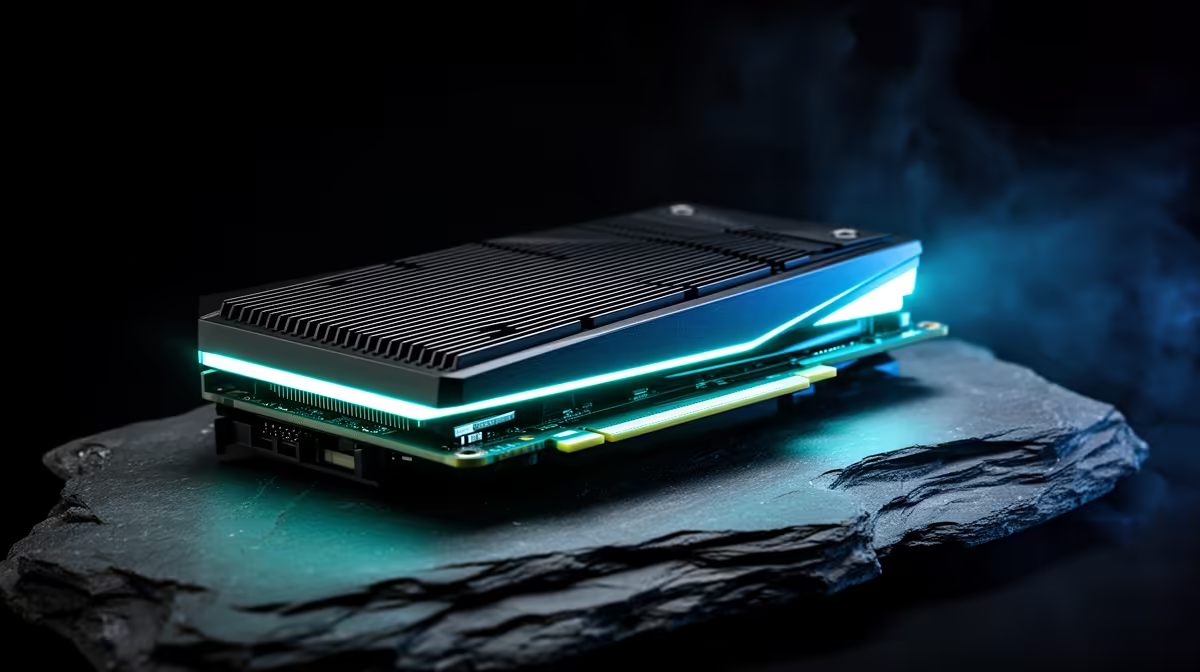
Modern cards concentrate a large cooler on a printed circuit board. In a desktop case, the bracket and slot support that assembly. Inside a loose or damaged parcel, the cooler can act as a lever when the box is dropped.
The retail insert is shaped around the product, yet it depends on the outer carton staying intact. A crushed corner can transfer force through the foam. Fans can lose blades or develop bearing noise, while the metal bracket can bend and leave the card sitting crooked in the slot.
Triple-slot cards bring more mass. Cards with long vapour-chamber coolers need firm end support. A compact dual-fan card has less leverage, though its connector, shroud and fans still need protection.
Ask the seller for a photograph of the card in its insert before the parcel closes. If it is a used card, insist on an anti-static bag and a fitted foam cradle. Bubble wrap around a bare board is poor packaging.
Keep the Factory Box Inside a Shipping Carton
The printed retail box is useful product packaging. It also attracts attention and may lack the puncture resistance you want for an international route.
A plain outer carton should leave room for cushioning on every side. The inner box must not slide when the parcel moves. Heavy accessories belong in a separate compartment so an adapter or support bracket cannot strike the card.
Tell a freight forwarder not to discard the manufacturer's insert during consolidation. Repacking can reduce volume, but shaving a few centimetres has little value if the card loses its fitted support.
Seal quality matters. Photograph the retail serial label and the completed outer box. Ask the shipper to use a service that records parcel weight at handover, because a weight change can help show where contents went missing.
Declared Value Is Not the Same as Full Cover
A shipping form may ask for customs value even when no damage cover has been purchased. Declaring the true price helps customs and establishes the shipment's value, but it does not create an all-risk policy by itself.
Standard courier liability can be capped by weight, service terms or an amount far below the card's invoice. Added cover can lift the ceiling. Its exclusions still matter: electronics, used goods, insufficient packaging, concealed damage and indirect loss may receive special treatment.
Ask four direct questions. Does the cover include physical damage as well as disappearance? Is the limit the invoice value or another amount? Who must submit the claim? Must the damaged item and all packing remain available for inspection?
Get the answers in the policy or service terms. A chat message that says the parcel is safe gives you little help if the written contract says something else.
Customs Value Must Be Honest
Do not lower the declaration to trim border charges. A false amount creates a customs problem and can cap a loss claim at the same low figure.
Keep the seller invoice, payment proof and product page. The model description should distinguish the exact card and memory capacity. Customs may need those records to classify and value the shipment.
If the seller replaces a damaged card, preserve the original import documents and RMA trail. The replacement has a new serial, and the paperwork should link it to the first movement.
The freight charge, border assessment and insurance premium all belong in your landed-cost comparison. A cheap card price does not reimburse the time spent chasing a weak claim.
Inspect Before You Install
Film the parcel before opening it. Capture the label, all six faces, seals and any dents or punctures. Open it without destroying the evidence.
Check the retail box, anti-static seal, serial and accessories. Look along the PCB edge for a curve, inspect the PCIe connector, examine the bracket and turn each fan by hand with the card unpowered. A fan should move without scraping.
Do not straighten metal or press a cooler back into place before reporting visible damage. Those actions make the original condition harder to prove.
If the card looks sound, photograph it in the test system and use proper slot support. Connect the required power leads without sharp bends at the plug. Start at factory settings.
Test for Damage That Hides at First
Install the current driver and capture the detected model, memory and link width. Run a known game or graphics test while watching temperature, clock behaviour and fan noise.
Repeat the test after the card cools. Intermittent display loss, visual corruption or a fan that fails only at a certain speed can escape a five-minute check.
Test every display output you plan to use. A bent bracket can place strain on a port even when the GPU completes a benchmark.
Keep overclocking, undervolting and firmware changes out of the first test. You want a clean record of behaviour at the supplied settings. If something fails, save screenshots, video and system details before removing the card.
File the Right Claim Fast
Visible impact points toward transit damage. A clean carton with a card that fails may involve the seller's arrival policy or the manufacturer's warranty. Report the facts without guessing at the cause.
Open the case through the contracting party named in the shipment. The buyer, seller or forwarder may hold the courier account, and carriers can restrict claims to that account holder.
Submit the invoice, tracking history, declaration, packaging images, unboxing record, serial and test evidence. Keep the card and every insert. Follow the stated deadline and request a reference number.
A claim can involve inspection, repair assessment or recovery of the damaged goods. Plan for that delay. Buying another card before the decision may solve your PC problem, but it does not change the claim terms.
Warranty Does Not Replace Transit Protection
Manufacturing defects and delivery damage follow different routes. A manufacturer can decline impact damage even when the product has a valid warranty. The courier can dispute a claim if the outer packaging lacks evidence or does not meet its standard.
Confirm whether the exact serial has South African warranty support. Some regional products must return to the original seller. International return freight, cover and customs paperwork can consume the original saving.
A used card adds another layer. Ask for the original invoice where available, the remaining warranty terms and evidence that the serial matches. A seller's personal assurance is not a substitute for written eligibility.
Put a Local Card Beside the Import
Use the graphics card range available in South Africa to find the same performance tier, then compare current options on the GPU best-seller page.
Match the GPU class, VRAM, cooler size, power requirement and warranty route. Add international freight, declared-value cover, border charges and a possible return to the imported total.
Local delivery still requires careful inspection. The advantage is a shorter chain and a local place to begin the support conversation if the box or card arrives hurt.
Decide With the Claim Route in View
Before paying, write down who owns the shipment contract, who can claim and what the maximum payment would be after every excess or cap. If any answer is missing, treat the uncovered amount as money you could lose.
Choose packaging that supports the cooler and isolates loose parts. Save the evidence before dispatch and again at delivery. That preparation takes minutes and can decide whether a damaged-card claim has substance.
FAQ
Why is a graphics card risky to ship internationally?
Its heavy cooler, thin PCB, exposed bracket and fans can react badly to drops or crushing. More handling points create more chances for damage.
Does standard courier liability cover the card's full value?
It may not. Liability can be capped by the carrier's terms, so confirm any added cover, exclusions and maximum claim amount before dispatch.
What evidence helps with a transit-damage claim?
Keep the invoice, declaration, tracking, serial, photographs of the sealed parcel, an unboxing record, all packaging and repeatable test results from stock settings.
Confirm the GPU's packing, covered value and claim owner before dispatch, then compare the landed risk with a locally supported card in the same performance class.