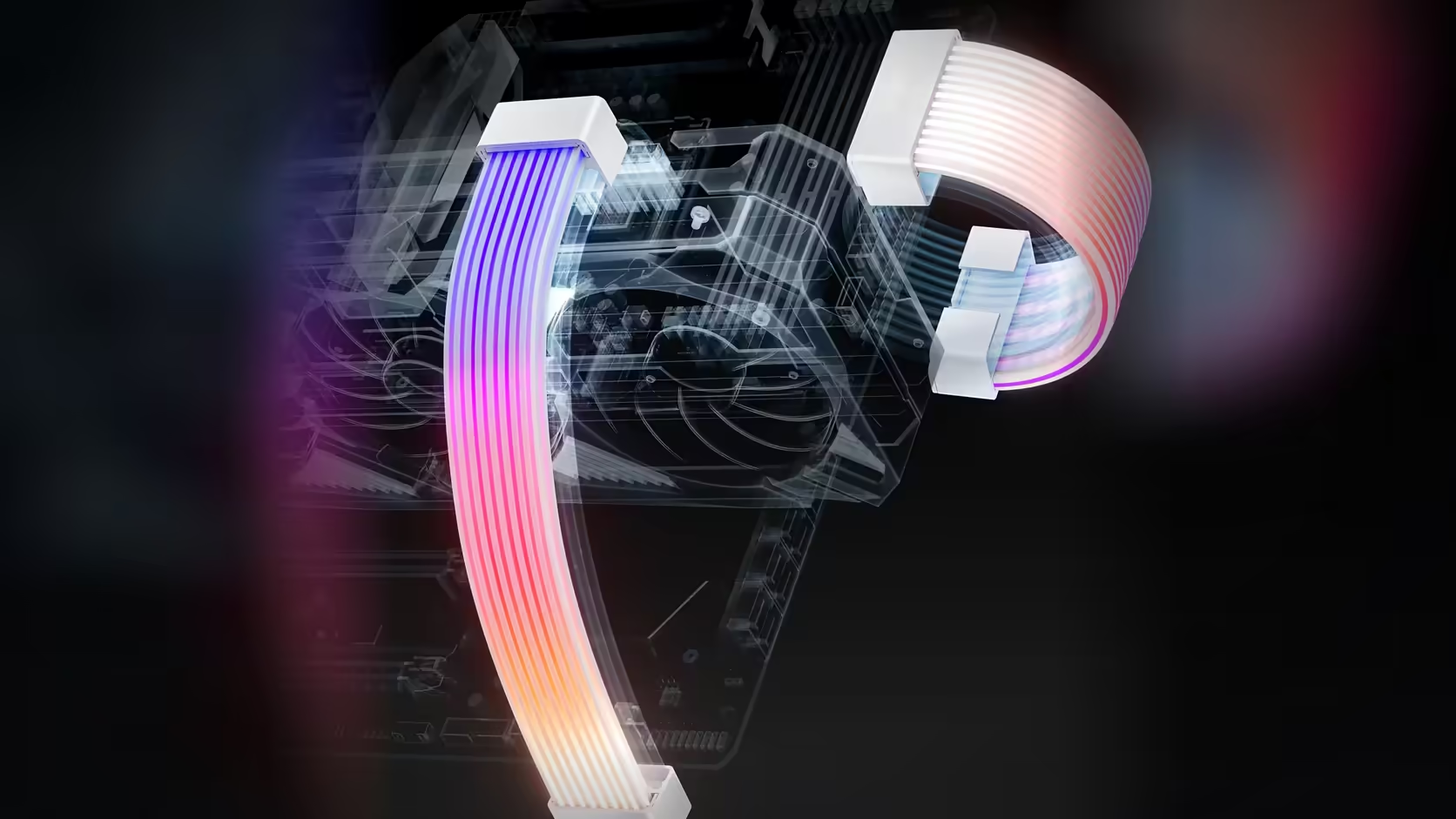
Two very different cable types can sit underneath the exact same shell, and AsiaHorse's Aurora ARGB cover kit genuinely supports both - stock power supply cables straight from the factory, and sleeved extensions bought and fitted afterwards. What the product description doesn't spell out is that the two behave a little differently once they're actually inside a moulded cover, and it's worth understanding why before assuming either one is a drop-in fit.
Quick Answer
Both stock flat cables and sleeved extensions are named as suitable for the Aurora kit's shells, but they sit differently inside the moulded profile. A factory stock cable is generally flat and lies naturally within the shell's shape, while a braided extension is rounder and fuller, taking up more of the internal space. Trying the fit before committing either cable type to a final position is worth the moment it takes, given the R699 kit isn't cheap to get wrong twice.
📋 Both cable types are officially supported
Both cable types get an explicit mention in the listing rather than one merely being tolerated while the other is treated as the intended fitment. That means the choice of which cable to run underneath a shell doesn't need to be made with the cover in mind at all; either works from a compatibility standpoint.
🔍 Where the practical difference actually shows up
It comes down to shape. A factory stock power supply cable is typically a flat ribbon, and that flat profile sits naturally inside a shell built around a similarly flat internal space. A sleeved extension, by contrast, is usually rounder and noticeably fuller once the individual wires are wrapped in braid - taking up more of the shell's internal volume even though the underlying wire count and gauge might be identical to the stock cable it's replacing.
Does braid ever actually prevent a clean fit?
Thicker braided extensions can make the shell's clip noticeably tighter than it would be over a stock cable, which is exactly why laying the shell against the run - without clipping it shut - is worth doing before committing to either cable type in a given position. If the shell visibly struggles to close comfortably at that stage, that's the moment to reconsider rather than after it's already fastened.
👁️ Does the choice of cable change the visible finish at all?
Only beyond the ends of the shell. Once a cover is clipped shut, the covered section is hidden regardless of what's underneath it - the visible finish along that length becomes the shell itself, and the cable type only shows where the cover doesn't reach.
🔒 Which cable type sits more securely once fitted?
Both hold well provided the shell closes without being forced - a snug fit is a snug fit whether the cable inside is a flat stock ribbon or a rounder braided extension. The risk isn't security so much as an uneven, stressed closure if the shell is pushed shut over a run that's genuinely too thick for it.
A shell that's borderline too tight over a particular cable will usually make that obvious before it's fully clipped shut - resistance building noticeably as the two halves come together, rather than snapping closed cleanly the way a properly matched fit does. Stopping at that point and reconsidering the cable underneath, rather than pushing through the resistance, is the more reliable approach than hoping the shell will settle in over time, since a stressed clip rarely relaxes on its own once it's forced shut.
Should cable combs be removed from either type?
Yes, from whichever run a shell is covering - a comb adds height to the cable regardless of whether the underlying cable itself is flat stock or braided, and that added height is what tends to interfere with a clean closure more than the cable material itself does.
🎨 Can the two cable types be mixed across the pair?
Nothing about the kit prevents it - the 24-pin cover and the graphics cover are entirely independent fittings, so a build running a stock cable under one and a sleeved extension under the other works perfectly well, provided each individually passes the same fit check before being clipped shut.
This kind of mixed setup often happens without any deliberate plan behind it - a builder buys a sleeved extension for the graphics run specifically because it's the more visible one, while leaving the factory cable running underneath the 24-pin cover simply because nobody got around to replacing it. Since both are hidden along the covered section regardless of what's underneath, the finished result looks identical either way, which takes some of the pressure off matching cable types across the two runs.
For anyone deciding between the two cable types before ordering either the kit or an extension to go with it, Evetech's cable management range covers both stock-compatible ties and sleeved extension products, and the case lighting selection is a useful comparison for how other addressable lighting products handle the same underlying-cable question.
Frequently Asked Questions
Are both stock cables and sleeved extensions actually supported?
Yes - both are called out directly in the listing as fine for the covers to clip over, with neither treated as an afterthought.
What's the practical difference between the two once fitted?
Shape - a flat factory ribbon lies naturally in the shell, while a braided extension is fuller and takes up more internal space.
Does braid ever stop a shell from closing properly?
Thicker braid can make the clip noticeably tighter, which is why testing the fit before actually clipping the shell shut is worth doing.
Does the choice of cable change how the finished build looks?
Only beyond the ends of the shell, since the covered section is hidden either way once the cover is clipped shut.
Which cable type holds more securely inside the shell?
Both hold well provided the shell closes without being forced over the run - the risk is an uneven fit, not insecurity.
Should cable combs be removed regardless of cable type?
Yes - from any run a shell will cover, since a comb adds height under the shell whatever the underlying cable happens to be.
Can stock cable and sleeved extension be mixed across the two shells?
Yes - the two covers are independent fittings, so running different cable types under each works fine if both pass the fit check.
Deciding between stock cables and sleeved extensions?
Browse Evetech's cable management range to compare both before fitting a cover.