Streaming and CAD can justify moving beyond a six-core processor when the current system shows sustained processor limits during the real combined workload. Core count alone cannot answer it. Architecture, clock speed, memory, graphics encoding and the CAD application all affect performance.
Benchmark the six-core system
Open a representative CAD model, run the game and start a private broadcast using the normal encoder. Record processor utilisation per core, frame-time consistency, export or rebuild time and dropped frames. Repeat with the stream off to identify which task creates the limit.
Check the whole platform
For a compact performance reference, the verified R12,900 GEEKOM A8 Max combines Ryzen 9 8945HS, 32GB memory and a 1TB SSD. Its product facts do not establish the requested core configuration or game result, so confirm processor specifications and application support on the exact model.
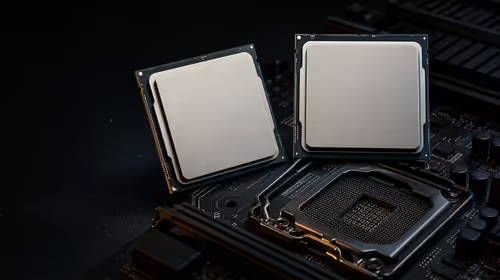
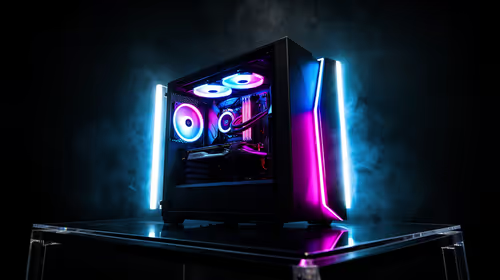
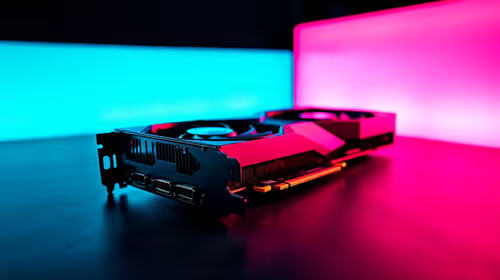
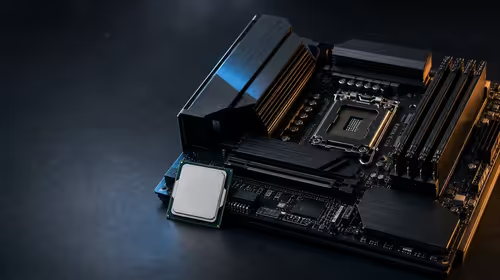
A tower platform may allow a faster desktop CPU, larger cooling and discrete graphics. Hardware encoding on a supported GPU can reduce processor demand, while a CAD rebuild may still favour strong single-thread performance. Include motherboard, memory generation, cooler and PSU in an upgrade price.
Move to eight cores and sixteen threads only when the measured workload benefits and the complete platform fits. A memory or graphics change may solve the bottleneck at lower cost. Re-run the same benchmark after upgrading.
Balancing CAD and streaming? > Ask Evetech to match processor, graphics and memory to a repeatable workload.