



Marvel Rivals launch in South Africa
Marvel Rivals launch needs a balanced parts plan, not a random basket. Map the CPU, GPU, RAM, SSD, cooling, and monitor target to the budget so SA builders know where to spend first.
Read moreStreaming Microphone buying order should be shortlisted around the job it must do. South African buyers should compare audio quality, mic clarity, comfort, and connection type, warranty path, and upgrade room before treating any pick as best.
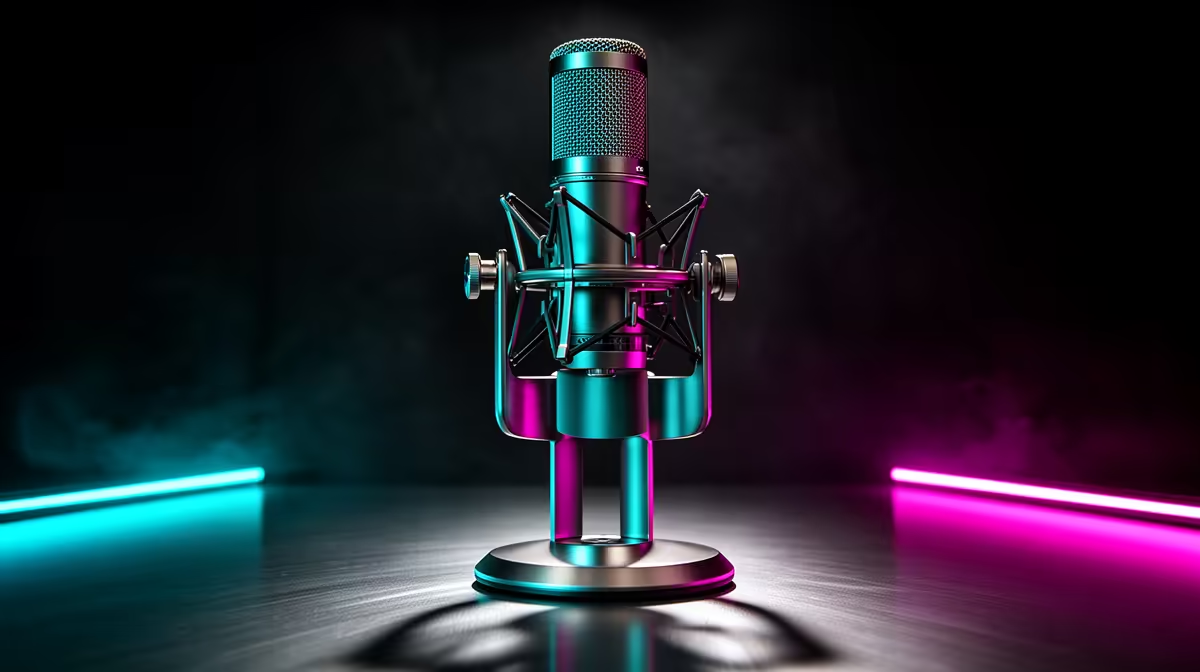
Get the buying order right and the budget stretches much further. A streaming mic upgrade is about buying in the right order and matching the pickup pattern to your room, not chasing the priciest model first. For most SA buyers the smart play is to anchor the choice to your actual room and budget, not a spec sheet.
Start with a single good USB cardioid mic, not an XLR chain: a HyperX SoloCast or Blue Yeti covers most streaming and voice chat. Entry USB mics start around R1,200-R1,800, a Blue Yeti sits near R2,500-R3,500, and a broadcast-grade Shure MV7 runs roughly R5,500-R7,500 at Evetech.
First buy is a USB cardioid mic around R1,200-R1,800 (such as a HyperX SoloCast); it plugs in over USB-C with no interface. Cardioid is the right pattern for solo voice: it captures the front and rejects keyboard clatter and room echo behind. Omni records the whole room and is wrong for gaming.
Move to a Blue Yeti (R2,500-R3,500) for multiple patterns, and only to a Shure MV7 (R5,500-R7,500) once your room is treated and you stream regularly. A R200-R400 desk arm and a foam shield do more for clarity than a pricier mic in an untreated room.
Buy in order of impact, not price. Get the core piece of a streaming microphone working first, add the accessory that removes your biggest friction next, and treat the nice-to-haves as later purchases. Spending in the wrong order is how budgets get wasted on extras before the basics are right.
Anchor the choice to your actual room, desk and budget rather than a spec sheet. Measure your space, list what you already own, and buy to fill the real gap. The right pick is the one that fits your day-to-day, not the one with the biggest numbers.
Measure your room and list what you own, then buy a streaming microphone to fill the real gap. The right pick fits your day-to-day, not the biggest spec numbers.
A USB cardioid mic around R1,200-R1,800 like a HyperX SoloCast. It plugs in over USB, rejects keyboard noise and needs no audio interface.
Only once you stream regularly with basic room treatment. The MV7 (R5,500-R7,500) sounds tighter in an untreated room, but a Blue Yeti (R2,500-R3,500) is better value for casual streamers.
a USB cardioid mic around R1,500, add a R300 desk arm and foam shield, and only step up to a Shure MV7 once you stream regularly.
Marvel Rivals launch needs a balanced parts plan, not a random basket. Map the CPU, GPU, RAM, SSD, cooling, and monitor target to the budget so SA builders know where to spend first.
Read more
Path of Exile 2 launch needs a balanced parts plan, not a random basket. Map the CPU, GPU, RAM, SSD, cooling, and monitor target to the budget so SA builders know where to spend first.
Read more
Black Myth Wukong launch needs a balanced parts plan, not a random basket. Map the CPU, GPU, RAM, SSD, cooling, and monitor target to the budget so SA builders know where to spend first.
Read more
Hollow Knight PC requirements should be mapped to resolution, settings and upgrade budget before choosing a tier. Verify current requirements, then balance GPU, CPU, RAM and SSD around SA pricing.
Read more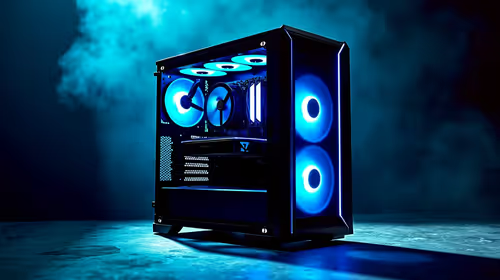
Hollow Knight build planning should focus on the target resolution, settings and total system balance. Treat launch wording as time-sensitive, then verify requirements before choosing SA PC parts.
Read more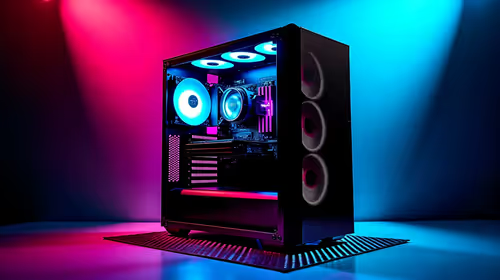
Fallout 4 PC requirements should be mapped to resolution, settings and upgrade budget before choosing a tier. Verify current requirements, then balance GPU, CPU, RAM and SSD around SA pricing.
Read more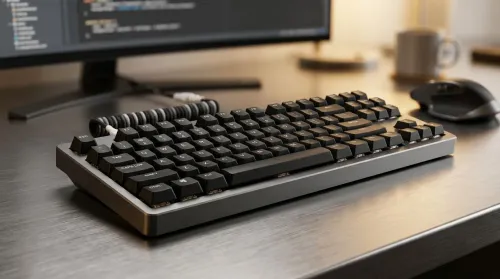
Wondering if a TKL wireless mechanical keyboard is worth it for everyday productivity? We break down latency, battery life, comfort, and workflow gains for real work. ⚡⌨️

Maximise battery life on a fanless 15-inch laptop using efficiency core architecture. Cut idle drain, tune power profiles, and improve thermals for longer runtime. 🔋⚙️
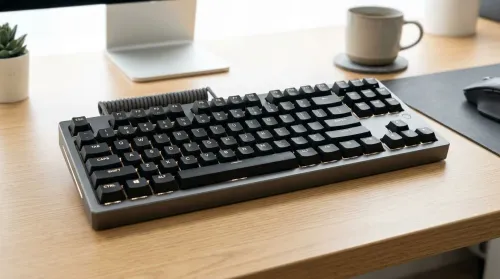
Learn how to reduce desk clutter with a TKL wireless keyboard using fewer cables, smart placement, and tidy essentials. Get a faster, calmer workspace with better ergonomics. ✅🧼
RGB keyboard lighting too distracting? Learn how to manage backlight modes, set brightness, and reduce distraction for focus and productivity 😌🖱️
Are themed gaming keyboards worth the extra cost? Compare build quality, switch options, features, and resale value to find the best fit for your setup 🎮⌨️
Full-Size vs Tenkeyless mechanical keyboards for gaming: find out if a smaller layout truly improves aim, speed, and comfort. We break down layout, desk space, latency-feel, and keybinds 🎮⌨️

Dedicated media rollers vs function key shortcuts: learn which setup gives you better workflow control, faster media access, and fewer mistakes. 🖱️🎧
Best Mechanical Switch Type for Gaming: Clicky vs Linear vs Tactile. Find your feel, speed, and noise balance with practical guidance for FPS, MOBA, and productivity 😄🎮
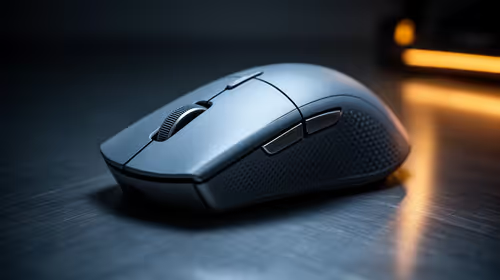
Direct mouse answer: Mouse not keeping up with your work? Everything that matters about dual-mode 2.4GHz + BT 5.0: DPI behaviour, channel switching, battery curves and per-app button mapping. Covers when 2.4GHz USB wins (low-latency desk) and when BT 5.0 wins (laptop, d
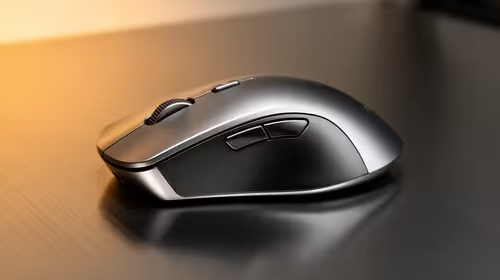
Plain wireless mouse guide: Mouse not keeping up with your work? Everything that matters about wireless productivity mouse: DPI behaviour, channel switching, battery curves and per-app button mapping. Includes DPI tuning tips, channel switch shortcuts, and ZAR-aware fea
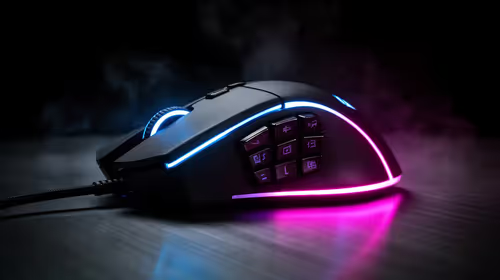
Real productivity numbers: Set up your wireless mouse in this order: everything that matters about wireless productivity mouse: DPI behaviour, channel switching, battery curves and per-app button mapping. Includes DPI tuning tips, channel switch shortcuts, and ZAR-aware
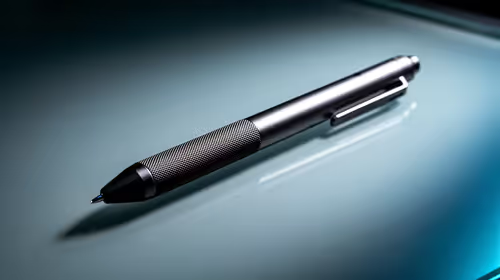
Pen not feeling like paper? Stylus lag and skipping usually trace to old drivers, dirty nibs, or display refresh mismatches, not the pen itself. Covers pressure curve tuning, tilt thresholds, nib swap timing, and SA pricing brackets.