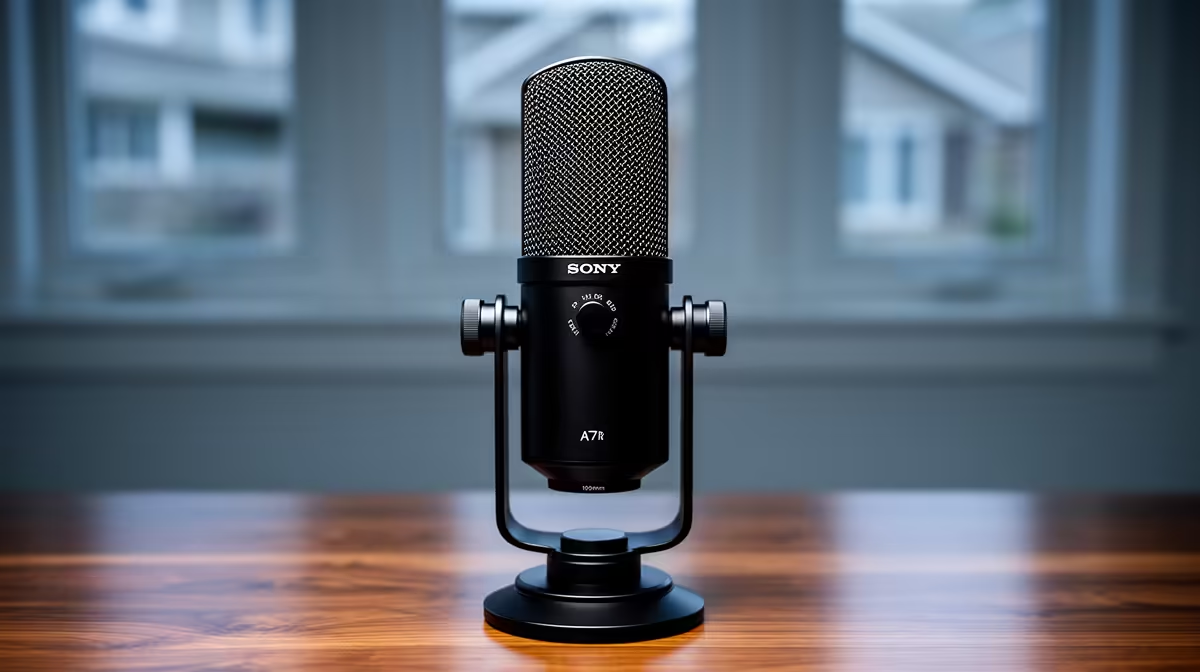
South African suburbs are not quiet. A lawnmower starts next door. Dogs two properties down run a full commentary on the postman. Taxis idle on the road outside. A standard cardioid microphone treats all of that noise as equally valid as your voice, and your recording pays the price. A supercardioid microphone applies a narrower pickup window to the problem, physically blocking a wider arc of ambient noise before any software processing touches the signal.
Quick Answer
A supercardioid mic captures a roughly 115-degree frontal zone, narrower than a cardioid's 130-degree window. This tighter pattern pushes steady suburban noise like traffic, dogs, and lawnmowers well into the background. Place it 8 to 10cm from your mouth to maximise the voice-to-room ratio further.
🔬 The Physics of the Supercardioid Pattern
Microphone pickup patterns are not arbitrary design choices. They are the result of how the capsule is ported: which surfaces are sealed, which are open, and how sound waves arriving from different angles interfere inside the body.
A cardioid capsule combines a pressure-sensitive front opening with a pressure-gradient channel from the rear. A supercardioid adjusts that balance to increase the gradient component, tightening the frontal capture angle to around 115 degrees and creating stronger rejection of sounds arriving from the sides at roughly 125 degrees off-axis.
The practical effect is that a source at the 90-degree position is attenuated significantly more than it would be on a cardioid. That attenuation is acoustic, not digital. It happens before the signal reaches the converter. Software noise removal working on an acoustically clean input produces far fewer artefacts than software trying to salvage a heavily contaminated one.
The Rear Lobe: What It Is and Why It Matters
Every supercardioid pattern includes a small rear pickup lobe directly behind the capsule at 180 degrees. This lobe is typically 8 to 10 dB quieter than the front zone, but it is real. Whatever sits directly behind the mic gets captured in some measure.
For a South African streamer, the most common rear-lobe problem is a PC tower fan exhaust or air conditioner. Position the mic so neither sits in the direct rear line. Angling the desk so the back wall is behind the mic, rather than an open room, also helps reduce reflections.
This rear lobe is why some streamers prefer a cardioid in noisy environments: cardioids have no rear lobe. Supercardioids trade that rear-lobe exposure for significantly better side rejection. In most South African suburban setups where dominant noise arrives from the sides -- windows, streets, neighbouring properties -- the trade favours the supercardioid.
🏠 Mapping the Noise Landscape of a SA Suburb
The noise a supercardioid is most effective against tends to arrive from the sides rather than directly behind. Identifying where your dominant sources are positioned before buying shapes how much improvement you can expect.
Street traffic in a Cape Town suburb typically arrives from one side wall of a home office if the desk faces the room interior. A supercardioid aimed away from that wall puts the street into the side rejection zone, where the pattern cuts by roughly 15 to 20 dB. That reduction pushes a moderate traffic drone below audibility in typical speech recordings.
Steady sources -- a lawnmower, a construction site a few houses away -- sit further off-axis still. The combination of a supercardioid cutting 15 dB plus a noise gate set just above the noise floor often makes suburban recordings sound close to studio-clean.
Dogs and voices from adjacent properties are harder because they are intermittent and spectrally similar to speech. Good isolation from these sources requires close mic placement. At 8 cm working distance, proximity effect boosts bass slightly, which a gentle high-pass filter at around 80 to 100 Hz corrects.
Pro Tip ⚡
Run a three-minute room noise capture before each session by recording in total silence with the mic at its working position. Play that file back in any audio editor and look at the waveform. If it is nearly flat, your gain and placement are working correctly. If it shows clear peaks where suburb sounds are, adjust the mic angle to push those sources further off-axis before recording your actual content.
🎙️ Dynamic Versus Condenser Supercardioids for Noisy Environments
The supercardioid designation covers two capsule technologies, and the choice matters in a noisy suburb.
A condenser supercardioid is highly sensitive, resolving fine vocal detail at distance. That sensitivity also pulls in distant suburb noise more readily. A condenser at 30 cm working distance in a Cape Town townhouse complex captures a wider noise floor than a dynamic at the same position.
A dynamic supercardioid has lower sensitivity by design and requires closer working distance, typically 5 to 10 cm, to achieve a full sound. That proximity naturally increases the voice-to-noise ratio. This is why broadcast dynamic mics -- built for news floors and sports sidelines -- favour the dynamic transducer even when condenser quality is available.
For a streamer in a townhouse complex, a busy street-facing flat, or a suburb with active neighbours, a dynamic supercardioid is usually the better technical choice. The condenser suits a quieter environment where vocal detail at longer working distance is the priority.
⚡ Stacking the Supercardioid With Software Noise Reduction
The supercardioid pattern is acoustic noise rejection. Software noise reduction is digital noise rejection. They address the same problem from different directions and work better together than either does alone.
A well-positioned supercardioid at 8 to 10 cm typically delivers a signal where suburb noise is already 15 to 20 dB below the voice. Software noise removal -- whether NVIDIA RTX Voice, Krisp, or a noise gate in OBS -- then deals with a much cleaner input. The result is a vocal track with minimal artefacts rather than software trying to carve speech out of a heavily contaminated signal.
Relying entirely on software to clean a noisy cardioid recording works to a point, but AI noise tools introduce tonal change at higher suppression settings, producing the characteristic "underwater" effect at extremes. Starting acoustically clean means the software operates in its transparent range.
Frequently Asked Questions
How wide is a supercardioid pickup angle?
The supercardioid pattern captures sound across a roughly 115-degree frontal arc, narrower than a standard cardioid's approximately 130-degree window. That difference produces noticeably stronger rejection of sources arriving from the sides, where most suburban ambient noise enters a home recording space.
Does a supercardioid mic have a rear pickup spot?
Yes. A small rear lobe at 180 degrees is inherent to the pattern. It is significantly less sensitive than the front -- typically 8 to 10 dB quieter -- but it is real. Position the mic so persistent noise sources such as PC fans, air conditioners, or street-facing windows do not sit directly behind the capsule.
How close should I sit for best rejection?
Around 8 to 10 cm is the standard working distance in a noisy environment. Close placement raises your voice well above the suburb noise floor the pattern is already cutting. Distances of 5 cm or less introduce proximity bass boost requiring a high-pass filter but push side rejection to its maximum effectiveness.
Can it block a lawnmower next door?
A supercardioid cuts steady-state side noise by roughly 15 to 20 dB. A neighbour's lawnmower at the 90-degree side position sits within that rejection zone. Combined with close mic placement and a noise gate, the mower is pushed to the point where it is inaudible in the finished recording.
Is a supercardioid better than software noise removal?
They are most effective together. The supercardioid handles acoustic rejection before conversion, so software works on a cleaner input at lower suppression settings, producing fewer artefacts and no tonal hollowness. Starting acoustically clean gives the software a smaller problem, which it solves with more transparent results.
Ready to record clean audio despite a noisy suburb?
Browse the supercardioid microphone range at Evetech and find the mic pattern that pushes street noise, dogs, and traffic out of your recordings before software ever touches the signal.