



Marvel Rivals launch in South Africa
Marvel Rivals launch needs a balanced parts plan, not a random basket. Map the CPU, GPU, RAM, SSD, cooling, and monitor target to the budget so SA builders know where to spend first.
Read more• Compare brightness tech; • Explain HDR and peak luminance; • Buying and upgrade guidance. Tandem OLED monitors deliver higher peak brightness and improved uniformity in 2026—learn why they matter and how to choose one. 🔍✨
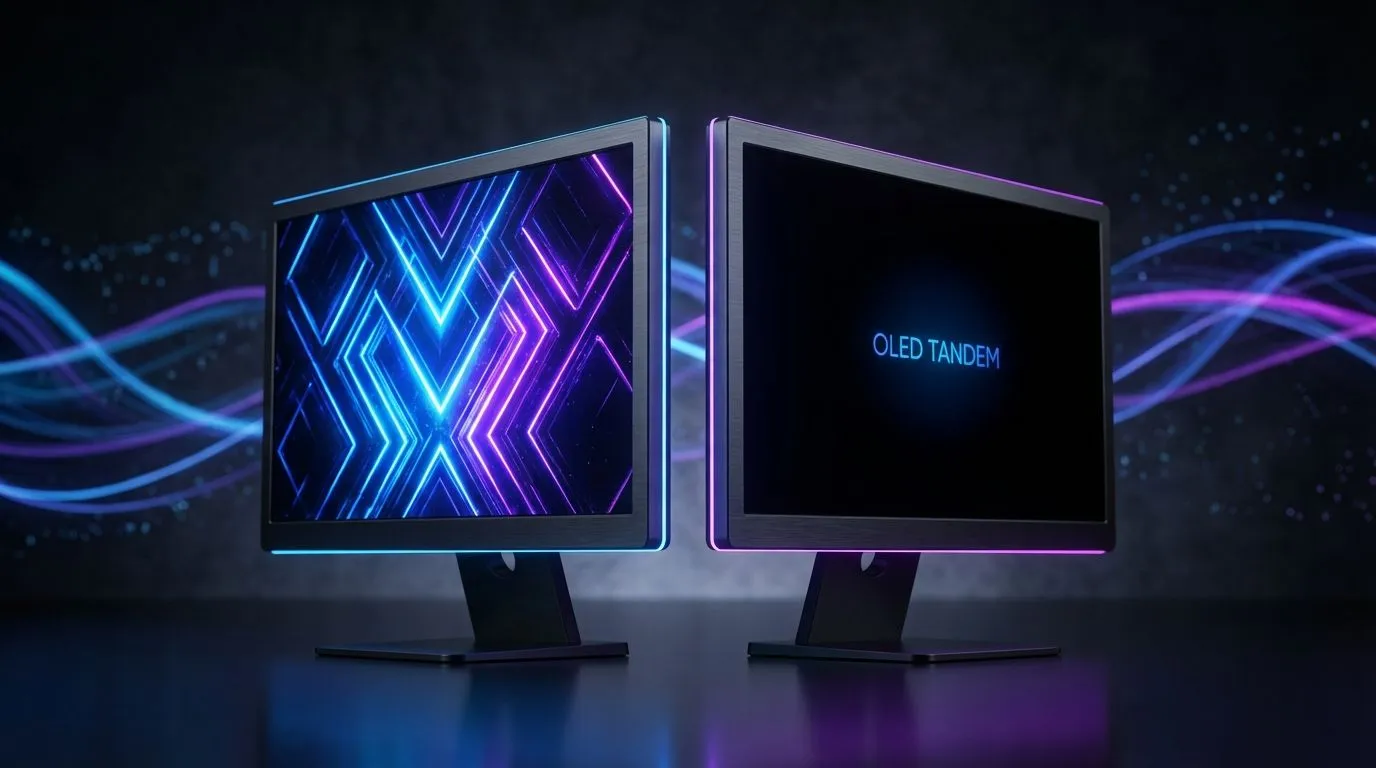
OLED monitors offer jaw-dropping contrast and colours, but let's be honest, the fear of burn-in and the struggle for brightness in a sunny Mzansi room is real. What if you could have it all? Incredible HDR performance, insane longevity, and zero anxiety. That's the promise of the next big leap in display tech. Enter Tandem OLED monitors, a 2026 reality that aims to solve OLED's biggest problems for good.
Think of it like this: instead of one layer of light-emitting organic diodes, a tandem OLED display stacks two (or even three) layers on top of each other. It’s a beautifully simple concept with powerful results. By sharing the workload between two emission layers, the panel can achieve two critical goals simultaneously: push out significantly more light for incredible brightness and reduce the strain on each individual pixel, massively extending the monitor's lifespan.
This isn't some far-off fantasy tech; it's already being used in high-end automotive displays and some tablets. The challenge has been scaling it up and making it affordable for desktop monitors, a hurdle manufacturers are set to clear by 2026. This evolution will finally bring the ultimate display experience from the concept stage right to your gaming desk.
The core benefits of the Tandem OLED monitor technology directly address the main concerns gamers and creators have with current-gen OLEDs. It’s not just an incremental update; it's a fundamental improvement.
Current OLED monitors are fantastic in a dark room, but can sometimes feel a bit dim compared to the brightest IPS panels in a well-lit space. Tandem OLED technology changes that by doubling the light output. We're talking peak brightness levels that could hit 3,000 nits, making HDR content look absolutely spectacular and daytime gaming sessions a vibrant, reflection-free experience. The extra brightness also means more detail and nuance in the brightest and darkest parts of an image.
The biggest fear for anyone dropping serious ZAR on an OLED is permanent image retention, or burn-in. Because tandem OLEDs share the electrical load across two layers, each pixel is under far less stress. According to panel manufacturers, this can increase the operational lifespan by up to 400%. For gamers with static HUD elements or professionals using fixed toolbars, this means peace of mind and a display that will last for years to come.
While we wait for the first Tandem OLED monitors in 2026, the display market isn't standing still. The technology that powers today's best screens is more advanced and accessible than ever. Whether you prefer an immersive curved screen or a traditional flat panel, features that were once high-end are now standard.
For competitive play, a screen in the 170Hz – 240Hz refresh rate range provides the buttery-smooth motion needed to track targets effectively. Pairing this with the right anti-screen tearing technology is also crucial. Whether your graphics card supports FreeSync (AMD), the premium G-Sync (NVIDIA), or the more general Adaptive Sync standard, ensuring your monitor is compatible is key to a flawless visual experience.
Don't wait for 2026 to get a better picture! Use Windows 11's built-in HDR calibration tool (search for "Calibrate display for HDR video"). This app helps you set the perfect black levels and peak brightness for your specific monitor, ensuring you're getting the most out of its current capabilities, especially for HDR games and movies.
The future is incredibly bright... literally. The arrival of tandem OLED monitors will redefine what we expect from a premium display, combining the perfect blacks of OLED with the dazzling brightness and robust longevity we've always wanted. It’s a technology worth getting excited about. 🚀
Ready to Upgrade Your View Today? While 2026 is on the horizon, today's monitor technology is better than ever. Don't wait to experience incredible visuals. Explore our massive range of PC monitors and find the perfect screen to dominate your game right now.
Tandem OLED monitors pair two OLED layers or panels to boost peak brightness and maintain color accuracy; expect higher luminance and HDR headroom.
Yes. Tandem OLEDs show significantly higher peak brightness and better sustained luminance, improving HDR highlights and visibility in bright rooms.
They can use more power at peak brightness, but 2026 efficiency gains and smart driving reduce average consumption compared to naive designs.
Content creators, HDR editors, and gamers who need high peak brightness, better contrast, and color accuracy benefit most from tandem OLED monitors.
Tandem OLED increases HDR peak brightness and dynamic range, giving brighter specular highlights and more lifelike contrast in HDR content.
Basic calibration helps; professional color workflow may require hardware calibration to fully exploit tandem OLED color accuracy and uniformity.
Yes—several 2026 models emphasize peak brightness and HDR. Look for reviews citing tandem OLED brightness and real-world HDR tests.
Marvel Rivals launch needs a balanced parts plan, not a random basket. Map the CPU, GPU, RAM, SSD, cooling, and monitor target to the budget so SA builders know where to spend first.
Read more
Path of Exile 2 launch needs a balanced parts plan, not a random basket. Map the CPU, GPU, RAM, SSD, cooling, and monitor target to the budget so SA builders know where to spend first.
Read more
Black Myth Wukong launch needs a balanced parts plan, not a random basket. Map the CPU, GPU, RAM, SSD, cooling, and monitor target to the budget so SA builders know where to spend first.
Read more
Hollow Knight PC requirements should be mapped to resolution, settings and upgrade budget before choosing a tier. Verify current requirements, then balance GPU, CPU, RAM and SSD around SA pricing.
Read more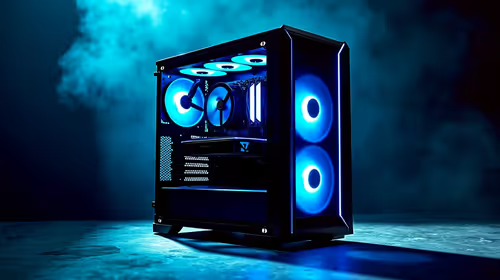
Hollow Knight build planning should focus on the target resolution, settings and total system balance. Treat launch wording as time-sensitive, then verify requirements before choosing SA PC parts.
Read more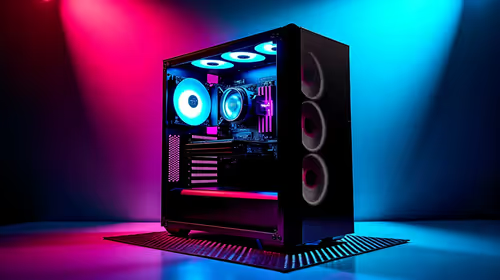
Fallout 4 PC requirements should be mapped to resolution, settings and upgrade budget before choosing a tier. Verify current requirements, then balance GPU, CPU, RAM and SSD around SA pricing.
Read more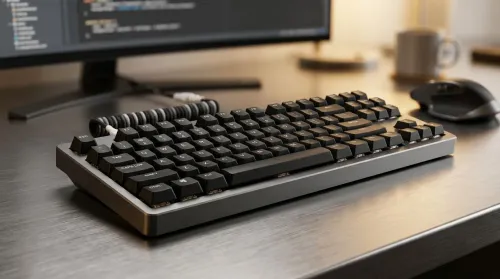
Wondering if a TKL wireless mechanical keyboard is worth it for everyday productivity? We break down latency, battery life, comfort, and workflow gains for real work. ⚡⌨️

Maximise battery life on a fanless 15-inch laptop using efficiency core architecture. Cut idle drain, tune power profiles, and improve thermals for longer runtime. 🔋⚙️
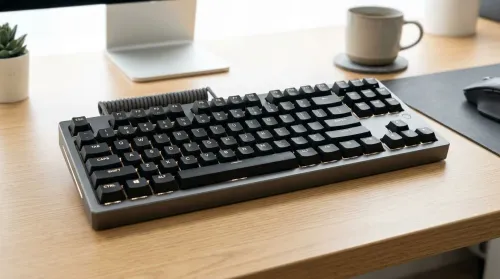
Learn how to reduce desk clutter with a TKL wireless keyboard using fewer cables, smart placement, and tidy essentials. Get a faster, calmer workspace with better ergonomics. ✅🧼
RGB keyboard lighting too distracting? Learn how to manage backlight modes, set brightness, and reduce distraction for focus and productivity 😌🖱️

Are themed gaming keyboards worth the extra cost? Compare build quality, switch options, features, and resale value to find the best fit for your setup 🎮⌨️

Full-Size vs Tenkeyless mechanical keyboards for gaming: find out if a smaller layout truly improves aim, speed, and comfort. We break down layout, desk space, latency-feel, and keybinds 🎮⌨️

Dedicated media rollers vs function key shortcuts: learn which setup gives you better workflow control, faster media access, and fewer mistakes. 🖱️🎧

Best Mechanical Switch Type for Gaming: Clicky vs Linear vs Tactile. Find your feel, speed, and noise balance with practical guidance for FPS, MOBA, and productivity 😄🎮

Direct mouse answer: Mouse not keeping up with your work? Everything that matters about dual-mode 2.4GHz + BT 5.0: DPI behaviour, channel switching, battery curves and per-app button mapping. Covers when 2.4GHz USB wins (low-latency desk) and when BT 5.0 wins (laptop, d

Plain wireless mouse guide: Mouse not keeping up with your work? Everything that matters about wireless productivity mouse: DPI behaviour, channel switching, battery curves and per-app button mapping. Includes DPI tuning tips, channel switch shortcuts, and ZAR-aware fea

Real productivity numbers: Set up your wireless mouse in this order: everything that matters about wireless productivity mouse: DPI behaviour, channel switching, battery curves and per-app button mapping. Includes DPI tuning tips, channel switch shortcuts, and ZAR-aware
Pen not feeling like paper? Stylus lag and skipping usually trace to old drivers, dirty nibs, or display refresh mismatches, not the pen itself. Covers pressure curve tuning, tilt thresholds, nib swap timing, and SA pricing brackets.