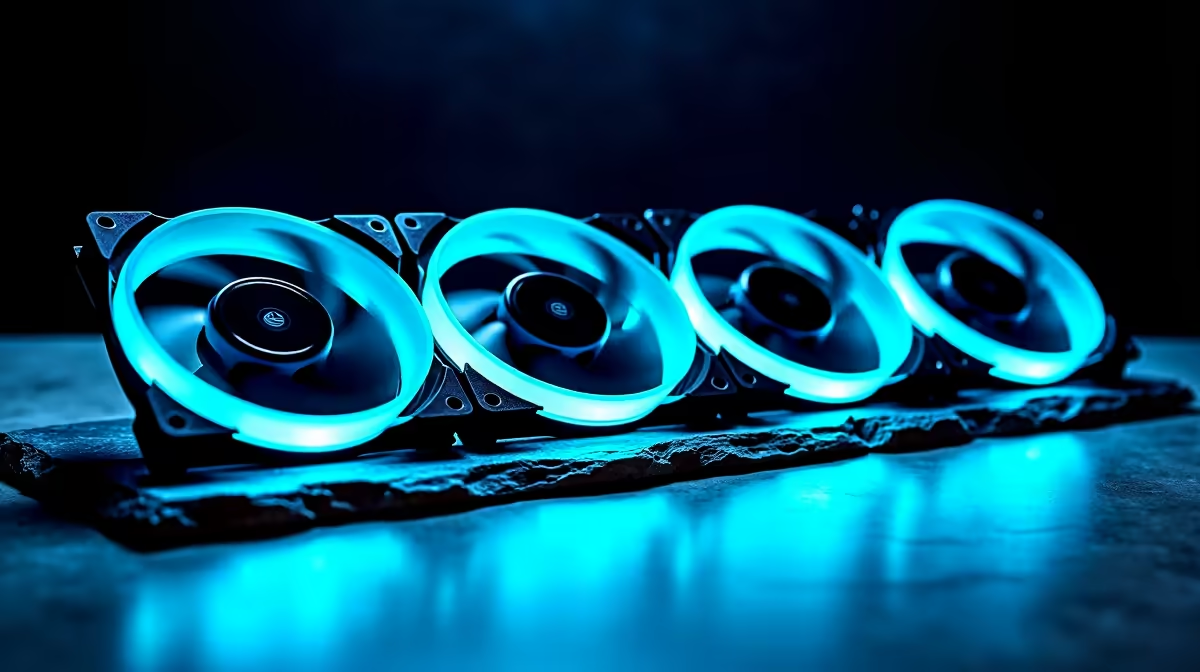
Late-night gaming demands quiet hardware so you do not wake the house, and case fans are the usual culprit behind a noisy rig. A focused short list points you to fans that stay near-silent during those after-hours sessions.
Quick Answer
For quiet late-night gaming, the short list favours fluid-bearing PWM fans rated under 22dBA, ideally 140mm for low-speed airflow, with a hub for fine control. Expect R300 to R500 each. The aim is fans you cannot hear over the game at low speed, so bearing quality and PWM matter most.
What Earns A Spot On The List
A fan makes the short list if it runs quietly at the low speeds you use at night, uses a long-life fluid or magnetic bearing, and supports PWM so it idles slow. A 140mm size helps, moving enough air gently. Anything that only gets quiet by running too slow to cool is off the list.
Setting Up For Silent Nights
Pair the fans with a hub and a gentle fan curve so they barely spin at idle and ramp slowly under load. With good fans this keeps the rig inaudible during calm gameplay and only mildly audible in intense moments, ideal for not disturbing a sleeping household. Add rubber anti-vibration mounts to stop any buzz transferring to the case panel, and your late-night sessions stay your secret rather than the whole home's.
FAQ
Which fan size is best for quiet night gaming?
140mm where your case allows, because it moves more air at a lower, quieter speed. Use 120mm only where the case requires it, choosing a low-noise model.
How quiet can case fans realistically get?
Good fluid-bearing fans at low speed sit under 22dBA, which is barely audible over a quiet room. At idle on a gentle curve, you often will not hear them at all.
Does a fan curve help with night-time noise?
Yes. A gentle curve keeps fans slow until temperatures rise, so the rig stays near-silent during calm gameplay and only ramps when the load truly needs it.
gentle fan curve so fans idle slow at night and only ramp under heavy load. It is the simplest path to silence.