



Marvel Rivals launch in South Africa
Marvel Rivals launch needs a balanced parts plan, not a random basket. Map the CPU, GPU, RAM, SSD, cooling, and monitor target to the budget so SA builders know where to spend first.
Read moreShort answer: If your build runs hot or loud, everything that matters about 4-pin PWM: airflow CFM, static pressure mm-H2O, bearing type and ARGB wiring in plain terms. Includes PWM duty targets, header limits (3 fans per chain), and SA dust-management notes.

PWM (Pulse Width Modulation) fan speed control uses a 4-pin signal from your motherboard to vary fan speed between a minimum (often 20 percent) and maximum RPM without changing voltage, giving you precise, quiet operation at idle and full cooling capacity under load. It is the standard fan control method for gaming and workstation builds today.
A 4-pin PWM fan uses three of those pins for standard DC operation (ground, 12V, tachometer signal) and adds a fourth dedicated to a PWM control signal. The motherboard's fan header sends a square wave signal between 0 and 100 percent duty cycle. At 25 percent duty cycle the fan runs at roughly a quarter of its maximum RPM; at 100 percent it runs flat out. This differs from older 3-pin DC-control fans, which changed speed by adjusting the voltage itself, often causing the fan to stall completely below 7V. PWM fans stay smooth at low duty cycles because the motor sees full voltage in short pulses rather than reduced constant voltage.
Every modern ASUS, MSI, Gigabyte, and ASRock BIOS includes a fan curve editor. You map fan RPM (or duty cycle percentage) against CPU or motherboard temperature at several breakpoints. A sensible gaming curve for SA conditions might hold fans at 30 percent below 50C, ramp linearly to 70 percent at 70C, and push to 100 percent above 85C. For workstation tasks like 3D rendering or video encoding where the CPU runs hot for extended periods, tighten the curve so fans start ramping at 60C rather than 70C. Software options like Fan Control (open source) and ASUS Armoury Crate offer the same curves outside of BIOS with added features like per-header assignments and custom response sources, so you can tie GPU fan speed to GPU temperature instead of the CPU sensor.
A gaming PC typically sees load spikes during intense scenes followed by lighter periods between them. A workstation running a video export or simulation holds peak CPU load continuously for hours. PWM curves for workstations should be designed for sustained rather than peak temperatures. Set your mid-temperature ramp point 5C to 10C lower than you would for gaming, ensuring fans are already spinning at 60 to 70 percent before the CPU reaches its maximum sustained temperature. Acoustically this matters for a studio or home office environment: a controlled 65 percent fan curve is significantly quieter than fans that sit at 30 percent and then suddenly blast to 100 percent when the workload hits. Building in a hysteresis setting (available in some BIOS versions) stops fans from rapid up-and-down hunting around a temperature threshold.
BIOS fan curves default to CPU socket temperature but a workstation build may benefit from using the coolant or VRM sensor instead. If your CPU cooler pump speed is tied to coolant temp, the pump responds to actual heat stored in the loop rather than a momentary CPU spike. Check your BIOS for available temperature sources before committing to the default setting.
Yes, a 4-pin PWM fan plugs into a 3-pin header using the first three pins. Speed control falls back to DC voltage regulation, which is less precise at low speeds but still functional.
Most quality PWM fans specify a minimum RPM between 200 and 500 RPM at the lowest duty cycle. At this speed the fan is nearly silent, well under 20 dB(A), and still produces enough airflow to prevent heat buildup at idle.
A good powered fan hub preserves the full PWM signal to each connected fan. Cheap passive splitters share the signal and can cause inconsistent speed readings on the tachometer line.
Looking to upgrade your fan setup? Evetech carries PWM case fans and controllers suitable for gaming and workstation builds at multiple price points. Browse the current range and pick the right configuration for your case.
Marvel Rivals launch needs a balanced parts plan, not a random basket. Map the CPU, GPU, RAM, SSD, cooling, and monitor target to the budget so SA builders know where to spend first.
Read more
Path of Exile 2 launch needs a balanced parts plan, not a random basket. Map the CPU, GPU, RAM, SSD, cooling, and monitor target to the budget so SA builders know where to spend first.
Read more
Black Myth Wukong launch needs a balanced parts plan, not a random basket. Map the CPU, GPU, RAM, SSD, cooling, and monitor target to the budget so SA builders know where to spend first.
Read more
Hollow Knight PC requirements should be mapped to resolution, settings and upgrade budget before choosing a tier. Verify current requirements, then balance GPU, CPU, RAM and SSD around SA pricing.
Read more
Hollow Knight build planning should focus on the target resolution, settings and total system balance. Treat launch wording as time-sensitive, then verify requirements before choosing SA PC parts.
Read more
Fallout 4 PC requirements should be mapped to resolution, settings and upgrade budget before choosing a tier. Verify current requirements, then balance GPU, CPU, RAM and SSD around SA pricing.
Read more
Wondering if a TKL wireless mechanical keyboard is worth it for everyday productivity? We break down latency, battery life, comfort, and workflow gains for real work. ⚡⌨️

Maximise battery life on a fanless 15-inch laptop using efficiency core architecture. Cut idle drain, tune power profiles, and improve thermals for longer runtime. 🔋⚙️
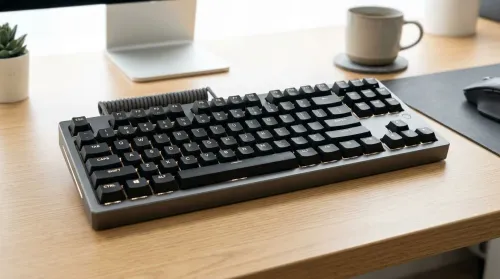
Learn how to reduce desk clutter with a TKL wireless keyboard using fewer cables, smart placement, and tidy essentials. Get a faster, calmer workspace with better ergonomics. ✅🧼

RGB keyboard lighting too distracting? Learn how to manage backlight modes, set brightness, and reduce distraction for focus and productivity 😌🖱️

Are themed gaming keyboards worth the extra cost? Compare build quality, switch options, features, and resale value to find the best fit for your setup 🎮⌨️

Full-Size vs Tenkeyless mechanical keyboards for gaming: find out if a smaller layout truly improves aim, speed, and comfort. We break down layout, desk space, latency-feel, and keybinds 🎮⌨️

Dedicated media rollers vs function key shortcuts: learn which setup gives you better workflow control, faster media access, and fewer mistakes. 🖱️🎧

Best Mechanical Switch Type for Gaming: Clicky vs Linear vs Tactile. Find your feel, speed, and noise balance with practical guidance for FPS, MOBA, and productivity 😄🎮

Direct mouse answer: Mouse not keeping up with your work? Everything that matters about dual-mode 2.4GHz + BT 5.0: DPI behaviour, channel switching, battery curves and per-app button mapping. Covers when 2.4GHz USB wins (low-latency desk) and when BT 5.0 wins (laptop, d

Plain wireless mouse guide: Mouse not keeping up with your work? Everything that matters about wireless productivity mouse: DPI behaviour, channel switching, battery curves and per-app button mapping. Includes DPI tuning tips, channel switch shortcuts, and ZAR-aware fea

Real productivity numbers: Set up your wireless mouse in this order: everything that matters about wireless productivity mouse: DPI behaviour, channel switching, battery curves and per-app button mapping. Includes DPI tuning tips, channel switch shortcuts, and ZAR-aware
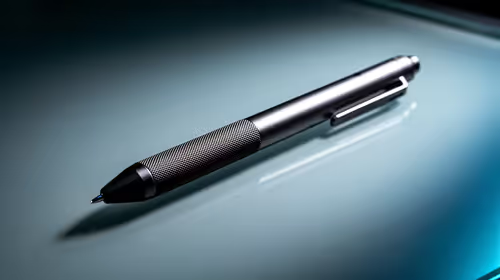
Pen not feeling like paper? Stylus lag and skipping usually trace to old drivers, dirty nibs, or display refresh mismatches, not the pen itself. Covers pressure curve tuning, tilt thresholds, nib swap timing, and SA pricing brackets.