Quick Answer
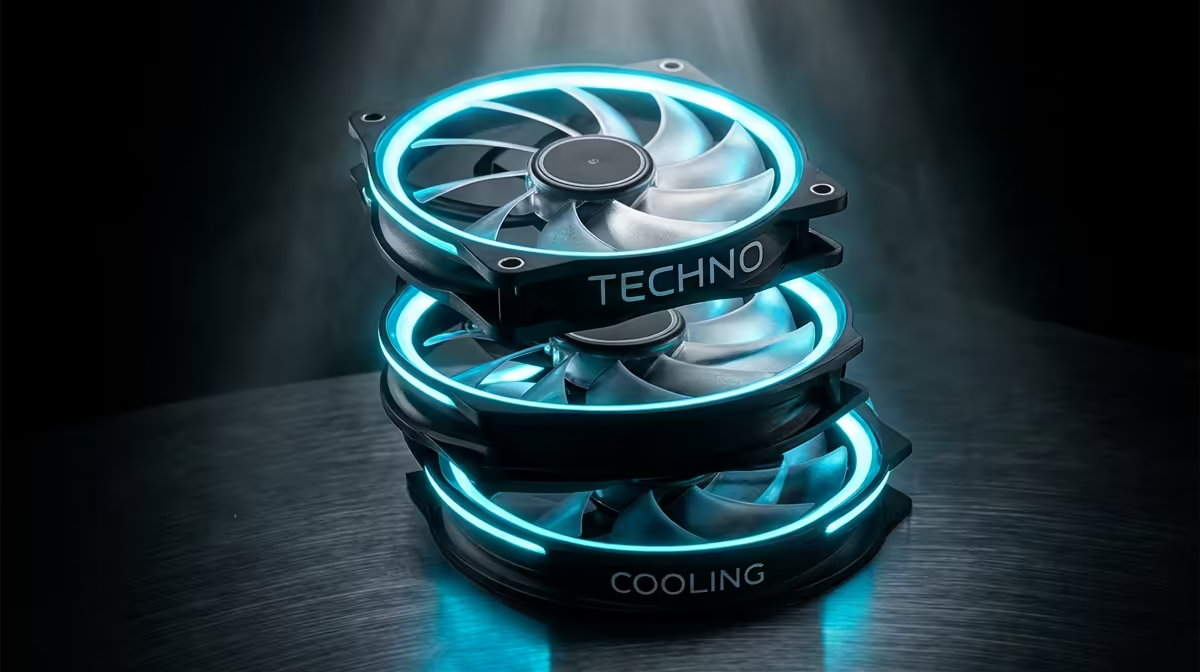
For flight simulation, a three-tier case fan plan is: budget = three 120mm intake fans (about R450 at Evetech), balanced = six fans plus a front mesh setup (R900-R1,400), premium = high-static-pressure fans on a 280-360mm AIO radiator (R1,600+). Flight sims push the CPU and GPU for hours, so sustained airflow to stop throttling matters more than peak fan speed.
Why flight sims need a cooling plan
Flight simulators run long, steady sessions that keep the CPU and GPU near full load — exactly when poor airflow causes throttling and lost frames. The fix is balanced intake and exhaust plus a cooler sized to your CPU. A mesh-front case with good intake fans keeps a hot-running sim rig stable across a two-hour flight.
The three tiers at Evetech
- Budget (R450-R700): three 120mm PWM intake fans, one exhaust — the airflow baseline.
- Balanced (R900-R1,400): six fans for positive pressure plus a 240mm AIO on the CPU.
- Premium (R1,600+): high-static-pressure fans on a 280-360mm radiator for sustained full-load flights.
SA buyer note
In warm SA rooms, sim rigs benefit from extra intake airflow and positive pressure to keep dust out during long sessions. A 144Hz monitor pairs well once cooling is sorted, since stable frames make a smoother flight than chasing ultra settings on an overheating rig.
FAQ
How many fans does a flight sim PC need?
At least three intake and one exhaust for the budget tier. Balanced sim rigs use six fans for positive pressure plus an AIO to handle long full-load sessions.
Do flight sims overheat a PC?
They can, because they hold the CPU and GPU near full load for hours. Good intake airflow and a properly sized cooler prevent the throttling that costs frames mid-flight.
Air or liquid cooling for flight sim?
A good air cooler suffices for mid-range CPUs. For high-core chips run hard for hours, a 280-360mm AIO keeps temperatures stable across long flights.
hold your CPU and GPU near full load for hours — prioritise sustained intake airflow and positive pressure over peak fan RPM to avoid mid-flight throttling.