Gloss, colour movement and apparent depth are connected, but they are not interchangeable. Glossy PLA filament finishes reflect the environment, while changing colour can make the same geometry feel more layered as it turns. A useful evaluation separates clean printing from optical presentation, then brings them together around the final model.
Quick Answer
Judge glossy PLA by printing representative geometry, inspecting layer quality under neutral light and then rotating the surface beneath the intended display light. The R499 ELEGOO package combines one kilogram of 1.75mm PLA with gloss and dynamic angle-sensitive colour. Visual depth is strongest where broad, curved or faceted surfaces remain exposed.
🔦 Gloss is a relationship with light
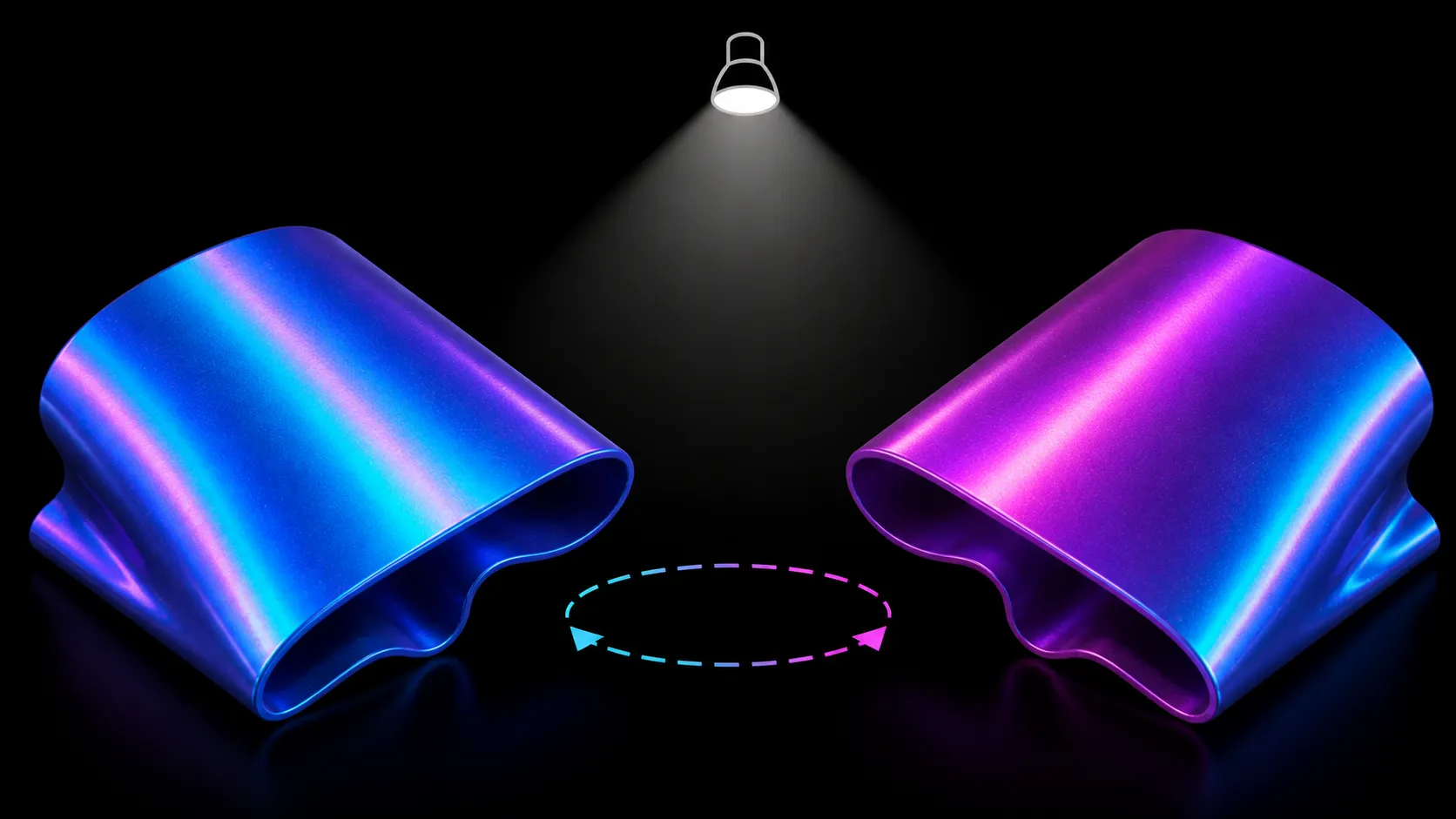
A glossy surface creates defined reflections. Their position changes when the model, viewer or light moves. On a broad wall, the highlight can reveal slight waviness that was difficult to see in diffuse light. On a curve, it traces the contour and may strengthen the sense of volume.
Set up two inspection conditions. Use soft, even light to check geometry and layer consistency without a dramatic reflection. Then use a controlled directional source to study highlight movement. Switching between them prevents an attractive flash from hiding a rough wall, or a flat room light from making a sound glossy material appear defective.
Photographs need consistent exposure and angle if they are used as records. Keep the physical sample as the primary reference because a still frame freezes one moment of a dynamic finish.
The 3D printing filament range at Evetech lets buyers compare named surfaces instead of relying on broad finish labels.
🎨 Colour shifts add another layer of perception
ELEGOO Galaxy PLA produces vibrant shifts across viewing angles. The model file does not change, yet different planes and curves become visually dominant as the object turns. This can make sculptural forms feel deeper or more active than a static single-colour surface.
Colour movement should support legibility. Dense small details may compete with the active finish. Print the finest important feature beside a broad face and judge both from the normal viewing distance. If the detail disappears, adjust model emphasis or choose a calmer surface for that component rather than assuming more gloss is always better.
Consider assembly. Adjacent parts with unrelated orientations may show different highlight behaviour. That can be an intentional contrast or an unwanted break. Mark the direction of successful test pieces so the final layout can be planned.
🧪 Build an inspection method you can repeat
Begin with the printer's supported PLA baseline and a small model containing the actual surface types. Confirm that filament feeds cleanly and that layers join consistently. Save the first acceptable sample along with its build orientation and general lighting notes.
If a later print looks dull or uneven, compare it beside the baseline. Ask whether the difference follows the geometry, the print quality or the room light. Change only one related factor and rerun the same sample. A repeatable method is more valuable than a collection of disconnected settings.
The ELEGOO spool is beginner and professional friendly, but the observation process serves each group differently. A new maker learns to distinguish geometry from appearance. A production user gains a reference for matching several visible parts across a run.
Machine choice can influence the workflow, so use Evetech's 3D printer range when planning hardware. The filament diameter is 1.75mm and must match the feed system before any surface test begins.
🌌 Use visual depth where the project can show it
Decorative vessels, display models, ornaments, visible housings and sculptural props can place the changing finish at the centre of the design. Hidden structural pieces cannot. Identify which faces will receive light and which are blocked by shelves, walls or neighbouring parts.
The R499 spool contains 1kg of biodegradable plant-based material. Price, quantity and formulation can then be weighed alongside finish. Model count still depends on geometry, supports and trials.
Plan presentation early. A rotating object, handheld piece or open shelf can reveal more colour movement than a fixed front-facing installation. Photograph several angles if the object will be sold or shared online. The goal is an honest representation of a surface that changes rather than one hero angle that suggests every view looks identical.
Create a small lighting card for the project. Sketch the approximate lamp direction, model position and normal viewing distance, then keep the card with the approved sample. It does not need precise photometric data. Its purpose is to make later comparisons use the same broad conditions instead of relying on memory after the workspace has been rearranged.
When two glossy samples differ, compare them in a sequence. First use soft light to inspect walls and layer texture. Next introduce the directional source and rotate both pieces through the same path. Finally, place them against the display background. A difference that appears only in the last step is a presentation issue, not necessarily a print-quality defect.
Visual depth can also guide part separation. If one component carries fine detail and another provides broad sculptural mass, they may benefit from different surface emphasis. Keep the Galaxy material where moving colour strengthens form, while allowing a quieter adjacent component to preserve legibility. This is a design decision rather than a claim that one finish is universally superior.
Archive the final lighting card, photographs and physical swatch together. Future projects can then compare new glossy materials against an observed reference without treating screen colour as exact. Note which features were intentionally emphasised and which details needed calmer treatment. A compact archive turns visual depth from an impression into a design resource that can be discussed, repeated and revised across later models.
Gloss creates visual depth by keeping highlights clear enough to trace the shape. Galaxy PLA extends that behaviour with rich colour transitions and dynamic reflections, so the highlight itself changes character as the print or viewer moves. A smooth convex wall may show one long travelling band, while a faceted model can reveal several distinct colour states across adjacent planes.
Lighting should support the geometry rather than overwhelm it. A controlled directional source makes movement easier to read; a large diffuse source may soften the shifts into a broad sheen. Test both if the finished object will move between rooms. The material is designed to look striking from changing viewpoints, but the display arrangement decides whether that property is obvious or subtle.
Because the filament keeps traditional PLA's approachable printing character, makers can focus on surface continuity and orientation without treating the galactic finish as a separate printing technology.
Judge the completed object at its normal display distance as well as close up. Fine layer detail may dominate an inspection lamp view, while the broader sheen, depth and colour transition determine what an observer sees across a desk or shelf.
Frequently Asked Questions
What is the difference between gloss and colour shift?
Gloss describes reflection from the surface, while colour shift describes the changing visible colour response as the viewing relationship moves.
How should a glossy sample be inspected for defects?
Use neutral light for geometry first, then a controlled directional source to reveal highlight movement across the clean surface.
Why can visual depth change by model shape?
Curves carry smooth transitions, facets divide reflections and dense texture breaks highlights into smaller pieces, creating different impressions of depth.
Which product details define the ELEGOO option?
It is 1kg of 1.75mm biodegradable plant-based Galaxy PLA at R499, with a glossy dynamic finish.
Can one photograph represent the full effect?
No. Several viewpoints or a moving physical sample better reveal an appearance designed to change by angle.
Ready to evaluate gloss with more than one snapshot?
Compare Evetech's PLA and 3D printer choices, then build a repeatable inspection routine around geometry, light and viewing distance.