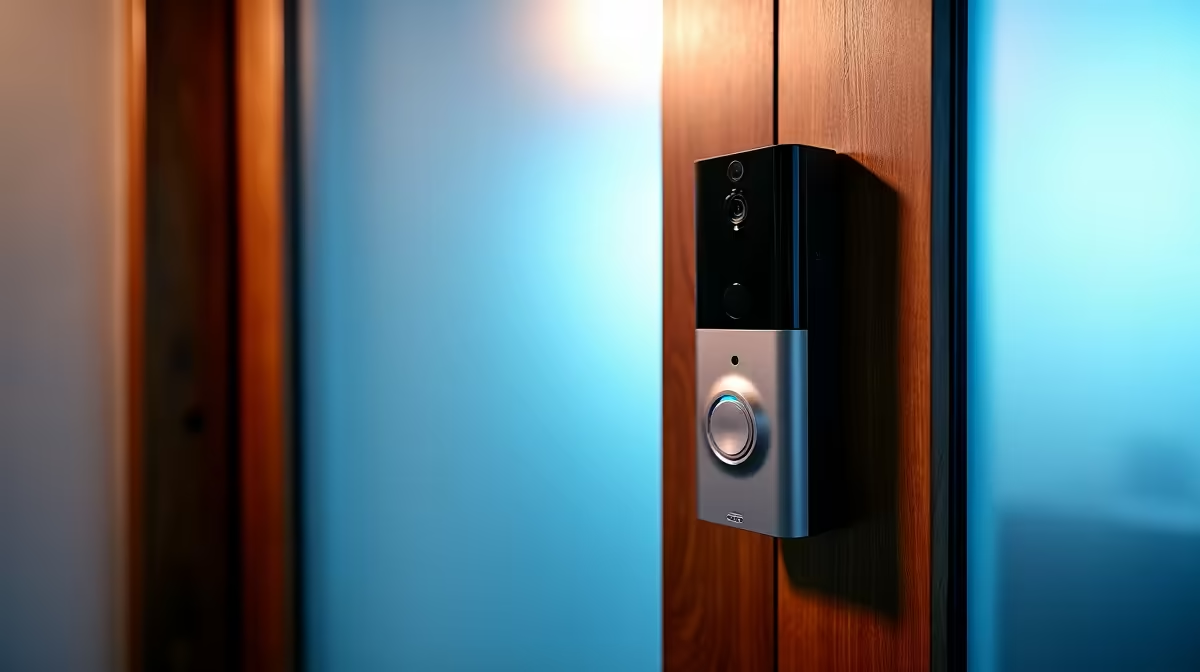
A video doorbell and a front-door security camera look similar but solve different problems. The doorbell answers the question "who is at my door right now" with two-way audio and a chime, framed for a head-to-toe view of a visitor. A dedicated camera answers "what is happening around my entrance" with a wider angle, flexible mounting and often higher resolution. The right pick depends on which question matters more at your house.
Quick Answer
Choose a video doorbell if you want two-way talk, a press-to-ring chime and a clear front-on view of whoever approaches the door. Choose a dedicated front-door camera if you want wider coverage, higher resolution and freedom to mount it where it sees most. Many SA homes already screen visitors at the gate, which changes which device fits.
What a Video Doorbell Does Best
A doorbell camera replaces your existing chime and adds a camera aimed straight at the threshold. Its strength is interaction: someone presses the button, you get an alert, and you can speak to them through the built-in two-way audio whether you are in the lounge or away from home. The framing is tuned to show a person from head to foot at close range, which is ideal for parcels, callers and quick conversations. It is the device for managing who comes to the door.
Most video doorbells sit at 1080p to 2K resolution and are deliberately easy to install at eye level near the frame, without needing a ladder or complex wiring. If you live in a flat or townhouse complex where visitors come straight to your door, the doorbell is often the most practical single-device upgrade.
What a Dedicated Camera Does Best
A standalone front-door camera trades the chime and the doorbell button for coverage and flexibility. You can mount it high to take in the whole entrance, the path and a slice of the driveway, and these cameras often carry a wider lens and sharper sensor than a doorbell unit. Resolutions from 4MP to 8MP are common, and the viewing angle can stretch from a focused 90 degrees to over 120 degrees, capturing far more of the approach than a doorbell frame allows. The trade-off is no press-to-ring function and, on many models, no two-way audio. It is the device for watching the area around your door rather than chatting to the person standing at it.
Mounting freedom is a real advantage. A camera can go above the door, on the side wall, or under an eave, aimed wherever the critical angle is, rather than being fixed to the doorbell position. That flexibility often produces more useful footage for identifying who came and went.
The SA Gate Factor
This is where local homes differ from the marketing examples. Plenty of South African properties already vet visitors at the street gate with an intercom or outdoor cameras, so by the time anyone reaches the front door they have usually been let onto the property. That can shift the doorbell from "first line of screening" to a convenience at a secured inner door, and it can make a wider-angle camera the more useful eye on the actual entrance. If your gate already has a camera covering arrivals, the doorbell's screening role is largely covered, and the question becomes whether you want the chime-and-talk function at the inner door or a second broad-angle view of the path. Map your own layout first, then decide. You can compare both styles in the smart home and security range at Evetech, and the accessories best sellers cover the mounts, cables and storage that finish either install.
Can You Use Both?
Often the strongest setup combines them. A doorbell at the door handles callers and parcels with two-way audio, while a separate camera watches the wider approach and fills the angles a doorbell cannot reach. If budget allows only one to start, let your priority decide: pick the doorbell for interaction, the camera for coverage, and add the second later.
Installation Differences Worth Knowing
Video doorbells install at eye level near the door frame and typically replace an existing wired chime or run on battery, keeping the work straightforward. A dedicated security camera needs a bracket, a cable run to the recorder or switch, and a considered mounting point for the angle you want. The camera install takes more planning but gives you exactly the view you specify.
Night vision and low-light performance
Both types of device include some form of night vision, but the technology and the result differ. Video doorbells typically use infrared LEDs focused on the close doorstep zone, which is effective at one to three metres but washes out anything further. Dedicated security cameras often carry stronger infrared arrays or full-colour night vision sensors that illuminate a wider area, useful for watching the path, steps, and any vehicles parked nearby. If the critical footage you need will often happen after dark, the broader low-light range of a dedicated camera is worth factoring into the choice.
Power and wiring options
Video doorbells have two common setups: wired to an existing doorbell transformer for continuous power, or battery-powered with periodic recharging. The wired path avoids ever running flat but requires compatible transformer wiring at the door. A dedicated security camera is typically PoE-wired, drawing power and sending data over a single ethernet cable to the recorder or switch, with no battery to manage. For a permanently installed front entrance, the PoE camera's wired reliability is an advantage. For a temporary setup or a property where no wiring runs to the door position, the battery doorbell is the practical solution.
Frequently Asked Questions
What is the main difference between a video doorbell and a security camera?
A video doorbell adds a chime button and two-way audio with a close-up, head-to-toe view of a caller. A dedicated camera offers a wider angle, higher resolution and flexible mounting, but usually no doorbell or, on some models, no two-way talk.
Which is better for watching for parcels?
A video doorbell, because it is aimed at the door and alerts you the moment someone presses it or, on many models, when motion is detected at the threshold. Its two-way audio also lets you speak to a courier.
Do I need both?
Not necessarily, but they complement each other. A doorbell handles callers at the door while a camera covers the surrounding area. Start with whichever matches your priority and add the other if you want full coverage.
Does an SA gate setup change what I need?
It can. If visitors are already screened at the gate, a doorbell becomes more of a convenience at the inner door, and a wide-angle camera may be the more useful watch on the entrance itself. Plan around your specific layout.
What resolution should I expect from a video doorbell?
Most sit at 1080p to 2K, sufficient for identifying a face at close range. A dedicated security camera can reach 4MP to 8MP, which captures more detail across a wider field, especially useful for number plates or a broad approach.