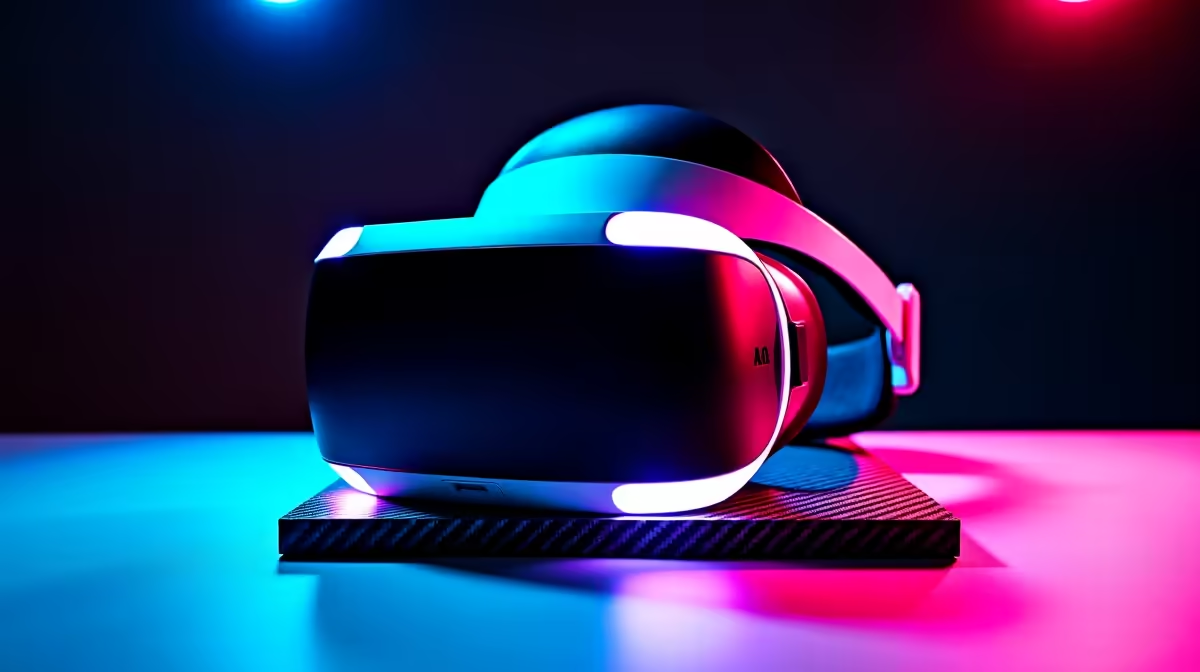
Remember the hype? For years, virtual reality has been the "next big thing" in gaming, always simmering but never quite boiling over for the mainstream. We've seen incredible tech, but also high costs and a few too many cables. But what if the tipping point is just around the corner? Many experts are looking ahead, asking if VR gaming 2026 will finally be the year the dream becomes an everyday reality for gamers across South Africa. Let's dive in. 🤔
What's Currently Holding VR Back?
Before we look forward, we need to understand the present. The biggest hurdle for many has been the "VR tax"—not just the cost of the headset, but the powerful PC needed to run it smoothly. Early headsets also struggled with issues like the "screen-door effect," where you could see the pixels, pulling you out of the immersion. This is a world away from the crisp, high-refresh-rate PC monitors we've become accustomed to.
On top of that, while there are some fantastic VR titles, the industry is still waiting for that one true system-seller, a game so compelling that it makes a VR setup a must-have, not just a nice-to-have.
The Hardware Revolution: What Changes by 2026?
This is where things get exciting. The path to a breakthrough for VR gaming in 2026 is paved with powerful new hardware. The specs required to create truly believable virtual worlds are immense, and the components hitting the market over the next couple of years are being designed to meet that challenge.
Core Processing Power
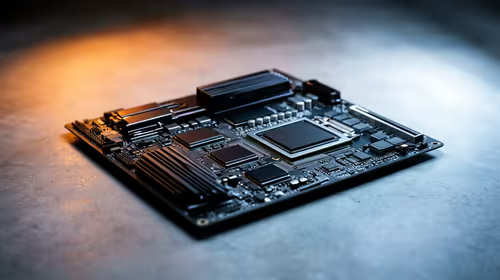
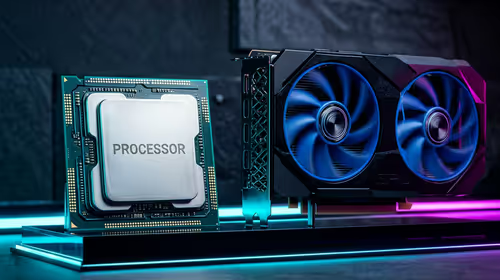
Future VR experiences will rely on complex physics, smarter AI, and larger, more interactive worlds. This all starts with the CPU. To avoid bottlenecks and ensure a smooth, stutter-free experience, you'll need a processor that can keep up. Whether you opt for a powerful Intel CPU for its raw single-core performance or a multi-talented AMD processor for its excellent multi-threading capabilities, the right chip will be non-negotiable. All these high-end parts need a reliable foundation, which is why choosing a solid motherboard is the first step to building a future-proof rig.
Graphics, Displays & Immersion 🚀
The visual leap is arguably the most critical factor for the future of VR gaming. By 2026, we expect to see:
- Lighter Headsets: More comfortable for longer play sessions.
- Micro-OLED Displays: Delivering deeper blacks and more vibrant colours.
- Higher Resolutions: All but eliminating the screen-door effect.
- Eye-Tracking & Foveated Rendering: A clever technique where the headset renders what you're directly looking at in full detail, saving massive performance.
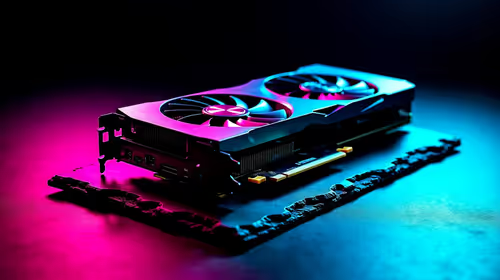
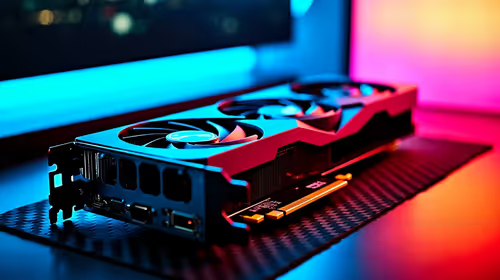
Of course, rendering those ultra-high-resolution images at a stable 90+ frames per second will demand incredible graphical horsepower. This is where next-generation NVIDIA and AMD graphics cards will truly shine, making today's most demanding titles look like child's play.
Cooling is Key 🔧
that performance generates heat! As you plan your future VR rig, don't forget the importance of cooling. A high-performance CPU needs an equally capable air or liquid cooler to maintain peak performance during intense gaming sessions. A good [CPU cooler](https: www.evetech.co.za PC-Components cpu-coolers-84) isn't a luxury; it's a necessity for a stable and long-lasting system.
Will VR Be More Accessible and Compelling?
While high-end PC VR will always offer the premium experience, the market is diversifying. We're seeing more capable standalone headsets that offer a great taste of VR without needing a PC. This creates a healthy ecosystem where users can start with a standalone and then upgrade to a PC-powered setup for the ultimate graphical fidelity.
It's a different kind of fun compared to the grab-and-go convenience offered by modern handheld gaming consoles, which are perfect for a quick game on the move. VR is about deep, focused immersion... blocking out the real world entirely. By 2026, the software library should be much more robust, giving players more reasons to strap in.
The next wave of AAA games will be built with VR in mind from the ground up, not as an afterthought. Imagine fully realised worlds with unparalleled interactivity, made possible only by the raw power of future graphics cards and processors. That is the promise of VR gaming in 2026.
So, is it the year of the breakthrough? All signs point to a massive leap forward. The technology is maturing, the hardware is getting exponentially more powerful, and the developers are getting more ambitious. It might not replace your monitor entirely, but 2026 is shaping up to be the year VR finally secures its place as a vital part of the gaming landscape. ✨
Ready to Build Your VR-Ready Rig?
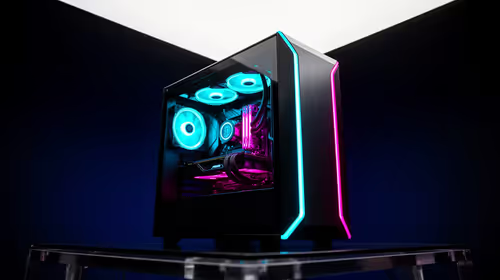
The future of VR is closer than you think, and the best way to prepare is with a powerful PC built for performance. Explore our massive range of PC components and start building the machine that will conquer the virtual worlds of tomorrow.