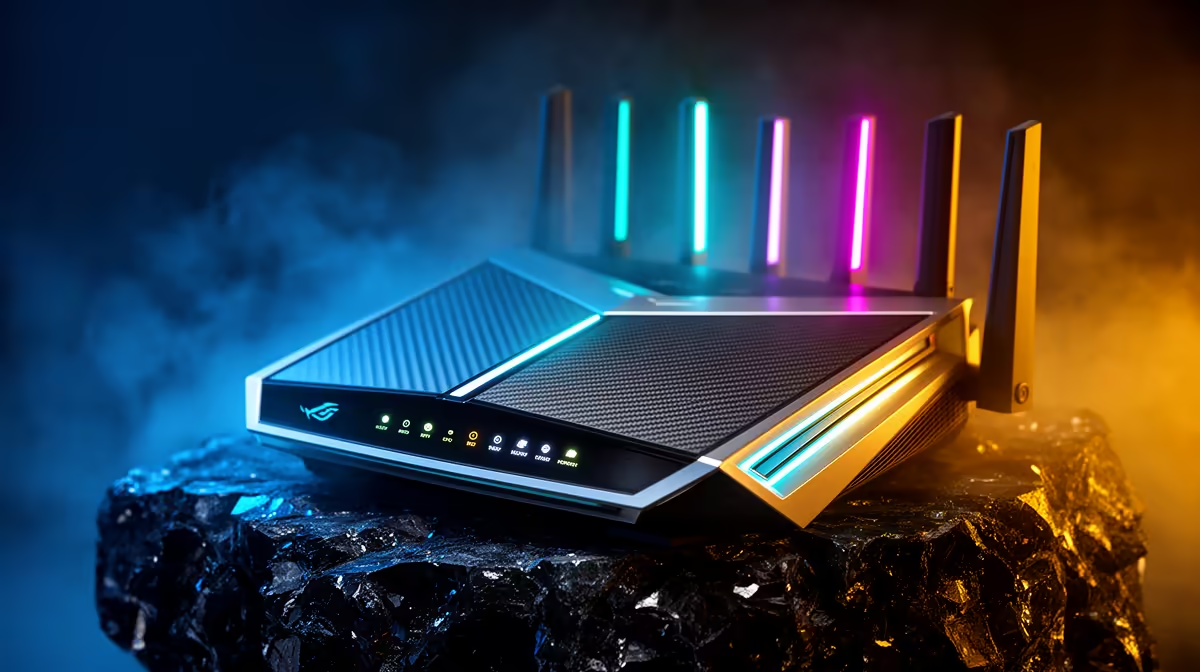
A Wi-Fi router buying order for esports gaming runs: a wired Ethernet connection first, then a low-latency router with good QoS, then mesh or extenders only if range demands it. For competitive play, a cable beats any router upgrade.
Quick Answer
For esports, wire your PC to the router with Ethernet first; it gives the lowest, steadiest ping. If wireless is unavoidable, a Wi-Fi 6 router with gaming QoS (around R1,500 to R3,500 at Evetech) keeps latency low. Skip premium mesh for a single gaming room where a cable reaches.
The Esports Buying Order
Must-have: a wired Gigabit Ethernet link from PC to router, which cuts the jitter and packet loss that cost you rounds. Nice-to-have: a Wi-Fi 6 router with QoS to prioritise game traffic over downloads, useful in a shared house. Skip: expensive tri-band mesh for a single room a cable reaches, and Wi-Fi range extenders that add latency. Spend on the cable and a solid router before chasing coverage you may not need.
What Actually Lowers Ping
A wired connection is the single biggest latency win, dropping jitter that wireless can't match for competitive play. After that, a Wi-Fi 6 router with gaming QoS prioritises your game packets so a flatmate's download doesn't spike your ping. Match the router to your fibre line speed; a 100-200Mbps line doesn't need a R5,000 router. For SA fibre on Vumatel or Openserve, a mid-range Wi-Fi 6 router around R2,000 handles esports well.
FAQ
Is a wired connection really better than Wi-Fi for esports?
Yes, by a clear margin. Ethernet gives lower, steadier ping with no jitter or packet loss, which directly affects competitive play. Wire your PC to the router before spending on any wireless upgrade.
What router specs matter for esports?
Wi-Fi 6 for efficiency and a QoS feature that prioritises game traffic over downloads. Match the router to your fibre speed; a mid-range Wi-Fi 6 router around R2,000 covers most esports needs.
Do I need a mesh system for gaming?
Not for a single gaming room a cable reaches. Mesh helps coverage across a large home, but adds cost and slight latency. For competitive play in one room, a wired link and a good router matter more.
single Ethernet cable from your router to your gaming PC, even if it means a flat cable along the skirting. It does more for your esports ping than any wireless router upgrade.