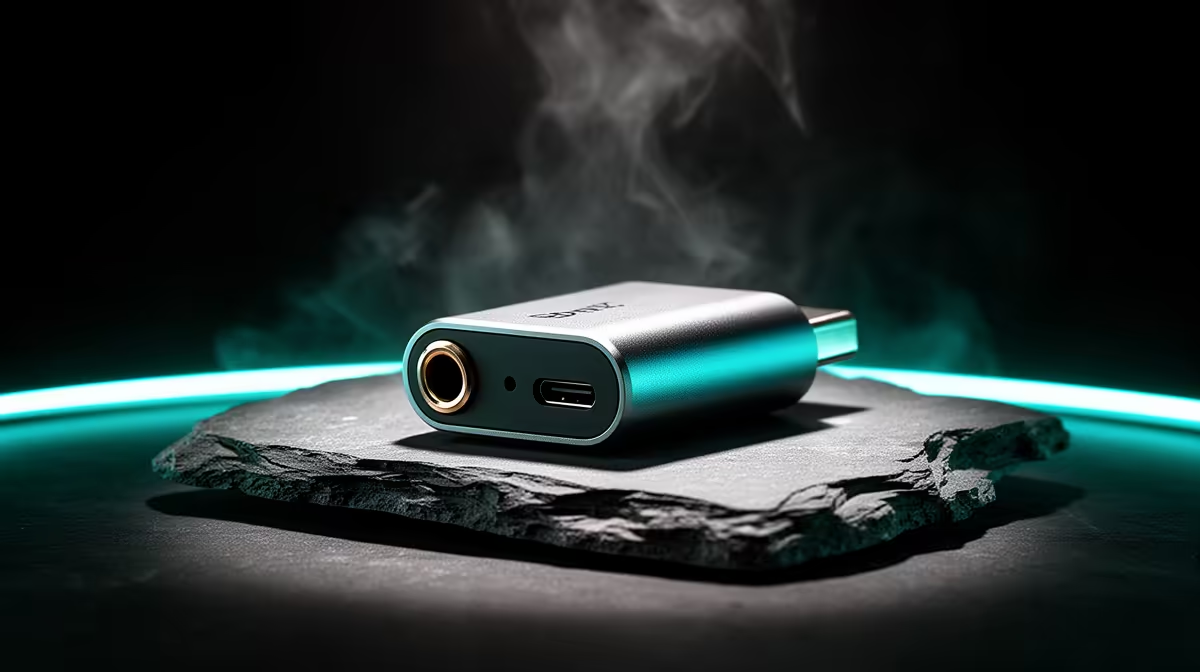
A good decision around won t my USB-C device recognize my starts with the device, desk or room it needs to serve. Start with USB-C charging, then check whether wired audio output and 50 ms wired timing check are actually supported by your device.
Quick Answer
Treat USB-C device recognition for 3.5 mm headphones as a fit, control and compatibility decision. Confirm USB-C charging, compare wired audio output, and make sure 50 ms wired timing check will not complicate legacy speaker setups.
Start With The Symptom In Legacy Speaker Setups For USB-C Device Recognition for 3.5 mm
Begin with the device chain you already use for USB-C device recognition for 3.5 mm headphones. If USB-C charging is unclear, the rest of the comparison becomes guesswork, especially when legacy speaker setups demands less crackle. Check wired audio output for USB-C device recognition for 3.5 mm headphones on the actual phone, laptop, console or desk where the product will live. For local mobile gamers, 50 ms wired timing check is the detail that often decides whether passive adapter mismatch stays away.
Settings And Hardware Details To Confirm For USB-C Device Recognition for 3.5 mm
Do not separate comfort from compatibility when judging USB-C device recognition for 3.5 mm headphones. A product can list USB-C charging and still feel wrong if wired audio output is awkward on your device or if 50 ms wired timing check adds friction to desk calls. For USB-C device recognition for 3.5 mm headphones, local buyers may use the same gear across work, study and entertainment, so the practical winner travels between those roles cleanly. With USB-C device recognition for 3.5 mm headphones, that matters more than a rarely used feature.
When A New Audio Adapter Makes Sense For USB-C Device Recognition for 3.5 mm
Keep the decision grounded in the first week of ownership for USB-C device recognition for 3.5 mm headphones. You will notice USB-C charging and wired audio output quickly, but 50 ms wired timing check decides whether the product stays convenient after the novelty fades. For legacy speaker setups, choose the model that removes the most friction with the least extra setup. For USB-C device recognition for 3.5 mm headphones, that is usually better than chasing the longest feature list.
-C device recognition for 3.5 mm headphones still feels confusing, remove any option that does not explain USB-C charging or wired audio output plainly.
FAQ
What should I test first when USB-C Device Recognition for 3.5 mm Headphones behaves badly for Legacy Speaker Setups?
Before choosing USB-C device recognition for 3.5 mm headphones, compare USB-C charging and wired audio output after a full workday. Most USB-C device recognition for 3.5 mm headphones problems become clearer once basic compatibility is removed.
When is replacement the right move for USB-C Device Recognition for 3.5 mm Headphones when USB-C Charging matters in Legacy Speaker Setups?
Replace the product only when 50 ms wired timing check or build quality is clearly limiting less crackle. If USB-C device recognition for 3.5 mm headphones settings or pairing are the cause, a new model may repeat the same issue.
Can USB-C Device Recognition for 3.5 mm Headphones problems come from the device with Wired Audio Output in Legacy Speaker Setups?
Yes. Devices and apps can all affect USB-C device recognition for 3.5 mm headphones, especially when legacy speaker setups depends on stable support.