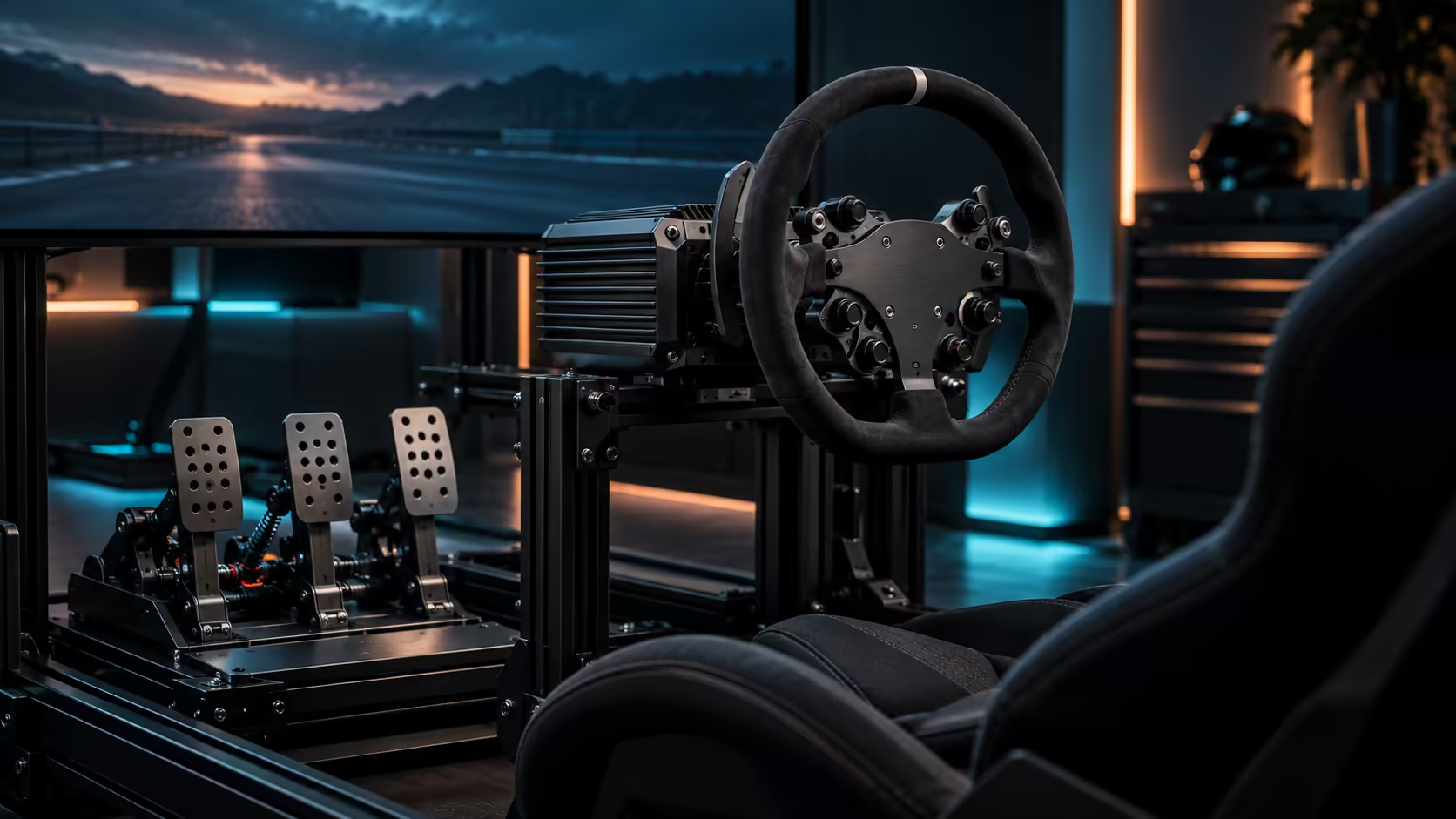
Spend the same rand amount on three different parts of a sim racing setup and you get three very different returns in actual lap time, which is the part most spec-sheet comparisons never mention. A ZAR value guide to a wheel base, pedals and racing wheel bundle has to rank the parts by what each rand actually buys you, not by which one is easiest to photograph for a listing.
Quick Answer
Rank the three components by how much lap time each one returns for the money: the brake sensor first, the wheel base second, and the rim last, since rim shape changes comfort but not accuracy. A bundle at R14,999 that already carries a 150kg load cell and a 9Nm base removes the expensive habit of buying the cheap version of each part first and upgrading it twice.
🥇 Why the brake sensor earns first place in the ranking
Braking happens on every single corner of every lap, which makes it the part of the car interaction with the most total opportunities to either gain or lose time. A load cell pedal set, reading pressure rather than travel, turns braking into a skill your leg can repeat consistently, and that consistency compounds across a race far more than any single wheel base upgrade does on its own.
Buying a cheap, position-based pedal set to save money upfront is the single most expensive false economy in this hobby, because most drivers upgrade to a load cell set within their first year regardless, at which point the original pedals are sunk cost rather than a saving. Starting with a 150kg load cell set, like the P700 pedals in the Green Flag bundle, means that upgrade never needs to happen twice.
🥈 Why the wheel base comes second, not first
Torque and drive type matter enormously, but their return scales with how demanding your driving actually is. A driver in lighter, lower-downforce cars extracts less additional value from 9Nm of headroom than a driver regularly running heavy GT-style machinery, which means the wheel base's value is somewhat use-dependent in a way braking consistency is not.
That said, direct drive over gear-driven wheels is close to a universal upgrade regardless of what you drive, since the detail improvement from removing mechanical backlash applies to every car equally. Within direct drive options, 9Nm sits at the point where torque headroom stops being the limiting factor for most drivers, which is why the Alpha EVO base earns its place in the ranking above the rim without needing to be the absolute highest torque figure available.
The base's value also holds up better over a longer ownership horizon than the ranking alone suggests. A driver who keeps the same setup for 3 or 4 years puts far more total hours through the base than through any single pedal calibration or rim choice, and a direct drive motor with no mechanical stage to wear has a genuinely longer useful life than a belt or gear system under that kind of sustained use, which is worth weighing if you are buying for the long term rather than planning to upgrade again within a year or two.
🥉 Why the rim matters least for lap time, and most for comfort
A rim shape changes hand position and session comfort, and it can genuinely add 1 or 2 extra hours of comfortable driving before fatigue sets in, but it does not change torque output, brake sensitivity, or anything the physics engine actually calculates. Two drivers on identical bases and identical pedals, one on a round rim and one on a GT-style rim, are working with the same underlying data; only their hands are positioned differently.
That is exactly why rim swapping is the cheapest meaningful change you can make later, and why it belongs last in a value ranking rather than being the deciding factor in a first purchase. Spend your first rand on the sensor and the base, and treat the rim as the part you can revisit once you know how you actually like to sit.
This is also the one component where personal taste genuinely outweighs any measurable return. Two equally skilled drivers can reasonably disagree on which rim shape they prefer for the exact same car, in a way neither would ever disagree about whether a load cell brake beats a spring-loaded one, which is itself a signal that the rim decision belongs at the bottom of a value ranking rather than the top.
🇿🇦 What South African buying adds to the value calculation
Local buying carries a value component that a spec sheet does not list: a fault on a heavy, specialised motor assembly is a shipping and repair job that can run to 14 to 21 days even under a straightforward local claim, and having that handled inside the country rather than through an international return process, often 30 to 45 days once freight and customs are added, is worth real money in time and hassle, even before any repair cost is considered. Factor that into the value comparison alongside torque and sensor specifications, particularly on a component this expensive to ship internationally if something needs attention outside a straightforward local warranty path.
Line specifications up against price on the racing simulation shelf, cross-check them against simulation gear, and finish the build with simulation accessories once the three main components are decided.
Frequently Asked Questions
Which single component gives the best return for the money?
The brake sensor, without much competition. Load cell pedals affect every single corner of every lap, which gives consistent braking a larger total effect on lap time than most single wheel base upgrades ever could.
Should I buy a cheap wheel base and upgrade later?
Direct drive over gear-driven wheels is worth prioritising early, since the detail improvement applies regardless of what you drive. The rim is the part that is genuinely fine to defer.
Does a more expensive rim improve lap times?
Not directly. Rim shape affects comfort and hand position, not torque output or sensor accuracy, which is why it ranks last in a pure value comparison.
Is buying locally part of the value calculation?
Yes, particularly for a heavy, specialised component. A local warranty and repair path avoids the cost and delay of shipping a fault internationally.
Ready to spend your rand where it actually returns lap time?
Prioritise the brake sensor and the base first, and treat the rim as your later, cheaper upgrade.