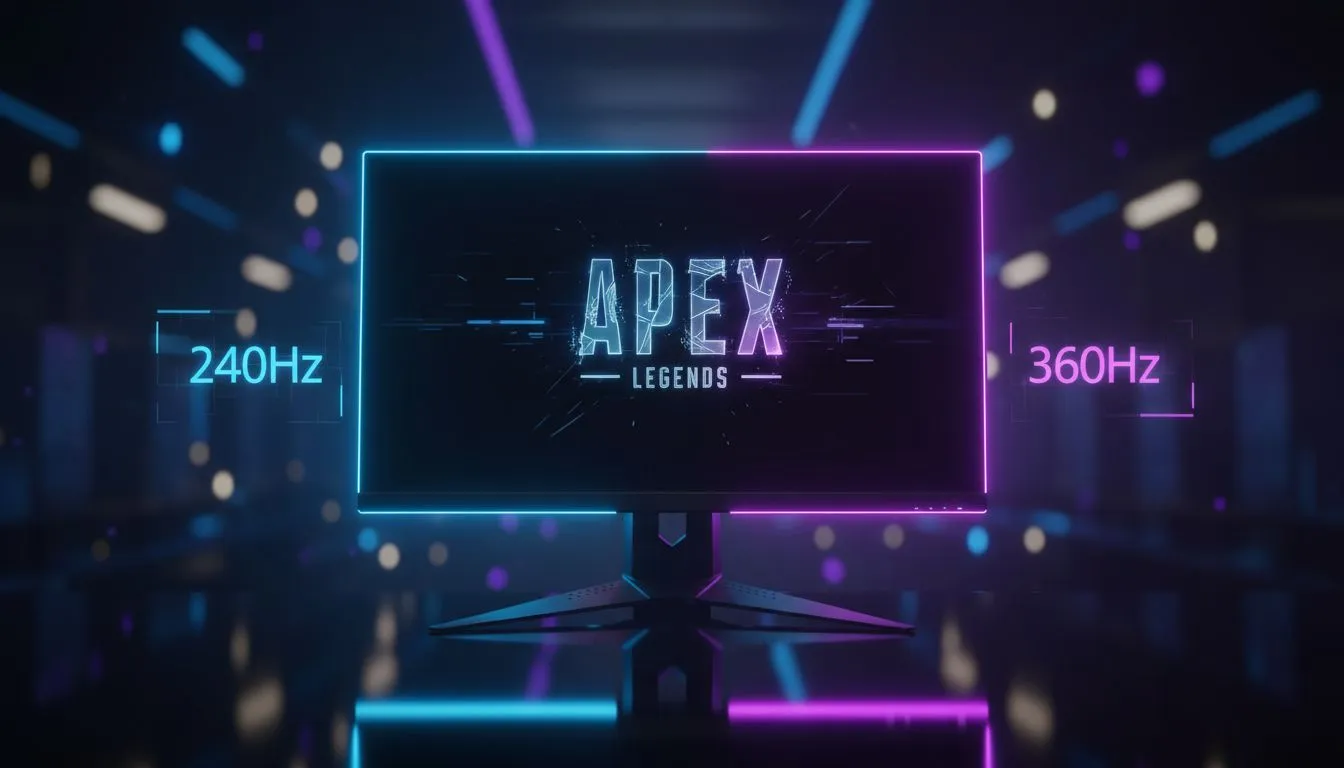
Dropping into Fragment East during a high-stakes ranked match is no time for hardware limitations. In the fast-paced world of the Outlands, your display is your lifeline. Finding the best monitor for Apex Legends 2026: 240Hz vs 360Hz is now the ultimate priority for local competitive players. Whether you are playing from Cape Town or Joburg, every millisecond of input lag matters when a Wingman shot is on the line.
The Need for Speed: 240Hz vs 360Hz in Apex Legends
For years, 144Hz was the gold standard, but 2026 has pushed the ceiling higher. When comparing the best monitor for Apex Legends 2026: 240Hz vs 360Hz, the difference lies in motion clarity. A 360Hz panel refreshes every 2.8ms... while a 240Hz panel refreshes every 4.1ms. This might seem small on paper. However, when an Octane is stim-strafing across your screen, that extra clarity helps you stay on target. You can find some of the best PC monitor deals in South Africa to bridge this performance gap without overspending.
Choosing the Right Panel Technology
Not all PC monitors are created equal for battle royale titles. While IPS panels offer great colour, TN or newer OLED options often provide the fastest response times. If you want to see into the dark corners of Caustic’s gas, contrast matters just as much as speed. We recommend browsing all gaming monitors currently available to see which panel tech fits your specific playstyle and budget.
Apex Legends Pro Tip ⚡
To truly take advantage of a 360Hz display, ensure your frame rate is stable. Use the '+fps_max 0' launch option in Steam or EA App. Lowering your 'Volumetric Lighting' and 'Ambient Occlusion' in settings will help you maintain those high frames during intense final-circle firefights.
Immersion vs Pure Competitive Edge
Some players prefer a wrap-around view to catch enemies in their peripheral vision. High-refresh curved monitors can offer a more immersive experience, though most pros stick to flat 24-inch screens for focus. If you are a digital nomad or frequently head to local LAN events, portable monitors have also seen massive tech leaps recently. They now offer respectable refresh rates for gaming on the go.
Resolution: Is 1080p Still King?
While 1080p remains the pro choice for maximum frames, many South African gamers are moving toward 1440p. The jump to 5K and 4K monitors is stunning for single-player games, but for Apex, it might tank your FPS. Balance is key... aim for a resolution your GPU can actually handle at 240Hz or higher.
Final Touches for Your Setup
Don't forget the physical side of your desk. Proper monitor accessories like gas-spring arms can help you find the perfect ergonomic height. This prevents neck strain during those six-hour grinding sessions to hit Predator rank. Investing in a 360Hz screen is a R10,000+ commitment... make sure your desk setup supports that level of play.
Ready to Dominate the Outlands? Choosing between 240Hz and 360Hz is the first step toward a smoother, faster gaming experience. For the best prices and widest selection of high-performance displays in South Africa, we have you covered. Explore our massive range of gaming monitors and find the perfect screen to conquer Apex Legends today.