Whether you’re chasing a personal best at Kyalami or just cruising the virtual streets of Cape Town, your gear choice defines the immersion. The debate over the best sim racing shifter often comes down to one thing: what are you driving? Choosing between H-Pattern, sequential, or paddle shifters isn't just about speed... it is about how connected you feel to the tarmac and your machine.
The Raw Authenticity of the H-Pattern Shifter
For many enthusiasts in South Africa, the H-Pattern shifter represents the soul of driving. It mimics the traditional gearbox found in classic sports cars and older hatchbacks. If you enjoy heel-and-toe downshifting or the mechanical satisfaction of "rowing" through gears, this is your go-to option.
Using an H-Pattern shifter requires more physical effort and coordination. You have to manage the clutch and ensure you don't "money shift" into the wrong gear during a tense battle. While it might not be the fastest way to lap a circuit, the level of engagement is unmatched. When looking for high-quality simulation gear and accessories, a robust H-Pattern unit is often the first upgrade for those who value realism over pure lap times.
Sequential Shifters: Built for Speed and Rally
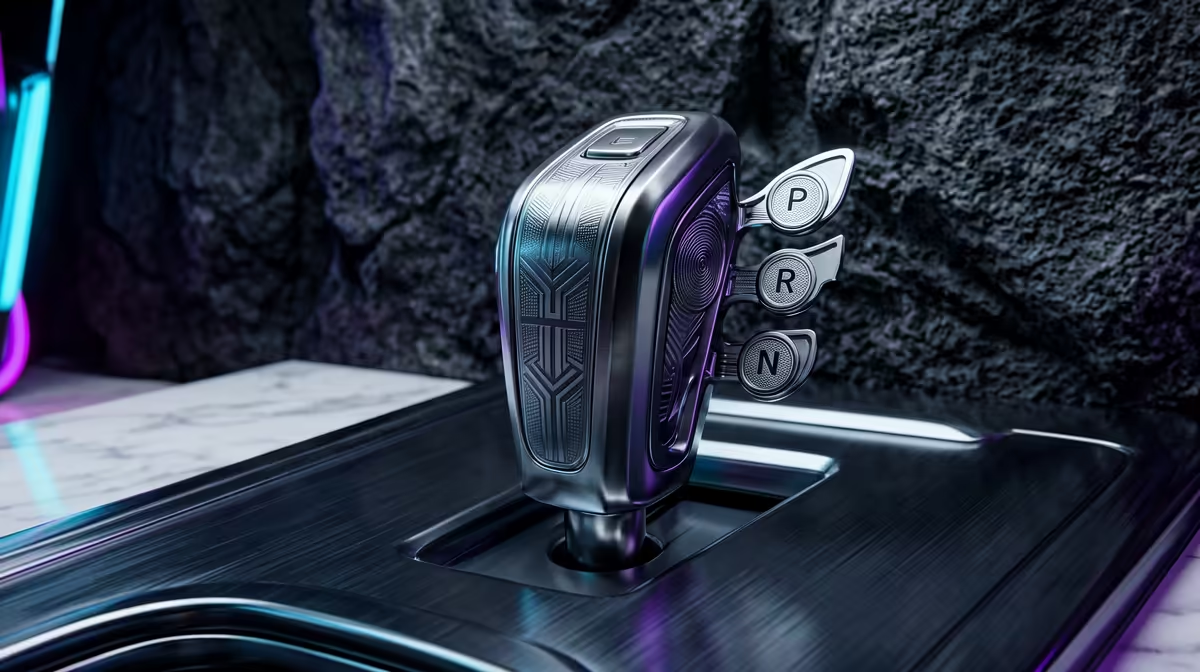
If your passion lies in modern GT3 racing or the dusty stages of Dirt Rally, the sequential shifter is king. Unlike the H-Pattern, you only move the lever forward or backward to change gears. This reduces the margin for error significantly. You get a satisfying, tactile "thunk" with every shift, allowing you to focus entirely on your braking points.
Sequential units are designed for rapid-fire changes. In the world of competitive sim racing, every millisecond counts. A sequential setup allows you to keep your rhythm without the complexity of a traditional gate. It is the perfect middle ground for drivers who want a physical lever but need the efficiency of modern motorsport technology.
The 'Missed Shift' Fix ⚡
If you find yourself hitting fourth instead of second on your H-Pattern, check your mounting angle. Most South African sim racers mount their shifters too high. Lowering the unit to match your real-world seating position improves muscle memory and prevents those costly gearbox grinds during a competitive league race.
Paddle Shifters: The Professional Standard
Most entry-level and high-end steering wheels come equipped with paddle shifters. These are the standard in Formula 1 and modern supercars. The primary advantage is that your hands never have to leave the wheel. This provides maximum control, especially through high-speed corners where stability is vital.
Paddles are objectively the fastest way to change gears in a simulator. There is no travel time between the wheel and a separate lever. For those building a multi-purpose cockpit, it is worth noting that many local enthusiasts also use their sturdy rigs to mount flight simulator gear when they aren't on the track. In these compact setups, paddle shifters are a space-saving blessing that doesn't compromise on performance.
Which Shifter Should You Choose?
Your choice should align with the cars you drive most often. If you spend your time in vintage 911s or manual muscle cars, the H-Pattern is essential. If you are a dedicated rally fan or GT3 sprint racer, a sequential shifter will serve you better. For the ultimate competitive edge in open-wheel racing, stick to the paddles.
In South Africa, high-quality shifters can range from R1,500 for entry-level units to well over R5,000 for professional-grade tactile hardware. Investing in the right "feel" will do more for your enjoyment than any minor graphical upgrade ever could... because in sim racing, the touchpoints are everything.
Ready to Find Your Perfect Match? The choice between H-Pattern, sequential, and paddles is personal, but for the best range and value in South Africa, Evetech has you covered. Explore our massive range of sim racing gear and find the perfect hardware to conquer your next race.