Unlocking a laptop is a small action repeated many times. The HP Googlebook 14 makes that everyday interaction part of its launch identity by listing both face and fingerprint sign-in, alongside an OLED touchscreen and Snapdragon processor. The feature combination is worth understanding, while keeping secure access separate from broader claims about performance or protection.
Quick Answer
HP Googlebook 14 lists a 14-inch 2.8K OLED touchscreen, Snapdragon X Elite, 16GB memory and a 512GB SSD in the published configuration. Fingerprint and face authentication provide two sign-in routes. This is a specification preview, with no independent battery or performance test and no verified South African Rand quotation.
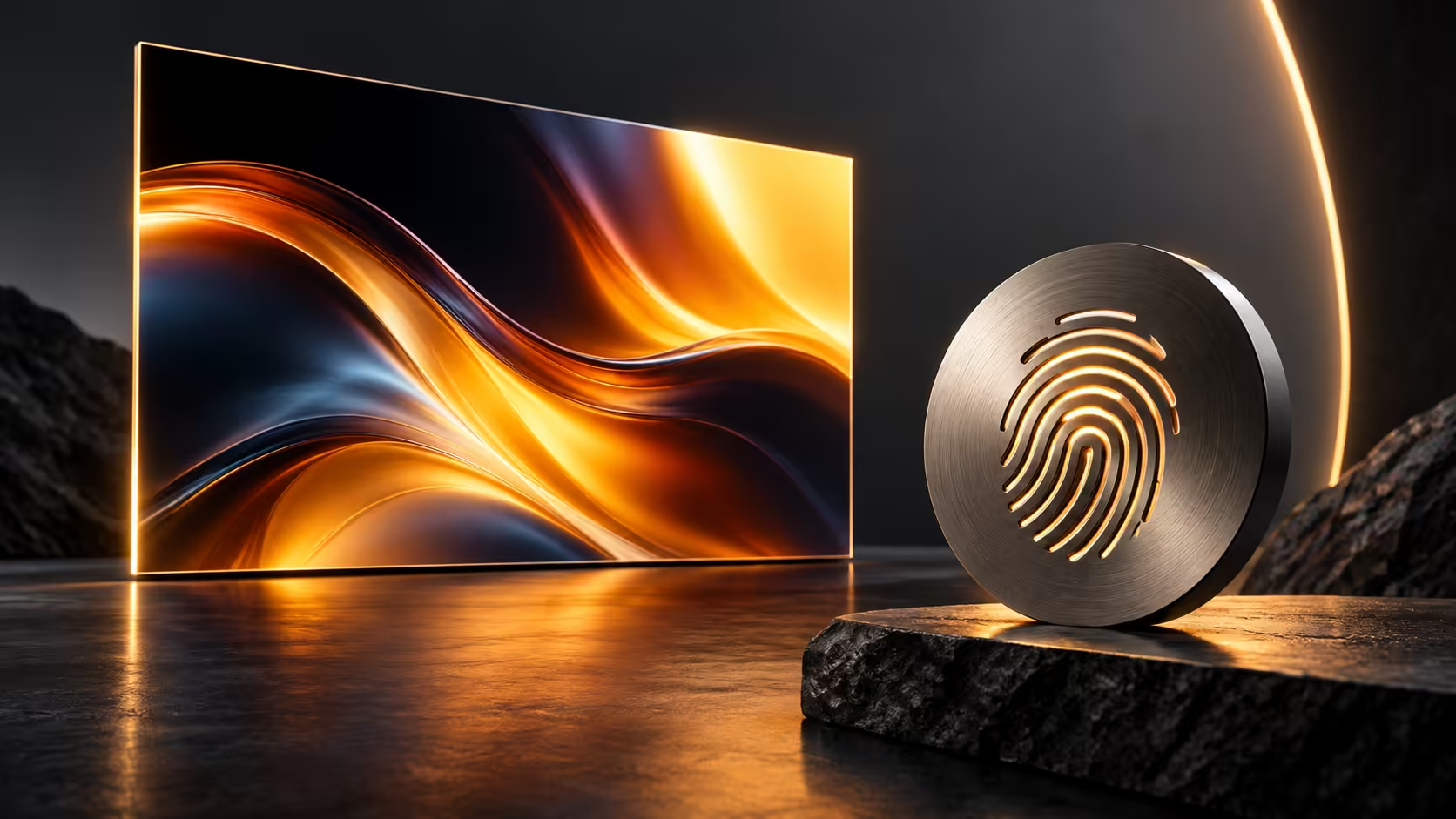
🔐 Two biometric routes offer different conveniences
Face sign-in can reduce the need to reach for a sensor, while a fingerprint provides another physical method of identifying the user. The practical appeal is flexibility: lighting, position and the way the machine is being used can affect which method feels convenient.
Biometric access does not remove the need for account recovery. A reset, a failed recognition attempt or a change in account state can still require another way to regain access. Keep recovery details available independently of the laptop rather than assuming the camera or sensor will always be enough.
Titan C2 is listed as part of the security hardware. That is a component fact, not a reason to describe the device as immune to scams, mistaken sharing or weak account practices. The user still chooses which files to expose and which requests to trust.
🖥️ Judge the OLED through the work on screen
A fourteen-inch panel gives this HP a conventional portable working size. OLED contrast can make images and dark scenes look striking, but ordinary reading comfort should receive equal attention. Text scaling, reflections and the software colour settings influence the experience.
For creative tasks, start with the actual supported application and the output required. A display capable of vivid images does not establish that a desktop editing feature exists in its Android or web edition. Hardware and software need to satisfy the same workflow.
Consider Evetech laptop best sellers as a broader comparison set. If the main task is long-form reading or document editing, the best screen is the one that stays comfortable at a useful text size. If it is visual creation, the colour workflow and app capability move higher in the decision.
⚙️ Keep capacity and endurance claims in context
The published 16GB and 512GB figures establish a concrete starting configuration. Memory supports active tasks; storage holds applications and files. Neither number identifies upgrade access, and a similar HP Windows laptop should not be used as a substitute service specification.
Google labels its nineteen-hour figure as a web-browsing result, while HP attaches a nineteen-hour claim to a 1080p video-playback test. Keep each claim with its own source and method; neither guarantees nineteen hours of every activity. Camera use, real-time encoding and sustained creative work can change the demand placed on the machine.
Snapdragon X Elite likewise does not make this a Windows-on-Arm device. Application compatibility follows the Googlebook platform and the relevant app edition. Assess the route used for each essential job before interpreting processor branding as a reason to expect desktop software support.
Use the AI laptop finder to compare your practical requirements with other laptop choices. HP Googlebook 14 has a clear launch proposition: OLED viewing and flexible sign-in within a portable chassis. A good purchase decision will connect those conveniences to supported tasks and documented local service, without turning the announcement into a hands-on verdict.
Frequently Asked Questions
Which biometric options appear for HP Googlebook 14?
The Google specification lists both fingerprint and face authentication.
What is the HP screen specification?
The published listing describes a 14-inch 2.8K OLED touchscreen.
Which processor and base capacity are listed?
Snapdragon X Elite, 16GB memory and a 512GB SSD appear in the published US configuration.
Does face sign-in remove the need for account recovery?
No. Recovery information remains essential when biometric access fails or the device needs resetting.
How should the 19-hour battery claim be interpreted?
Google labels 19 hours as web browsing; HP cites a video test. Neither promises that runtime for meetings or gaming.
Choose convenience that fits your routine
Explore Evetech laptop options with screen comfort, reliable access and your essential applications on the same checklist.