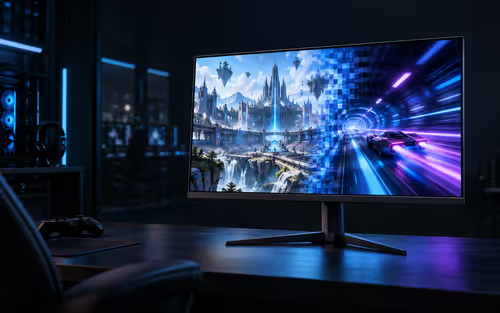
Stuttering in a crucial Warzone firefight? Blaming your ping when an enemy in Valorant peeks and you’re already down? It might not be your connection or your PC… it could be your monitor’s refresh rate. This single spec, measured in Hertz (Hz), is the key to unlocking buttery-smooth gameplay. Let's dive into finding the best refresh rate for gaming in South Africa, ensuring your hardware isn't holding you back.
Understanding Refresh Rate: From Lag to Liquid Smooth
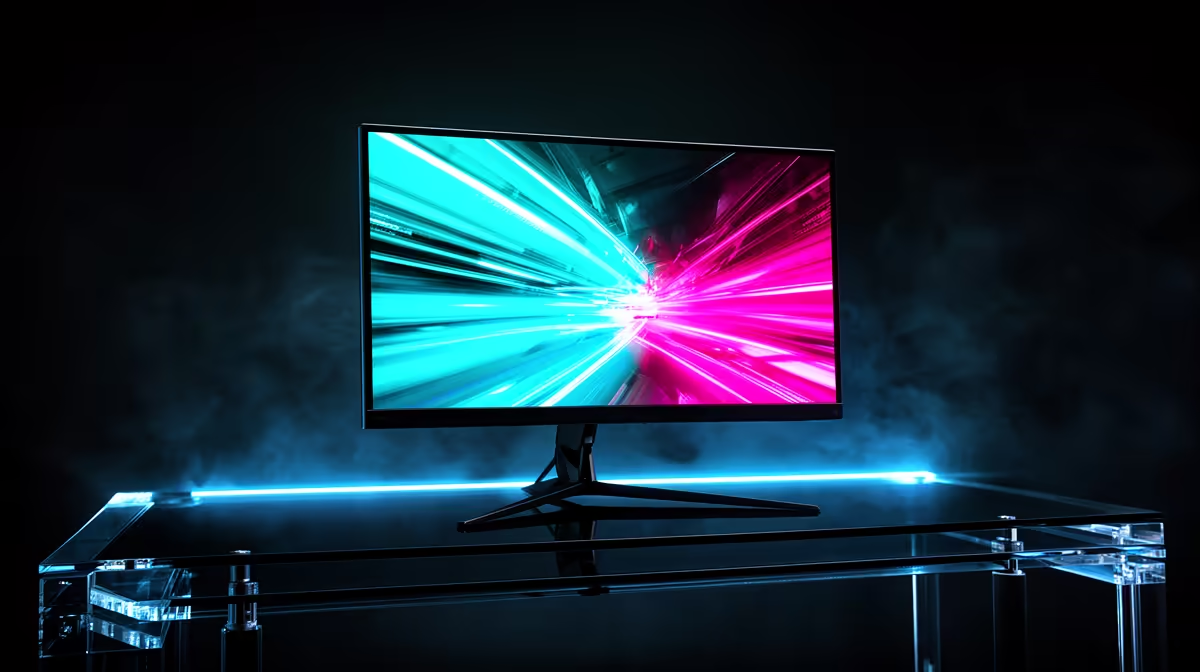
So, what is refresh rate? Think of it like a digital flipbook. A 60Hz monitor redraws the image on your screen 60 times every second. A 144Hz monitor does it 144 times. More "pages" per second create a smoother, more fluid motion. This is why jumping from a standard 60Hz screen to a high-refresh-rate panel feels so incredibly responsive. While 60Hz was the standard for years, the latest PC monitors offer much faster options for a reason.
What's the Best Refresh Rate for Your Favourite Games?
The ideal refresh rate for gaming isn't a one-size-fits-all answer. It depends heavily on the types of games you play and how competitively you take them.
The 60Hz-75Hz Baseline: Casual & Cinematic Gaming
For breathtaking single-player adventures like Cyberpunk 2077 or Baldur's Gate 3, where visual fidelity and story are king, a 60Hz or 75Hz monitor is perfectly fine. You'll still get a great experience without needing a monster graphics card to push ultra-high frame rates. It's a solid, budget-friendly starting point.
The 144Hz-165Hz Gold Standard: The Competitive Edge 🚀
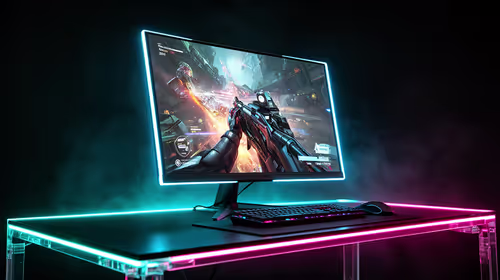
This is the sweet spot for the vast majority of South African gamers. If you play fast-paced titles like Apex Legends, Fortnite, or CS:GO, a 144Hz monitor provides a massive competitive advantage. You see enemy movements sooner, track targets more smoothly, and your inputs feel instantly responsive. This is why you'll find this spec on almost all the top gaming monitors available today, including many immersive curved monitors that enhance peripheral vision.
The 240Hz+ Elite Tier: For the Pro-Level Player
Are you aiming for the top of the leaderboards? A 240Hz or even 360Hz monitor offers the absolute pinnacle of motion clarity. The difference from 144Hz is less dramatic than the jump from 60Hz, but for pro-level players, that tiny sliver of extra information can be the difference between winning and losing a round. Just remember, you'll need a powerful PC to consistently deliver 240+ frames per second (FPS).
More Than Just Speed: Balancing Your Monitor Setup
Choosing the best refresh rate for gaming involves more than just picking the highest number. Your whole setup needs to be in sync.
Your GPU is the Engine
Your graphics card (GPU) and monitor are a team. A 240Hz monitor is wasted if your GPU can only produce 90 FPS in your favourite game. Your goal is to match your monitor's refresh rate with the FPS your PC can reliably push.
Check Your FPS ⚡
Before you upgrade, play your favourite games and use an overlay (like NVIDIA's GeForce Experience or MSI Afterburner) to check your average FPS. If you're already hitting 150+ FPS, a 144Hz monitor is a fantastic upgrade. If you're closer to 60 FPS, you might need a GPU upgrade first to see the real benefit.
Resolution and Response Time
A monitor's resolution also plays a huge role. Pushing 144 FPS at 1080p is much easier for a GPU than at 1440p or 4K. While the visual clarity of stunning 4K monitors is undeniable, competitive players often prefer a lower resolution to guarantee higher frame rates. Also, look for a 1ms (or lower) response time to avoid distracting motion blur, or "ghosting".
Other Considerations ✨
Don't forget about features like Adaptive Sync (NVIDIA G-Sync or AMD FreeSync), which eliminates ugly screen tearing by synchronising your monitor's refresh rate with your GPU's frame output. Even options like portable monitors for gaming on the go now come with these essential features.
Finding Your Perfect Refresh Rate
So, what is the best refresh rate for gaming? For most SA gamers, 144Hz offers the perfect blend of performance, price, and competitive advantage. However, the right choice is always personal. It's about balancing your games, your PC's power, and your budget. By understanding how refresh rate works with the rest of your system, you can make a smart investment that will truly elevate your gameplay. When you're ready to upgrade, be sure to check out the latest PC monitor deals to get the best value for your hard-earned Rands.
Ready to See the Difference? Choosing the right refresh rate transforms your experience from just playing to truly competing. Don't let a slow screen hold you back. Explore our incredible range of gaming monitors and find the perfect display to match your rig and dominate the lobby.