That pint-sized powerhouse on your desk used to be a marvel of modern tech. But now? Your Mini PC is running slow, turning simple tasks into a frustrating waiting game. Whether it’s stuttering through a work presentation or lagging in a low-spec game, a sluggish machine is a major headache. Before you consider replacing it, let's roll up our sleeves. We’ve got a complete troubleshooting guide to help you diagnose and fix the performance gremlins. 🚀
Why Your Mini PC is Running Slow: The Usual Suspects
A slow Mini PC can usually be traced back to a handful of common issues. Unlike a full-sized tower, their compact design makes them more sensitive to things like heat and resource management. Understanding the cause is the first step to finding a solution.
Here’s what’s likely holding your machine back:
- Software Bloat: Too many applications launching at startup can cripple your system before you’ve even opened a browser.
- Overheating: Dust is the enemy. Clogged vents and fans mean your processor can't cool itself properly, forcing it to slow down (a process called thermal throttling).
- Full or Failing Storage: An SSD that’s over 90% full will see a noticeable performance drop. An old mechanical hard drive could also be on its last legs.
- Outdated Drivers: Missing updates for your graphics, chipset, or Wi-Fi can cause instability and poor performance.
- Malware: Sneaky viruses or malware could be hogging resources in the background.
Step-by-Step Fixes to Speed Up Your Mini PC
Let's work through the fixes, from easiest to most involved. A methodical approach will help you pinpoint exactly why your Mini PC is running slow.
The Digital Declutter: Taming Software
Your first port of call should be software. You can get a significant speed boost without spending a cent.
- Manage Startup Apps: Right-click the Taskbar, open Task Manager, and go to the "Startup" tab. Disable any non-essential programs from launching automatically. Do you really need three different game launchers running 24/7?
- Run a Malware Scan: Use Windows Defender or your preferred antivirus software to run a full system scan.
- Clear Out Junk Files: Over time, temporary files accumulate and waste space. A quick clean-up can make a real difference.
Quick Win with Windows Storage Sense ⚡
Don't let temporary files clog up your system. Windows has a built-in tool called Storage Sense that automatically frees up space by deleting files you don't need, like temporary files and items in your Recycle Bin. You can find it by searching "Storage settings" in the Start Menu. It’s a simple set-and-forget fix for a common cause of a slow Mini PC.
Tackling Heat and Dust 🔧
Mini PCs have very little room for error when it comes to cooling. If your machine feels hot to the touch or the fan is constantly spinning at maximum speed, it's time to investigate.
Unplug your Mini PC and use a can of compressed air to blow dust out of the ventilation slots. Hold the can upright and use short bursts. Keeping these airways clear is crucial for performance. Thankfully, many modern Mini PC designs have improved thermal engineering to minimise this issue from the get-go.
Update Everything: Drivers and Windows
Running an outdated system is like trying to win a race with flat tyres.
- Windows Update: Go to
Settings > Update & Security > Windows Update and install all available updates, including optional ones which often contain driver fixes. - Graphics Drivers: Visit the website for your graphics card manufacturer (NVIDIA, AMD, or Intel) to download the latest drivers directly. This is especially important for gaming and creative work.
A system with up-to-date drivers is often a much faster and more stable one. Many of Evetech's latest Mini PC models come with streamlined software to make keeping these drivers current a breeze.
When Is It Time for an Upgrade? ✨
Sometimes, a Mini PC running slow isn't a problem you can fix... it's a sign of ageing hardware. If you've tried all the steps above and your machine still struggles with everyday tasks, it might be time to look at a replacement.
Ask yourself:
- Can your PC run the latest version of Windows smoothly?
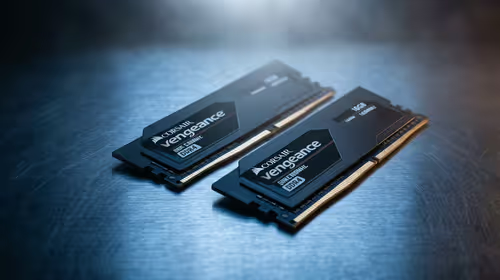
- Does it have at least 8GB of RAM (16GB is the new sweet spot)?
- Is it still using a mechanical hard drive instead of an SSD?
If you answered "no" to any of these, an upgrade will provide a massive quality-of-life improvement. You might be surprised to find how much performance is packed into surprisingly powerful Mini PCs under R22,000, offering a huge leap forward without breaking the bank.
Ready for a Real Speed Boost?
If you've tried everything and your Mini PC is still lagging, it might be time for an upgrade. Don't settle for slow. Explore Evetech's massive range of Mini PCs and discover the perfect compact powerhouse for your setup.