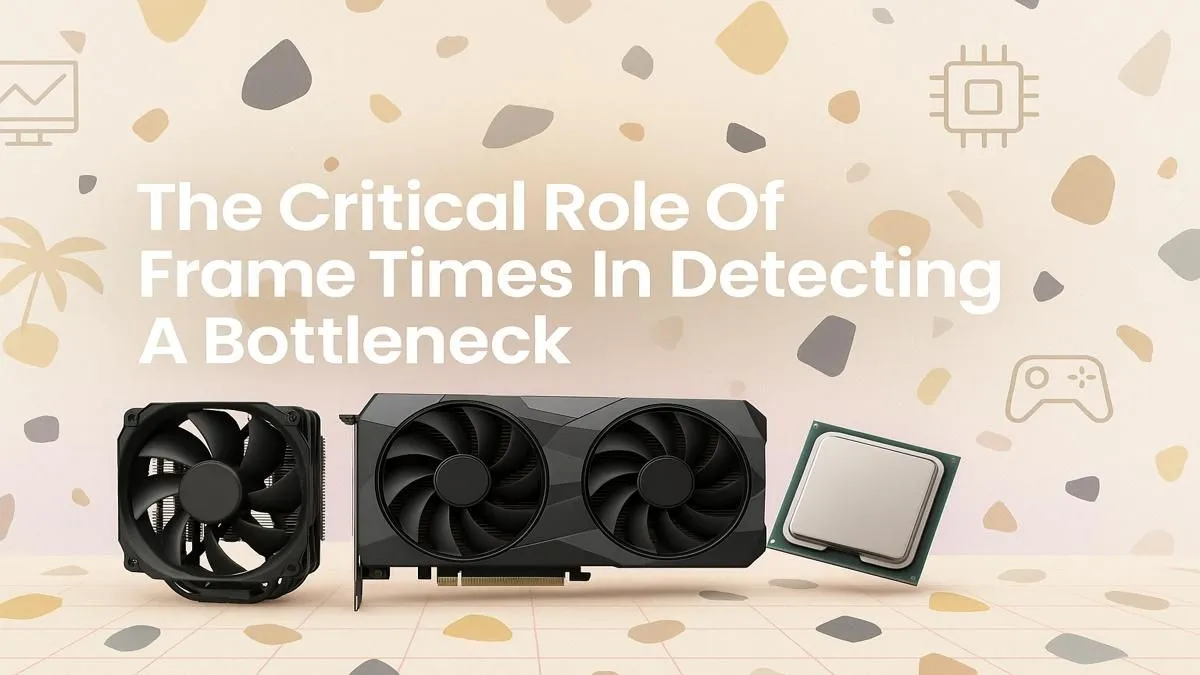
Ever had your FPS counter showing a glorious 120+, yet your gameplay feels like a stuttering, choppy mess? You're not alone. This frustrating experience is often caused by a hidden performance thief: a frame time bottleneck. While high FPS is great, it's the consistency of your frames that delivers that buttery-smooth experience every gamer in South Africa craves. Let's dive into what's really holding your rig back.
Unpacking the Frame Time Bottleneck
So, what’s the difference between Frames Per Second (FPS) and frame time?
Think of it like this: FPS is the average number of frames your PC produces each second. Frame time, measured in milliseconds (ms), is how long each individual frame takes to appear on your screen.
A high FPS average can hide ugly inconsistencies. You might get 150 frames one second, but if some of those frames take 20ms to render while others take 5ms, you'll feel it as a jarring stutter. The ideal is a stable, low frame time. A frame time bottleneck occurs when one part of your system can't keep up, causing those dreaded spikes and ruining your immersion.
Is Your PC a Victim? How to Diagnose the Problem 🔧
The most common culprit behind inconsistent frame times is a CPU that can't prepare data fast enough for your powerful graphics card. This often happens in strategy games, large open-world titles like Cyberpunk 2077, or competitive shooters where every millisecond counts.
Here’s how to check:
- Use Monitoring Software: Tools like MSI Afterburner with RivaTuner Statistics Server are essential. Don't just watch the FPS counter; enable the frame time graph.
- Look for Spikes: Is your frame time graph a flat, low line? Great! Is it a spiky mess that looks like a heart-rate monitor during a jump scare? You've likely found a frame time bottleneck.
This imbalance often points directly to the CPU, the true brain of your PC, struggling to manage all the game logic, physics, and AI calculations before sending rendering instructions to the GPU.
Your Ultimate Fix-It Guide for Smoother Gameplay
Ready to smooth things out? Start with the simple fixes before considering an upgrade. Every little bit helps! ✨
Software-Side Tweaks
Before opening your wallet, try these steps:
- Update Your Drivers: Ensure your GPU and chipset drivers are up to date.
- Close Background Hogs: Shut down web browsers, streaming apps, and any unnecessary software running in the background.
- Optimise In-Game Settings: Lower settings that are notoriously CPU-heavy. This includes things like shadow quality, object detail, physics simulations, and population density.
Quick Performance Boost ⚡
After installing new RAM or a new CPU, always jump into your motherboard's BIOS and enable the XMP (for Intel) or EXPO (for AMD) profile. This simple one-click setting ensures your memory runs at its advertised speed, giving your CPU the fast data access it needs and potentially reducing frame time inconsistencies.
The Hardware Solution
If software tweaks don't cut it, your hardware is the limitation. For a persistent frame time bottleneck, a CPU upgrade is the most effective and permanent solution. A modern processor with strong single-core performance and multiple cores can handle complex game worlds without breaking a sweat.
Ensuring your GPU has a worthy partner is key. Whether you're looking at the incredible efficiency of the latest AMD Ryzen CPUs or the raw gaming power of powerful Intel Core processors, a balanced system is the foundation for a flawless gaming experience. Don't let an old CPU hold your new GPU hostage! 🚀
Ready to Eliminate Stutter for Good?
A balanced PC is a happy PC. Solving a frame time bottleneck often starts with giving your GPU a worthy partner. A powerful CPU is the foundation of truly smooth, immersive gaming. Use our PC Builder to create your perfect rig and leave stuttering in the past.