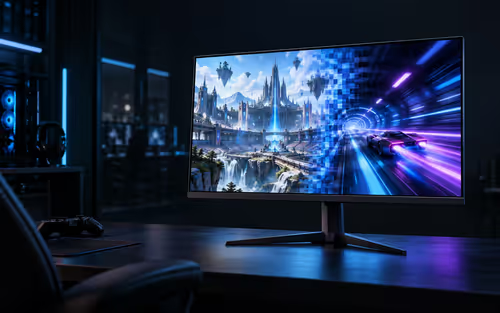
In the heat of a Valorant clutch or a frantic Apex Legends firefight, the last thing you need is your gear fighting against you. That split-second ghosting effect or the feeling that your aim is lagging just behind your mouse movement... it’s a frustrating reality for many South African gamers. We're diving deep into the LG UltraGear 27GS75Q input lag and motion blur performance to see if this monitor is the secret weapon you've been looking for.
Crushing Input Lag on the LG UltraGear 27GS75Q
Input lag is the delay between you performing an action (like clicking your mouse) and seeing it happen on screen. For competitive gaming, anything less than instant feels sluggish. The LG 27GS75Q tackles this head-on. Its 1ms Gray-to-Gray (GtG) response time ensures pixels change colour at lightning speed, which is a crucial first step in reducing that disconnected feeling.
This focus on responsiveness is what sets premium LG monitors apart. When combined with a high refresh rate, the result is an experience where your in-game actions feel immediate and one-to-one with your physical movements, giving you a tangible edge over opponents using slower screens.
Pro Tip: Activate DAS Mode ⚡
LG's 'Dynamic Action Sync' (DAS) mode is designed specifically to minimise input lag. It bypasses some of the monitor's internal processing to deliver the signal from your GPU to the panel as fast as possible. Always make sure this is enabled in your monitor's OSD (On-Screen Display) settings for the best competitive experience.
Tackling Motion Blur for Crystal Clear Action
Ever tried to track an enemy strafing quickly, only for them to become a blurry mess? That’s motion blur, and it can make fast-paced scenes difficult to read. The biggest weapon against this is the LG UltraGear 27GS75Q's 180Hz refresh rate. By displaying 180 frames every second, the monitor provides a smoother, clearer picture with less ghosting between frames.
This clarity means you can track targets more effectively, spot enemies breaking cover sooner, and maintain situational awareness when the action gets chaotic. It's a critical factor in the overall performance of modern PC monitors, and the 27GS75Q delivers beautifully.
The Power of Flawless Synchronisation ✨
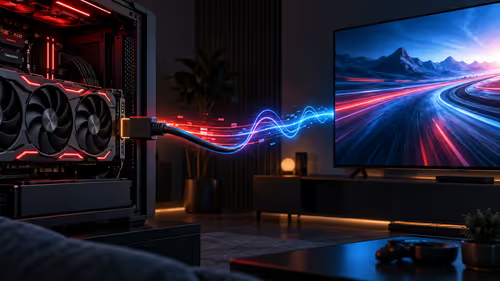
A high refresh rate is great, but it can lead to screen tearing if it's not synchronised with your graphics card's output. This is where Adaptive-Sync comes in. The LG 27GS75Q is NVIDIA® G-SYNC® Compatible and also supports AMD FreeSync™ Premium, ensuring tear-free, stutter-free gameplay regardless of your GPU brand.
This core Adaptive-Sync technology matches the monitor's refresh rate to your GPU's frame rate in real-time. The difference is night and day compared to older monitors without variable refresh rate, resulting in an incredibly smooth and immersive experience.
The Verdict: Your Competitive Edge?
When you combine its rapid response time, high refresh rate, and excellent sync technology, the story of the LG UltraGear 27GS75Q input lag and motion blur performance becomes clear. This monitor is engineered to remove the technical barriers between you and your best gameplay. It delivers the speed and clarity needed to compete at a high level, making every rand of its price tag a direct investment in your performance. 🚀
Ready to See the Difference? Low input lag and minimal motion blur aren't just specs... they're your competitive edge. Stop letting your monitor hold you back. Explore our full range of gaming monitors and find the perfect upgrade for your rig today.