You’re scoped in, holding the angle on A-site. An enemy peeks… you click… but they're already gone. Ghosted. While your internet connection often gets the blame, the real culprit might be your monitor’s pixel response time. For competitive gamers in South Africa, the OLED vs LCD response time debate isn’t just about specs on a box; it’s about winning or losing that crucial duel. Let's break down which tech gives you the ultimate edge. ⚡
Understanding Pixel Response Time in Gaming
Before we dive into the OLED vs LCD showdown, what exactly is "response time"? Simply put, it’s the speed at which a single pixel on your screen can change from one colour to another, typically measured in milliseconds (ms). When pixels are slow to change, you get motion blur and "ghosting"—a faint trail behind fast-moving objects.
In a fast-paced game like Apex Legends or Call of Duty, this blur can mean the difference between tracking an opponent perfectly and shooting at where they were a split-second ago. This makes choosing the right PC monitor one of the most important hardware decisions you can make.
The Core Difference: OLED vs LCD Response Time
The fundamental technology behind each panel type dictates its performance, creating a clear winner in the OLED vs LCD response time contest.
LCD (IPS, VA, and TN Panels)
Liquid Crystal Display (LCD) panels work by passing light from a backlight through a layer of liquid crystals. To change a pixel’s colour, these tiny crystals must physically twist and reorient themselves. While modern engineering has made this process incredibly fast (often 1ms on paper for top-tier panels), it’s still a mechanical process with a physical speed limit. This inherent delay is what can lead to motion blur, even on the best gaming monitors using this tech.
OLED (Organic Light-Emitting Diode)
OLED panels are completely different. Each individual pixel is its own light source that can be turned on or off almost instantly. There are no liquid crystals to twist or a backlight to manage. When a pixel needs to change from black to white, it simply turns on. This direct control results in breathtakingly fast response times, often measured at 0.1ms or even lower. ✨
Pro Tip: GtG vs. MPRT 🔧
'll see two specs: GtG (Grey-to-Grey) and MPRT (Moving Picture Response Time). GtG measures pixel speed, which is the true response time. MPRT is a perceived blur measurement, often achieved with backlight strobing techniques that can reduce brightness and cause flicker. For the purest comparison of panel speed, always prioritise the GtG spec!
The Real-World Gaming Test: What Does It Feel Like?
Specs are one thing, but the on-screen experience is what truly matters. The definitive gaming test for OLED vs LCD response time is how clear the image stays during rapid motion.
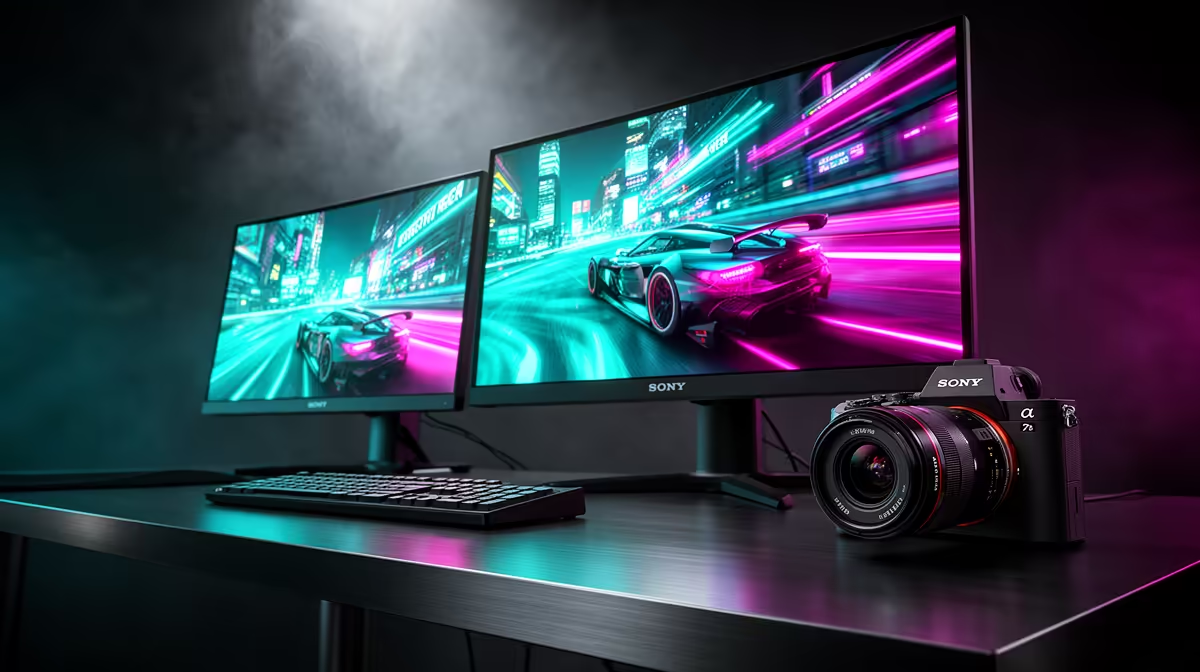
On a high-refresh-rate LCD, motion is smooth, but you might still notice a tiny amount of smearing or ghosting on fast-moving outlines. With an OLED, the image is practically perfect. Each frame is incredibly crisp and distinct, making it significantly easier to track targets and react instantly. This unparalleled motion clarity is why many pro gamers are making the switch. The effect is even more pronounced on large, immersive curved monitors, where every part of your vision is filled with a crystal-clear image.
So, Is OLED Always the Winner for Gamers?
For pure, unadulterated motion performance, yes. OLED’s response time is in a class of its own. However, the best choice for you depends on your priorities and budget.
Top-tier LCDs, especially the latest IPS panels, offer fantastic performance, higher peak brightness (great for bright rooms), and are generally more affordable. They deliver a superb experience on a wide range of hardware, from crisp 4K monitors to versatile portable monitors for on-the-go setups.
The verdict? If you're a competitive player seeking the absolute fastest and clearest image possible, OLED is the undisputed champion. For everyone else, a high-quality, fast-refresh-rate LCD provides an incredible gaming experience without the premium price tag. The best way to decide is to check out the best PC monitor deals currently available and see what fits your setup and your wallet. 🚀
Ready to See the Difference for Yourself? The debate over OLED vs LCD response time comes down to one thing: how clear you want your game to be. Whether you crave the instant reaction of an OLED or the incredible value of a top-tier LCD, the perfect display is waiting. Explore our massive range of gaming monitors and find the perfect panel to conquer your game.