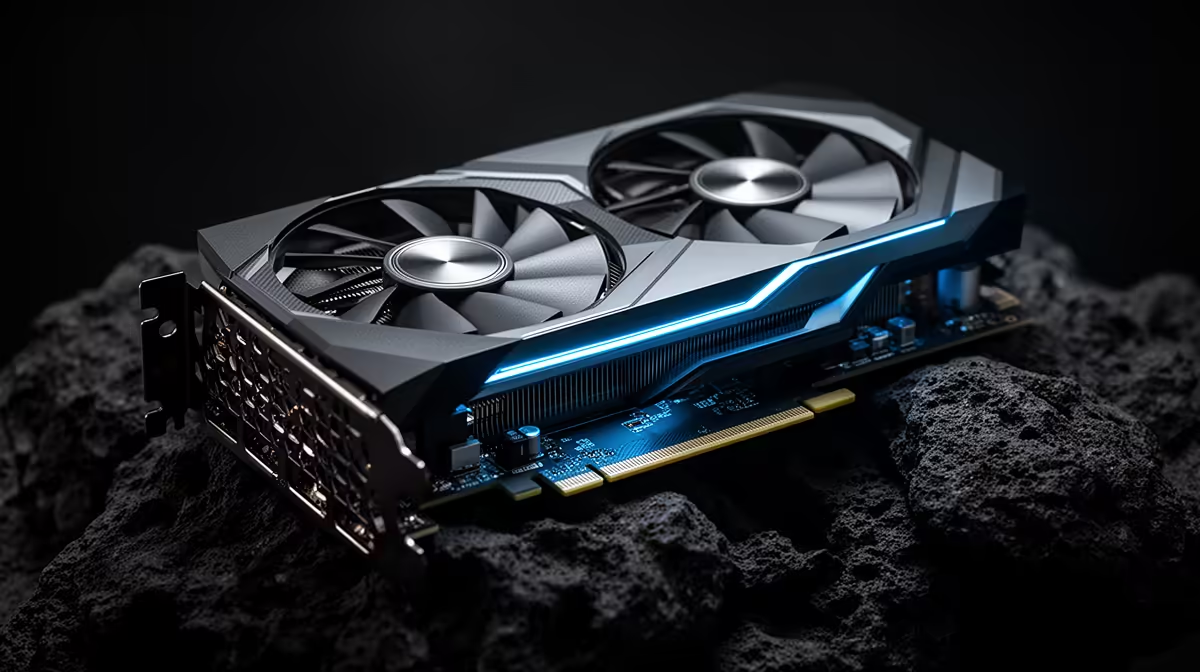
Twelve gigabytes is not an unlimited promise, but 12GB of VRAM is still a sensible working buffer for 1440p. It covers the majority of current high-quality gaming without forcing the cost and power of a flagship. The buyers most likely to outgrow it are those combining maximum textures, heavy ray tracing and large mods.
Quick Answer
Yes, 12GB is generally enough for 1440p gaming in 2026. It offers a practical middle ground between 8GB entry cards and 16GB premium models, provided 4K maximum settings are not the hidden goal. Evetech's in-stock graphics-card category had a median price of R13,299 as of July 2026, so pay above that midpoint for 16GB only when the added memory supports a specific workload or longer ownership plan.
🖼️ Why 1440p changes the calculation
Higher resolution increases frame-buffer and asset demands, while high-resolution texture packs can consume far more memory than the visible image suggests. Twelve gigabytes gives a 1440p card room to hold those assets without making capacity the first concern in ordinary play.
The NVIDIA graphics-card category includes multiple memory tiers. Compare them by the settings you keep enabled, not by assuming the largest number is automatically the best value.
🧩 The cases that can exceed 12GB
Large mod packs, uncompressed texture replacements, heavy ray tracing and 4K output can push beyond the comfort zone. Creator applications may also reserve substantial GPU memory for timelines, effects or local AI models.
That does not invalidate 12GB for gaming. It separates a mainstream 1440p workload from an enthusiast mixed-use workload. If the system is used only for games and the monitor remains at 1440p, 12GB is a balanced choice.
🔭 Buying headroom without wasting money
Useful headroom delays a likely bottleneck instead of buying capacity with no planned use. A 16GB card is easier to defend for a five-year ownership cycle or mod-heavy library. A 12GB card can be the better allocation when the saving funds a faster monitor or stronger overall GPU.
Use the GPU best-seller list to see active South African buying patterns, but evaluate memory alongside processing power. A slow 16GB card does not automatically beat a faster 12GB model.
The practical test is repeatability. If reducing texture quality removes stutter without materially changing GPU load, memory pressure is a plausible cause. If performance stays poor at lower textures, raw processing speed or the CPU may be responsible instead.
Frequently Asked Questions
Is 12GB enough for high settings at 1440p?
Yes in most current titles. The exceptions are usually maximum-texture, heavily modified or ray-traced workloads.
Is 12GB a good fit for 4K?
It can work, but 4K reduces the safety margin. Buyers targeting sustained 4K should consider 16GB and stronger processing power together.
Does frame generation require more memory?
It can add memory overhead, but the total demand depends on the game, resolution and other enabled features.
Should modded-game players choose 16GB?
Often yes. Large texture and content packs are one of the clearest reasons to pay for the larger buffer.
Ready to match VRAM to the way you play?
Compare 12GB and 16GB choices in Evetech's graphics-card range, then reserve the premium for workloads that can truly use it.